

iPhone 17e
The iPhone 17e is Apple's most affordable iPhone with Apple Intelligence. Pre-orders start March 4.
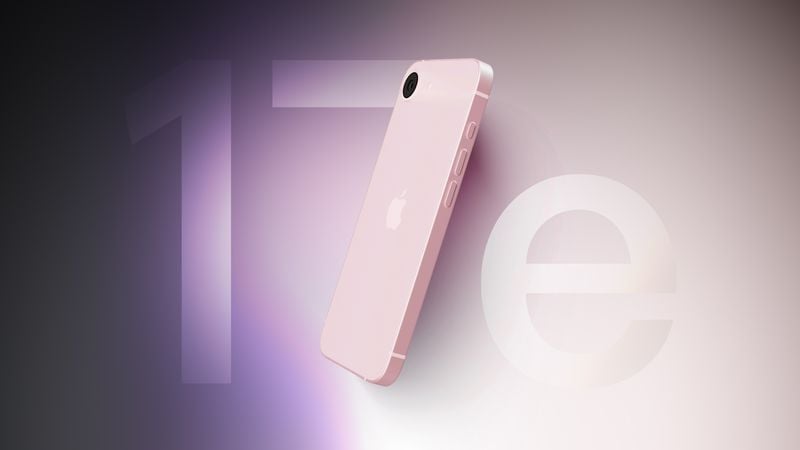
Should You Buy the iPhone 17e?
Apple debuted the iPhone 17e in March 2026, which means now is the best time to buy. Another update won't be coming until 2027 at the earliest.
The iPhone 17e is the most affordable iPhone that Apple sells. At $599, it is $100 cheaper than the prior-generation iPhone 16 that Apple still sells and $200 cheaper than the entry-level iPhone 17. The iPhone 17e offers many of the same features as the iPhone 17 at a more affordable price point.
Compared to the iPhone 17, the iPhone 17e has an A19 chip with one fewer GPU core, a single-lens rear camera with no Wide-Angle camera, no ProMotion display technology, no Dynamic Island, and no upgraded front camera, but if those features don't matter to you, you can save money by opting for the iPhone 17e.
For dual cameras and an improved display, the flagship iPhone 17 is available for $799. Apple also has the super-thin iPhone Air available for $999, plus top-of-the-line iPhone 17 Pro and iPhone 17 Pro Max models for $1,099 and $1,199, respectively.
iPhone 17e
Contents
Introduced in March 2026, the iPhone 17e is the most affordable iPhone that Apple sells as a lower-cost alternative to its iPhone 17 models.
The iPhone 17e is almost identical to the prior iPhone 16e, with no notable design updates. Apple is still using the older iPhone 14 design, featuring a 6.1-inch OLED display with a notch for the TrueDepth camera system, an aluminum frame with squared-off edges, and a single-lens rear camera. New this year is the faster A19 chip, an upgraded Ceramic Shield 2 display cover, a faster modem chip, and MagSafe support.
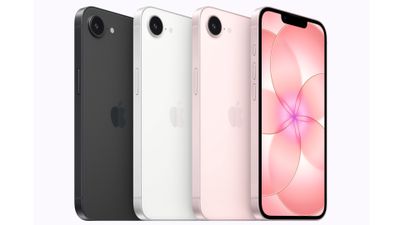
The iPhone 17e has an aluminum frame that comes in blackwhite, or soft pink, a new color this year. The device has a glass back like the iPhone 17, but the glass is standard glass rather than Ceramic Shield, so it is just as breakable as before. It still uses the iPhone 14-style design, so it does not look as modern as Apple's more expensive iPhones.
With a 6.1-inch Super Retina OLED XDR display, the iPhone 17e is the smallest iPhone in Apple's lineup. It continues to feature a display with a notch instead of the Dynamic Island. There have been no display upgrades, and the iPhone 17e continues to offer 800 nits max brightness and 1200 nits peak HDR brightness. It has features like True Tone, Wide Color, and Haptic Touch, but it is limited to a 60Hz refresh rate and it does not have the ProMotion technology available in the rest of the iPhone 17 models.
The new Ceramic Shield 2 is more durable than before, so the iPhone 17e display offers 3× better scratch resistance, identical to the iPhone 17. Like Apple's other iPhones, the iPhone 17e offers IP68 dust and water resistance.
The iPhone 17e uses the same A19 chip that's in the iPhone 17, but it has one fewer GPU core. There's a 6-core CPU and 4-core GPU, and GPU performance doesn't quite match the iPhone 17. The chip includes a 16-core Neural Engine and it has 8GB RAM, so it is compatible with all Apple Intelligence features. Storage starts at 256GB, up from 128GB with the iPhone 16e. It can be upgraded to 512GB storage for an additional fee.
The single-lens 48-megapixel f/1.6 Fusion camera is the same as the Wide camera in the iPhone 17, and it is a 2-in-1 camera system that offers standard wide photos and photos with a 2× zoom. The camera supports Focus Control for Portraits, which is new to Apple's affordable iPhone this year, but it still doesn't support the newest Photographic Styles. Since there is just one lens, the iPhone 17e cannot capture spatial photos or videos.
There is no Camera Control button, but Apple did include the Action button that replaces the mute switch. The Action button is customizable and can be used to activate the flash light, turn on the camera, open the Translate app, turn on a Focus mode, and more. The Action button supports Visual Intelligence, a feature activated with the Camera Control button on the iPhone 17 models.
As for video, the iPhone 17e supports 4K dolby vision video recording like the iPhone 17, but it does not include Cinematic mode or Action mode. The iPhone 17e also uses the same 12-megapixel front-facing TrueDepth camera with ƒ/1.9 aperture that was in the iPhone 16e, and it does not have the newer front-facing camera introduced in the standard iPhone 17.
Apple equipped the iPhone 17e with its latest C1X modem chip, which is Apple's second custom-designed 5G modem. The C1X supports 6GHz 5G networks, but it is not compatible with mmWave. The modem is up to twice as fast as the C1 modem, and it is more battery efficient than Qualcomm modems.
The iPhone 17e has the same battery life as the iPhone 16e, and it lasts for up to 26 hours when watching videos, up to 21 hours when streaming video, and up to 90 hours when listening to audio.
There is a USB-C port for charging purposes, and the iPhone 17e is able to charge to 50 percent in 30 minutes with a 20W or higher power adapter. This year, MagSafe wireless charging is included, so the iPhone 17e can use MagSafe chargers and accessories. With MagSafe, it can wirelessly charge at up to 15W, double the prior 7.5W charging speed. It does not charge as fast as the iPhone 17 models, which support up to 25W wireless charging.
Modern safety features are available in the iPhone 17e, including Crash Detection that's able to automatically contact emergency services if a car crash is detected, Emergency SOS via satellite for off-grid emergencies, Roadside Assistance via satellite, and Messages via satellite for sending texts when a Wi-Fi or cellular connection is unavailable.
Apple added Wi-Fi 7 to iPhone 17 models with its N1 networking chip, but the iPhone 17e did not get the new chip and it is limited to Wi-Fi 6, so it is not able to connect to the 6GHz Wi-Fi band available with Wi-Fi 6e and Wi-Fi 7. There is no Ultra Wideband chip for Precision Finding in the Find My app and for indoor mapping, nor is there Thread networking technology included. Dual eSIMs are supported.
Priced starting at $599, the iPhone 17e is $200 less than the iPhone 17. Preorders launch on March 4 at 6:15 a.m. Pacific Time, and it will be available in stores starting on March 11.
Note: See an error in this roundup or want to offer feedback? Send us an email here.
How to Buy
The iPhone 16e can will be available for preorder from Apple's website, from carriers, and from other third-party retailers starting on March 4, with a launch to follow on March 11. The entry-level model is priced starting at $599 for 256GB of storage, which makes it $200 cheaper than the iPhone 17.
Design
The iPhone 17e is the same size as the iPhone 16e, featuring a 6.1-inch display when measured diagonally. It is 5.78 inches tall, 2.82 inches wide, and 7.8mm thick. It is slightly heavier than the iPhone 16e at 5.96 ounces, likely due to the addition of MagSafe charging support.
The iPhone 17e is close in size to the iPhone 17, but the iPhone 17 is slightly taller and heavier. Like the iPhone 17, the iPhone 17e has an aluminum frame and a glass back, but it only comes in black, white, and soft pink, so more color options require upgrading to the standard iPhone 17 or better. Soft pink is a new shade this year, as last year's iPhone 16e was limited to black and white.
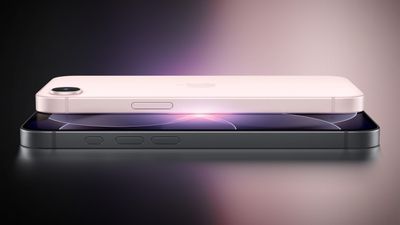
The iPhone 17e has an older chassis and display that's most comparable to the iPhone 14. There is an all-screen design with Face ID, but there continues to be a notch at the top of the device. The rest of the iPhone 17 lineup has the Dynamic Island, so the older notch design distinguishes the iPhone 17e as a lower-cost device.
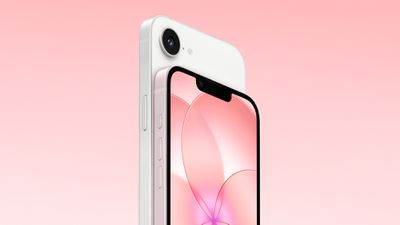
There are antenna bands at the top and sides of the iPhone 17e, with a power button on the right side and volume buttons and an Action button on the left.
The Action button is the same button that Apple included with all iPhone 17 models, and it replaces the Mute Switch. Unlike the iPhone 17, the iPhone 17e has a single-lens rear camera at the back with a more subtle camera bump.
Speaker holes, a microphone, and a USB-C charging port are located at the bottom of the iPhone 17e, and there's a MagSafe charging ring at the back. In some countries, there is a SIM slot, but the physical SIM has not been included in U.S. iPhones for several years now.
USB-C Port
The iPhone 17e has a USB-C port and it can be charged with a USB-C cable. Fast-charging is available with a 20W or better USB-C power adapter.
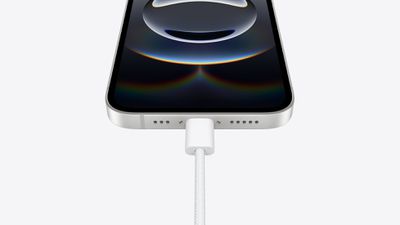
USB-C allows an iPhone to directly charge AirPods or an Apple Watch using a USB-C cable, and the iPhone 17e is able to provide up to 4.5W.
The USB-C port is limited to USB 2 transfer speeds of 480 Mb/s, the same as the iPhone 16e and the standard iPhone 17.
Water and Dust Resistance
The iPhone 17e has an IP68 rating for resistance to water and dust intrusion. An IP68 rating means it is able to withstand a depth of up to six meters (19.7 feet) for up to 30 minutes.
In the IP68 number, the 6 refers to dust resistance (and means the iPhone 16 can hold up to dirt, dust, and other particulates), while the 8 pertains to water resistance. IP6X is the highest dust resistance rating that exists. With the IP68 rating, the iPhone 17e can withstand splashes, rain, and accidental water exposure, but intentional water exposure should be avoided.
Water and dust resistance are not permanent conditions, according to Apple, and can deteriorate over time as a result of normal wear. Apple's standard warranty does not cover liquid damage, which means it's best to use caution when it comes to liquid exposure.
Action Button
The Action button on the iPhone 17e replaces the Ring/Silent switch above the volume buttons on the left side of the device. Apple designed the Action button to be customizable, and it can be set to perform one of several different actions in the Settings app.
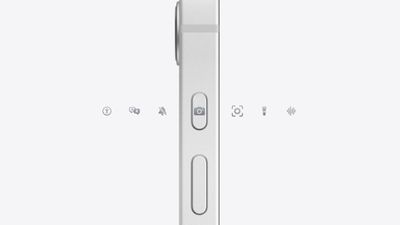
- Focus: Activate or deactivate a Focus mode (Do Not Disturb is the default).
- Camera: Take a photo (the default), a selfie, video, portrait, a portrait selfie, or activate Visual Intelligence.
- Flashlight: Turn the flashlight on or off.
- Voice Memos: Start or stop recording a voice memo with the Voice Memos app.
- Magnifier: Activate the Magnifier app to use the iPhone's camera as a magnifying glass to zoom in on small text or objects.
- Shortcuts: Open your favorite app, or run a shortcut created in or downloaded from the Shortcuts app, such as sending a message, playing a playlist, or controlling smart home devices.
- Control Center: Several Control Center controls can be assigned to the Action button.
- Accessibility: Access to various Vision settings (Classic Invert, Color Filters, Detection Mode, Increase Contrast, Reduce Motion, Reduce Transparency, Reduce White Point, Smart Invert, VoiceOver, Zoom) Motor settings (Switch Control, Voice Control, Full Keyboard Access, AssistiveTouch, Apple Watch Mirroring, Control Nearby Devices) Hearing settings (Background Sounds, Left/Right Balance, Live Captions) and General settings (Guided Access, Live Speech).
- Silent Mode: Like the Ring/Silent switch on existing iPhone models, toggle silent mode on or off, which mutes or unmutes the ringer and alerts.
- Translate: The Translate action launches the Translate app and start a text or conversation translation.
- No Action.
Activating the Action button is done with a long press, which limits it from being hit accidentally.
Display
The iPhone 17e has an OLED Super Retina XDR display with a 2,000,000:1 contrast ratio for blacker blacks and brighter whites, along with 800 nit typical max brightness and up to 1200 nits peak brightness for HDR photos, videos, TV shows, and movies.
The iPhone 17e has a resolution of 2532 by 1170 with 460 pixels per inch, which is the same resolution as the iPhone 14 display. The iPhone 17e's display is slightly lower resolution than the 2556 by 1179 resolution of the iPhone 17 display.
Wide color support provides vivid, true-to-life colors, and True Tone matches the white balance of the display to the ambient lighting for a paper-like viewing experience that's easier on the eyes. There's also a fingerprint-resistant oleophobic coating and support for Haptic Touch, which provides haptic feedback when interacting with the display.
The display is protected by Apple's next-generation "Ceramic Shield" 2 material, which is made by infusing nano-ceramic crystals into glass. The ceramic crystals are manipulated to optimize for clarity while maintaining toughness, with the display created in partnership with Corning.
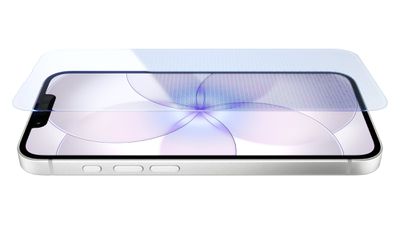
Ceramic Shield 2 is 3× more scratch resistant than the standard Ceramic Shield used in the iPhone 16e, so the iPhone 17e should better withstand minor wear and tear.
The iPhone 17e does not offer the ProMotion 120Hz refresh rate or Always-On display technology available for the rest of the iPhone 17 lineup.
Face ID
Like the iPhone 17 models, the iPhone 17e uses Face ID, Apple's facial recognition system that was introduced in 2017. The iPhone 17 has a Dynamic Island instead of a notch, but the iPhone 17e uses the iPhone 14 design and it continues to have a notch to house the TrueDepth camera hardware.
Face ID is used across iOS for unlocking the iPhone, allowing access to third-party passcode-protected apps, confirming app purchases, authenticating Apple Pay payments, and more.
Face ID works through a set of sensors and cameras. A Dot Projector projects tens of thousands of invisible infrared dots onto the surface of the skin to create a 3D facial scan that maps the curves and planes of each face, with the scan read by an infrared camera.
The facial depth map is relayed to the A19 chip where it is transformed into a mathematical model that the iPhone uses to authenticate identity. Face ID works in low light and in the dark, and with hats, beards, glasses, sunglasses, scarves, masks, and other accessories that partially obscure the face.
Front-Facing Camera Features
The iPhone 17e has the same 12-megapixel front-facing camera with an ƒ/1.9 aperture that's used in the iPhone 16e, with no upgrades.
The front-facing camera supports many of the same features as the rear camera, including Night mode for selfies, Smart HDR 5, Dolby Vision HDR recording, Deep Fusion, and the Photonic Engine. Apple added next-generation Portrait Control to the front-facing camera, but the newer Photographic Styles are not available, nor is Cinematic mode or Action mode when recording video.
A19 Chip
The iPhone 17e uses the same A19 chip as the iPhone 17, with a minor difference in GPU performance. The A19 chip is built using a third-generation 3-nanometer process, so it is faster and more efficient than the A18 used in the prior-generation iPhone 16e. The A19 chip is capable of handling Apple Intelligence tasks, and it supports the Apple Intelligence features in iOS.

There's a 6-core CPU with four performance cores and two efficiency cores, along with a 4-core GPU and a 16-core Neural Engine optimized for running large generative models. Apple has also upgraded the memory subsystem with more memory bandwidth.
Compared to the A19 chip in the iPhone 17, the iPhone 17e's chip has one fewer GPU core. Apple used a binned A19 chip, and binning is a common practice where chips with disabled or non-functional components are repurposed for lower-tier products. Using a binned A19 chip allows Apple to sell the iPhone 17e at a lower price than the iPhone 17.
Apple added a Neural Accelerator to each GPU core, improving daily workflows and the performance of local AI models like Apple Intelligence and on-device Siri. The A19 chip supports hardware-accelerated ray tracing. Ray tracing is useful for gaming, and the iPhone 17e can run console-quality games much like the other iPhone 17 models.
Storage Space
Entry-level iPhone 17e models start with 256GB of storage, which is double the starting storage of the iPhone 16e. 512GB is also available as an upgrade option.
Rear Camera
The iPhone 17e has a single-lens camera with the same 48-megapixel "Fusion" lens Apple used for the iPhone 16e. The high-resolution lens gives users an option to crop in to 2× optical zoom, or it can be used at the full 48-megapixel resolution.
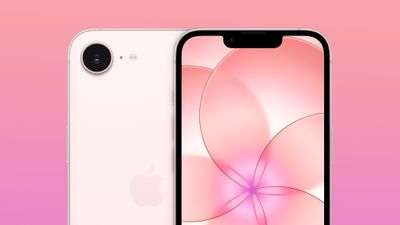
The iPhone 17e doesn't have a Telephoto lens and an Ultra Wide lens, and while Apple did add support portrait mode with depth control this year, it lacks the updated Photographic Styles, a macro mode, and many of the video capabilities available with the more expensive iPhones.
The camera features a 26mm focal length with ƒ/1.6 aperture that lets in plenty of light for situations where lighting is not optimal. It doesn't have the more advanced sensor-shift optical image stabilization, but there is optical image stabilization for crisper photos and videos. The lens supports both 24-megapixel and 48-megapixel high-resolution images.
Photo Features
- True Tone Flash - When using the flash, it matches the ambient lighting in the room so that images don't look too blue or too yellow.
- Portrait Features - You don't need to choose Portrait mode before capturing an image to get a portrait shot. You can snap a photo, and if there's a person or a pet, depth information is collected and Portrait mode is enabled automatically with a blurred background. The amount of blur can be adjusted in edit mode.
- Deep Fusion - Deep Fusion merges multiple images to cut down on noise and preserve detail in low-light shots.
- Photonic Engine - The Photonic Engine builds on Deep Fusion, combining images to provide more detail, preserve subtle textures, and improve color. It offers notable improvements for mid to low-light photos.
- Smart HDR 5 - Recognizes one or more people in a scene and optimizes contrast, lighting, and skin tones so each person in an image looks their best.
- Photographic Styles - These filters can boost or mute colors without affecting skin tone. They can be applied selectively to an image, but are not as advanced as the second-generation styles available for the other iPhone 17 models. Photographic Styles include Vibrant (boosts colors), Rich Contrast (darker shadows and deeper colors), Warm (accentuates golden undertones), or Cool (accentuates blue undertones). Tone and Warmth are customizable for each style, so you can get the exact look that you want.
- Night Mode - Takes a series of images over a few seconds and aggregates them to allow for photography in extreme low lighting situations.
- Portrait Lighting - Changes the lighting of Portrait mode photos with effects that include Natural, Studio, Contour, Stage, Stage Mono, and High-Key Mono.
- Panorama - Captures panoramic shots up to 63 megapixels.
- Burst mode - Allows a series of images to be captured all at once, which is good for high-action shots.
Video Features
The iPhone 17e supports up to 4K video recording at 24, 25, 30, or 60 frames per second. HDR recording, slo-mo video, and time-lapse are all supported. There's a QuickTake mode that allows you to capture video by holding down the photo button.
Spatial Audio sound recording is available for more dynamic, immersive sound for video recording, and there is a wind noise reduction that cuts down on wind sound when recording. The iPhone 17e also supports Audio Mix, a feature that is part of Spatial Audio capture. You can use it to adjust the way that voices sound in videos, and there are three options.
- In-frame - Only captures the voices of people on camera, even if people off camera are talking.
- Studio - Makes voices sound like the recording was done in a professional studio with sound-dampening walls. A recording sounds like the mic was close to the subject's mouth.
- Cinematic - Captures all voices and consolidates them to the front of the screen, which is how sound is formatted for movies.
Battery Life
The iPhone 17e has the exact same 4,005 mAh battery that was in the iPhone 16e, with no updates.
The battery lasts for up to 26 hours when watching videos, up to 21 hours when streaming video, and up to 90 hours when listening to audio.
Fast charging is supported over USB-C, and a 20W or higher battery provides a 50 percent battery charge in 30 minutes.
MagSafe Support
15W Qi-based wireless charging is supported with Qi2 and MagSafe chargers, which is a new feature in 2026. It does not support faster 25W charging with MagSafe or Qi2.2 like the iPhone 17.
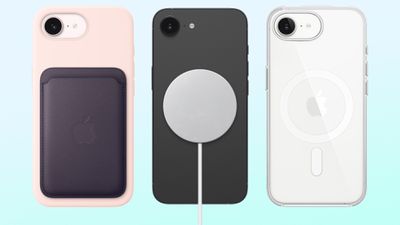
MagSafe was first introduced with the iPhone 12 models, but Apple didn't include it with the iPhone 16e. MagSafe adds a magnetic ring to the back of the iPhone, allowing it to connect to MagSafe chargers and other magnetic accessories.
5G Connectivity
C1X Modem
The iPhone 17e includes the second Apple-designed modem chip, called the C1X. Apple says that the is up to 2× faster than the C1X and even faster than the Qualcomm modem in the iPhone 17.
The C1X is more energy efficient than Qualcomm's modems, and it is the most power-efficient modem in an iPhone. Apple's C1X modem does not support mmWave 5G, so it is limited to sub-6GHz 5G worldwide.
mmWave 5G is the fastest version of 5G, but it is limited to short range and is thus most suitable for large, dense areas like airports, stadiums, and major urban cores. Sub-6GHz 5G is slower, but it is more widespread and ideal for suburban and rural areas.
eSIM
The iPhone 17e includes dual eSIM support, though in some countries there continues to be a physical SIM slot.
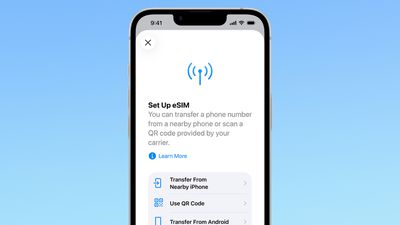
iPhone 17e models sold in the U.S., Canada, Mexico, Japan, Saudi Arabia, the United Arab Emirates, and more do not have a physical SIM.
eSIMs are more secure because there is no physical SIM to remove, and it also makes switching carriers easier. eSIM is supported in most countries worldwide.
5G Bands
The iPhone 17e in the United States supports more than 20 5G bands, and all of the sub-6GHz bands supported by other iPhone 17 models with a Qualcomm modem.
- Sub-6GHz 5G - n1, n2, n3, n5, n7, n8, n12, n14, n20, n25, n26, n28, n29, n30, n38, n40, n41, n48, n53, n66, n70, n71, n75, n76, n77, n78, n79
LTE Bands
The iPhone 17e models offers Gigabit LTE with 4x4 MIMO for connecting to LTE networks when 5G is unavailable. The following bands are supported.
- FDD-LTE - Bands 1, 2, 3, 4, 5, 7, 8, 12, 13, 14, 17, 18, 19, 20, 25, 26, 28, 29, 30, 32, 66, 71
- TDD-LTE - Bands 34, 38, 39, 40, 41, 42, 48, 53
Satellite Connectivity
The iPhone 17e can connect to satellites in emergency situations when cellular and Wi-Fi connections are not available. Apple has designed the Emergency SOS via satellite feature to allow the iPhone's antennas to connect to satellites operated by Globalstar.
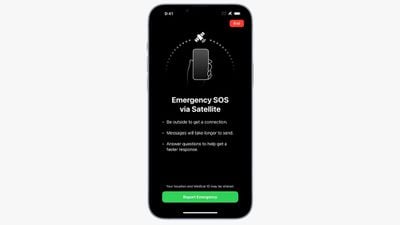
Satellite communications are designed to be used in open spaces with few trees so the iPhone can connect to a satellite that's in the sky. Apple has a walkthrough interface that instructs you how to hold the iPhone to connect to a satellite, and the company has developed a compressed messaging protocol because sending data via satellite can take minutes. In an area with no trees, a short message to emergency services can send in as little as 15 seconds.
Emergency SOS via satellite provides a series of important questions that you answer when it is activated, with these questions aimed at getting necessary details to emergency personnel as quickly as possible. The answers that you provide are sent directly to emergency services if text communication is supported in your area, or sent to relay centers staffed by Apple-trained specialists who can call emergency services on the user's behalf.
Satellite connectivity is mainly designed to allow users to contact emergency services in dire situations, but it can also be used to update your Find My location if you're camping or hiking off the grid, giving your family and friends peace of mind about where you are.
Emergency SOS via satellite is free for all iPhone 17e users for two years, and Apple has not yet provided details on what it might cost in the future.
Roadside Assistance via satellite is available, allowing iPhone users to contact local service providers for help if they have car trouble in an area without cellular or Wi-Fi connectivity. There is no charge to use Roadside Assistance with satellite, but there may be a fee charged by the roadside service provider.
The iPhone 17e also supports Messages via satellite, which means you can still send iMessages and text messages when you don't have access to cellular or Wi-Fi connectivity. You'll see a satellite icon in the upper right of the iPhone's display when satellite connectivity is available, and your messages are transmitted via satellite. Note that you still need a clear view of the sky for this to work.
Crash Detection
There's a high dynamic range gyroscope and a dual-core accelerometer capable of detecting G-force measurements of up to 256Gs in the iPhone 17e, and paired with other iPhone sensors like a barometer that can detect cabin pressure changes caused by deployed airbags, this hardware enables a Crash Detection feature.
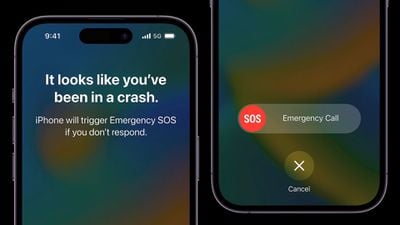
The iPhone 17e can detect a severe car crash and automatically dial emergency services when the car's occupants are seriously injured or unable to reach their phones. The GPS in the iPhone is able to detect speed changes, and the microphone is able to recognize loud sounds associated with severe car crashes. Crash Detection is also available on the Apple Watch, and the iPhone and Apple Watch work together to contact emergency services when an accident occurs.
Bluetooth, Wi-Fi, NFC, and GPS
While the other iPhone 17 models support Wi-Fi 7 (802.11be), the iPhone 17e is limited to older Wi-Fi 6 (802.11ax) technology, much like the iPhone 16e. Wi-Fi 6 means the iPhone 17e does not have the hardware to connect to the faster 6GHz Wi-Fi band made available with Wi-Fi 6E and Wi-Fi 7 modems.
The iPhone 17e supports Bluetooth 5.3, but it does not have an Ultra Wideband chip for indoor mapping and Precision Finding in the Find My app.
There is an NFC chip with reader mode for NFC accessories like door locks, plus power reserve is supported so a small amount of power is held back so that NFC can be used for a few hours after the iPhone's battery dies.
As for GPS, the iPhone 17e supports GPS, GLONASS, Galileo, QZSS, BeiDou, and NavlC location services.
