Apple Gains Early Access to Intel's Z68 Chipset for New iMacs

095114 intel z68

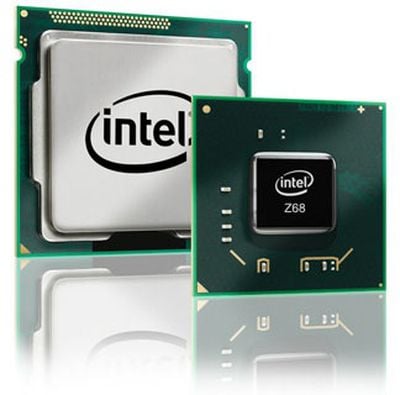
As noted by tonymacx86 (via 9 to 5 Mac), iFixit's teardown of the new iMac released earlier this week reveals that the machine utilizes Intel's BD82Z68 platform controller. The inclusion is notable in part because the Z68 chipset is reportedly not set for public introduction until next week.

Apple use of the Z68 chipset marks yet another exclusive for the company, which has occasionally been granted early access to forthcoming chip components ahead of public unveilings and competitors' offerings.

The Z68 chipset is also notable because it supports SSD caching, a system that marries conventional hard drives to small solid-state drives (SSDs) to provide a seamless user experience with increased performance as the most frequently-accessed files are placed on the speedy SSD.

Apple of course offers SSD options in its iMacs, either as a replacement for or in addition to the traditional hard drive included as standard. The iMac's SSD, however, is a full 256 GB drive rather than the much smaller-capacity drives envisioned for SSD caching. And while Apple doesn't seem to be supporting true SSD caching in the new iMacs, the company achieves a similar but less seamless effect by installing the operating system and applications on the SSD while leaving the traditional hard drive for media on systems configured with both types of drives.

Intel is reportedly preparing to launch its own "Larsen Creek" line of SSDs with capacities around 20 GB and specifically designed to support seamless SSD caching when paired with a traditional hard drive and a compatible chipset such as the Z68. It is unclear if Apple will be looking to incorporate such systems in future hardware, but the company is clearly interested in pursing SSD technology for its performance benefits.

Related Roundup: iMac
Buyer's Guide: iMac (Don't Buy)
Related Forum: iMac

Popular Stories

wwdc sans text feature

Apple Rumored to Announce New Product on February 19

Thursday February 5, 2026 12:22 pm PST by
Apple plans to announce the iPhone 17e on Thursday, February 19, according to Macwelt, the German equivalent of Macworld. The report, citing industry sources, is available in English on Macworld. Apple announced the iPhone 16e on Wednesday, February 19 last year, so the iPhone 17e would be unveiled exactly one year later if this rumor is accurate. It is quite uncommon for Apple to unveil...
maxresdefault

Apple Shows Off a Key Reason to Upgrade to the iPhone 17

Saturday February 7, 2026 9:26 am PST by
Apple today shared an ad that shows how the upgraded Center Stage front camera on the latest iPhones improves the process of taking a group selfie. "Watch how the new front facing camera on iPhone 17 Pro takes group selfies that automatically expand and rotate as more people come into frame," says Apple. While the ad is focused on the iPhone 17 Pro and iPhone 17 Pro Max, the regular iPhone...
Apple Logo Zoomed

Tim Cook Teases Plans for Apple's Upcoming 50th Anniversary

Thursday February 5, 2026 12:54 pm PST by
Apple turns 50 this year, and its CEO Tim Cook has promised to celebrate the milestone. The big day falls on April 1, 2026. "I've been unusually reflective lately about Apple because we have been working on what do we do to mark this moment," Cook told employees today, according to Bloomberg's Mark Gurman. "When you really stop and pause and think about the last 50 years, it makes your heart ...
Finder Siri Feature

Why Apple's iOS 26.4 Siri Upgrade Will Be Bigger Than Originally Promised

Friday February 6, 2026 3:06 pm PST by
In the iOS 26.4 update that's coming this spring, Apple will introduce a new version of Siri that's going to overhaul how we interact with the personal assistant and what it's able to do. The iOS 26.4 version of Siri won't work like ChatGPT or Claude, but it will rely on large language models (LLMs) and has been updated from the ground up. Upgraded Architecture The next-generation...
iOS 26

iOS 26.3 and iOS 26.4 Will Add These New Features to Your iPhone

Tuesday February 3, 2026 7:47 am PST by
While the iOS 26.3 Release Candidate is now available ahead of a public release, the first iOS 26.4 beta is likely still at least a week away. Following beta testing, iOS 26.4 will likely be released to the general public in March or April. Below, we have recapped known or rumored iOS 26.3 and iOS 26.4 features so far. iOS 26.3 iPhone to Android Transfer Tool iOS 26.3 makes it easier...

Top Rated Comments

alvindarkness Avatar
193 months ago
The Z68 does something far more important than just SSD Caching. It lets you use QuickSync. Basically letting you use the onboard intel HD GPU to accelerate tasks such as encoding while still relying on your dedicated GPU for normal graphics tasks.

Some Z68 motherboard manufacturers have decided to ignore this entirely, such as Gigabyte who dont supply power to the VAXG pin of the CPU - which means the Intel HD GPU is never powered.

I'd love to know what Apple have done. Does their implementation of the chipset/cpu allow OpenCL access to the HD2000/HD3000 on the iMacs?
Score: 6 Votes (Like | Disagree)
BTGeekboy Avatar
193 months ago
More than just SSD Caching...

The Z68 chipset has more functionality than just SSD caching. Check out the writeup from Tom's Hardware: http://www.tomshardware.com/reviews/z68-express-lucidlogix-virtu-ssd-caching,2888.html

A few things I learned from the article:
1. SSD Caching is not the best; it's far faster to use the SSD on its own. It does add a small speed bump when it's "primed" but, when I first read about it, it seemed like a lot of work for little gain, which I could already do better with existing chipsets.

2. The other big benefit, and I think this is even bigger than the SSD angle, is it allows you to access the excellent video transcoding capabilities that are included in the video chip built into the processor while making use of the add-in discrete graphics card to run the display. If they can combine that with Grand Central, that's a whole lot more performance out of the same chip than with a P67.
Score: 3 Votes (Like | Disagree)
Al Coholic Avatar
193 months ago
The big news here to me is Apple's continued quick access to components from intel that are barely out of the mold. Bodes well for future updates on their entire computer line.

Is it just me or has Apple been more aggressive with this in the last 12 months or so?
Score: 2 Votes (Like | Disagree)
Lesser Evets Avatar
193 months ago
I'm still waiting for an inexpensive and functioning PCI-e SSD for my tower. The tech is oddly behind for such things, on Mac. I'd love to have a 128gb SSD starter in a PCI-e slot... yeah, I'm slightly off topic.
Score: 2 Votes (Like | Disagree)
wacomme Avatar
193 months ago
It lets you use a cheap hdd to get speeds similar to an expensive large ssd.

Does this imply that with the arrival of TB supported drives, a cheap HD can be paired with a small SSD for speeds on par with a large SSD? Does TB access the Z68 chipset, assuming TB can be used as a boot drive?
Score: 2 Votes (Like | Disagree)
Hellhammer Avatar
193 months ago
That's the thing. We don't know how Apple has the display implemented in the iMac. They've implemented seamless display support allowing the use of both the IGP and a discrete GPU in the MacBook Pros so they can certainly implement something similar to allow the IGP to be active for QuickSync. As for Virtu, Apple would have to implement something similar themselves due to the different windowing/graphics system from Windows. It'll be interesting to see whether they've done so, perhaps in Lion. Certainly the performance of QuickSync over OpenCL for video encoding makes it worthwhile. Particularly, because all subsequent Intel processor generations look to keep and expand QuickSync support so adding support now will have long-term benefits and its something they will probably have to do eventually anyways.

And I've read the latest version of Virtu virtualizes the IGP rather than virtualizing the discrete GPU as before. Perhaps that also means that the display can be connected to the discrete GPU.

Hopefully Apple has since QS is definitely awesome. However, this could have been achieved with H67 as well since it supports the IGP as well so the main point of using Z68 still seems to be the SRT.
Score: 1 Votes (Like | Disagree)