Amazon has quietly launched a new web app called "Kindle Cloud Reader" that allows Chrome and Safari users to access their Kindle eBooks through their browsers. The Cloud Reader also supports the iPad version of Safari, giving Amazon a workaround to Apple's new subscription rules requiring any in-app sales to go through Apple's purchasing system.
The iPad version is especially good because the store is fully optimized for the device. And you can easily switch back and forth between the store and your own library. It feels like a native app, but it’s not.
The web app even supports local storage so that you can read your Kindle books even without a web connection.
Apple has been at odds with many content providers after implementing their new subscription rules preventing native iOS app publishers from selling content outside of Apple's own in-app system. Amazon complied with the rules by removing the Kindle Store button from their native application, but for the iPad now has this web-based option that does directly integrate with their sales system.
Saturday February 7, 2026 9:26 am PST by Joe Rossignol
Apple today shared an ad that shows how the upgraded Center Stage front camera on the latest iPhones improves the process of taking a group selfie.
"Watch how the new front facing camera on iPhone 17 Pro takes group selfies that automatically expand and rotate as more people come into frame," says Apple. While the ad is focused on the iPhone 17 Pro and iPhone 17 Pro Max, the regular iPhone...
Friday February 6, 2026 3:06 pm PST by Juli Clover
In the iOS 26.4 update that's coming this spring, Apple will introduce a new version of Siri that's going to overhaul how we interact with the personal assistant and what it's able to do.
The iOS 26.4 version of Siri won't work like ChatGPT or Claude, but it will rely on large language models (LLMs) and has been updated from the ground up.
Upgraded Architecture
The next-generation...
Thursday February 5, 2026 12:22 pm PST by Joe Rossignol
Apple plans to announce the iPhone 17e on Thursday, February 19, according to Macwelt, the German equivalent of Macworld.
The report, citing industry sources, is available in English on Macworld.
Apple announced the iPhone 16e on Wednesday, February 19 last year, so the iPhone 17e would be unveiled exactly one year later if this rumor is accurate. It is quite uncommon for Apple to unveil...
Monday February 9, 2026 6:24 am PST by Joe Rossignol
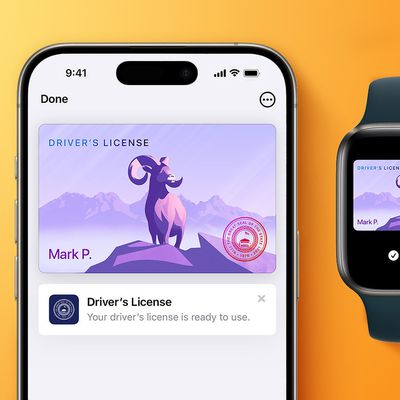
In select U.S. states, residents can add their driver's license or state ID to the Apple Wallet app on the iPhone and Apple Watch, and then use it to display proof of identity or age at select airports and businesses, and in select apps.
The feature is currently available in 13 U.S. states and Puerto Rico, and it is expected to launch in at least seven more in the future.
To set up the...
New MacBook Pro models with the M5 Pro and M5 Max chips could arrive as soon as Monday, March 2, according to Bloomberg's Mark Gurman.
In today's "Power On" newsletter, Gurman said that the release of new MacBook Pro models is tied to the release of macOS Tahoe 26.3. The launch is said to be slated for as early as the week of March 2. He added that the M4 Pro and M4 Max models on sale today...
Stuff like this shows how useful HTML5 can be. I'm pleased to see things like this myself, great work from Amazon.
Looking forward to see more things like this powered by HTML5.
Since it's HTML5, it's a bit like Amazon beat Apple at their own game with this. :D
And it really does serve Apple right for the terms they enacted. It's also a good move should Apple decide to become even more anti-competitive with their App Store terms.
Seems like a pretty brilliant use of the latest HTML5 technologies (especially with the off-line functionality). The obvious benefit, as mentioned, would be getting around Apple's "give us 30% of the price for in-app purchases" rule; but it would seem to have other advantages as well. If Apple chose to dramatically change the API in a future release of iOS - or if Google did the same with Android, for that matter - Amazon wouldn't have to break a sweat. Kindle users would continue to have full access to their books on the iPad with no extra effort or feverish overtime work by their programers to update. It's not as if Apple or Google can remove HTML5 functionality without repercussions...
A lot of the scrap on the iOS app store would be much better done as web apps. Much more universal, much less of a pain to develop for the developers and also would help with the crowding in the app store.
Let's face it, many of the apps are just document viewers or smallish databases. The problem is with the "gold rush", everyone went native, destroying basically 10 years of moving stuff to the Web where it fit gracefully. The 80s and 90s was where boxed software was the rage, where you had to install it locally. The late 90s brought us rich web applications where server-side dynamically generated HTML technologies the likes of J2EE and other, simpler stacks.
HTML5 solves a lot of the issues we had client side (offline storage, richer UIs) and moving forward, a lot of apps just make sense as webapps.