A Look at How GT Advanced Makes Sapphire Glass for Smartphone Displays - MacRumors
Skip to Content

A Look at How GT Advanced Makes Sapphire Glass for Smartphone Displays

Yesterday, the State of Arizona and GT Advanced announced that Apple is building a new 700-employee factory in Arizona to make sapphire glass. Apple will contract with GT Advanced, with that company owning and operating furnaces and related equipment at the facility.

Back in April, Pocketnow went to GT Advanced's factory in Massachusetts to find out how sapphire displays are made. It's likely that the facility in Arizona will use a similar process, though we do not yet know what Apple will use the sapphire for. A safe bet would be the company's rumored smart watch product -- many luxury watches use sapphire glass because of its durability.

The process is relatively straightforward: a sapphire seed, about the size and shape of a hockey puck, is placed at the bottom of a single-use molybdenum barrel called a crucible. The crucible is then filled with a mixture of condensed corundum -a crystalline form of aluminum oxide- and a material called “crackle,” sapphire material left over from previous runs. The full crucible is then placed inside the furnace, where it sits atop the “finger,” a small liquid helium-cooled platform that prevents the sapphire seed from melting too early. The furnace is sealed, the air is evacuated, and the temperature is brought up to 2100 degrees Celsius to allow the materials to melt together. (The video says 2200, but that’s wrong. It’s 2100, for all you making-sapphire-at-home hobbyists.) The material is put through a series of cooling cycles over the next 16 or 17 days, during which time the sapphire slowly crystallizes from bottom to top. The end result is this: a 115kg cylindrical section of industrial sapphire called a “boule.”

The new factory is expected to use next generation, large capacity furnaces with an emphasis on lower cost, higher volume sapphire glass manufacturing.

Apple currently uses small pieces of sapphire glass -- which provides superior durability and scratch resistance to other forms of glass -- to protect the cameras on the iPhone and on the home button for the new Touch ID-equipped iPhone 5s. A report from earlier this year suggested that future smartphones may use sapphire, a crystalline form of aluminum oxide, instead of more traditional forms of glass.

Popular Stories

Apple Event Logo

Apple's Next Era Begins September 1

Thursday May 7, 2026 10:36 am PDT by
Apple recently announced that Tim Cook will be stepping down as CEO later this year, after 15 years of leading the company. Effective September 1, Apple's hardware engineering chief John Ternus will become the company's next CEO, while Cook will become executive chairman of Apple's board of directors. In his new role, Apple said Cook will assist with "certain aspects" of the company,...
Four iPhone 18 Pro Colors Mock Feature

iPhone 18 Pro Launching in September With These 10 New Features

Saturday May 9, 2026 6:03 am PDT by
While the iPhone 18 Pro and iPhone 18 Pro Max are not launching until September, there are already plenty of rumors about the devices. It was initially reported that the iPhone 18 Pro models would have fully under-screen Face ID, with only a front camera visible in the top-left corner of the screen. However, the latest rumors indicate that only one Face ID component will be moved under the...
Apple Watch Series 10 Jet Black Touch ID

Apple Watch Series 12 and watchOS 27: What to Expect Later This Year

Friday May 8, 2026 2:07 pm PDT by
While not too much has been reported about the next Apple Watch models, there are a few rumors about potential design changes and watchOS 27 features. Apple Watch Series 12 and Apple Watch Ultra 4 models are expected to be released in September, and we have outlined some of the key rumored hardware and software changes below. A new Apple Watch SE is not expected this year, as that model was...

Top Rated Comments

hiptobesquare Avatar
163 months ago
Sapphire glass is crystalline Aluminum Oxide...

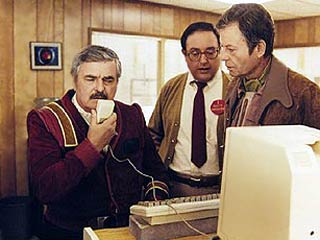
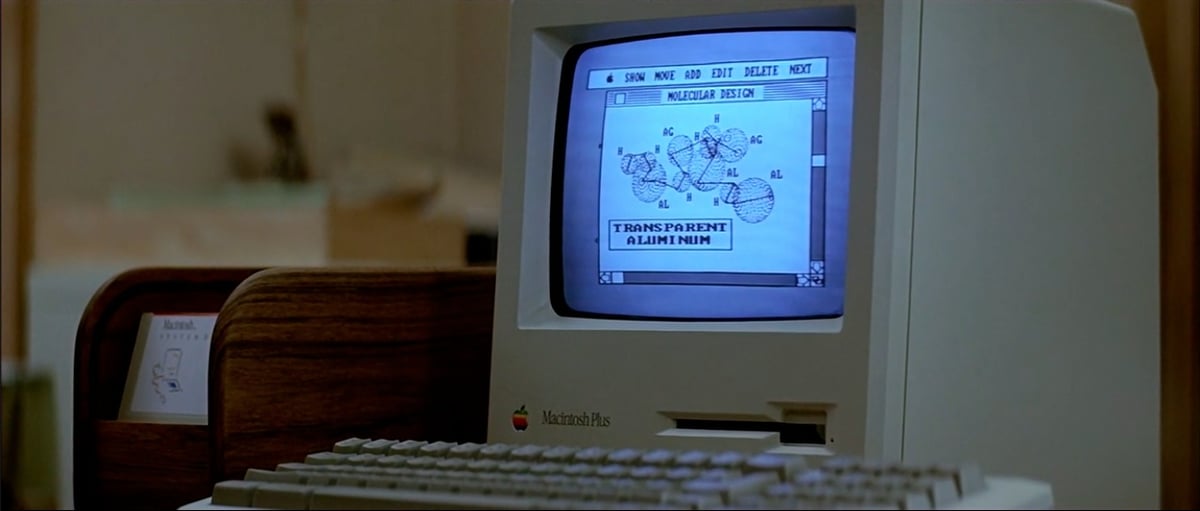
I suppose it is fitting that Apple is getting into the transparent aluminum oxide crystal manufacturing business, considering that Scotty gave a 20th century engineer the formula for transparent aluminum, using a Mac Plus.


"Computer. Hello, Computer..."

"The keyboard... how quaint."

Quaint indeed now, with on-screen keyboards, and voice recognition and response. Scotty could actually converse with a Mac with dictation and voice commands, and iPhone's Siri. Majel Barret should have been the voice for Siri and Apple's Speech response. (Better than Siri or Vicki.)

Just imagine what another 30 years will do for technology... considering the last 30 years between the original 1984 Macintosh, and the ready-for-2014 iPad Air and next month's Mac Pro.
Score: 15 Votes (Like | Disagree)
163 months ago
.
Score: 13 Votes (Like | Disagree)
hiptobesquare Avatar
163 months ago
She died in 2008 :\

I know, but one would think there are enough voice samples from Star Trek and other recordings, to create a reasonable digital facsimile of her voice-print, for her to live on in the culture, as the voice of actual computers, as well as the voice of fictional star trek computers.

RIP Majel Barrett, Gene Roddenberry, DeForest Kelley, and James Doohan.
Score: 3 Votes (Like | Disagree)
163 months ago
This is pretty fascinating, I didn't even know they could make them artificially! Here I thought they had to mine sapphires and then press them into screens
Score: 2 Votes (Like | Disagree)
paulsdenton Avatar
163 months ago
Amazing stuff

Apple can't go wrong getting into the use of sapphire. It is an incredibly versatile product. For one thing it is awesomely hard, far harder than Gorilla Glass. I've never had a problem with Gorilla Glass but it is used by everyone and using a superior ingredient is consistent with Apple quality. Helps differentiate the Apple brand as superior (yet again).

It transmits light across the entire spectrum with no distortion. That's why it is used in the scanners at checkout counters; almost no read errors.

Less known is it's non-optical possibility, as substrate for chip manufacture. It has a low conductivity rate for electric current but a high transmission rate for heat. This obviously would allow it to conduct heat away from high capacity processors.

IMHO this is one of the materials that will find greater and greater use in the types of products that Apple now builds and may build in the future. maybe a transparent iPhone in our future!
Score: 2 Votes (Like | Disagree)
Alphabetize Avatar
163 months ago
I'm not all that interested in keeping my screen scratch free, I'd really like my screen to be shatter resistant/proof instead.
Score: 1 Votes (Like | Disagree)