Google today announced that it is bringing Chrome Apps to the Mac, following a beta period that began in May. First introduced in September for Windows and Chromebook users, Chrome Apps are designed to function like native Mac apps, working offline, updating automatically, and syncing on any computer where a user is signed into Chrome.
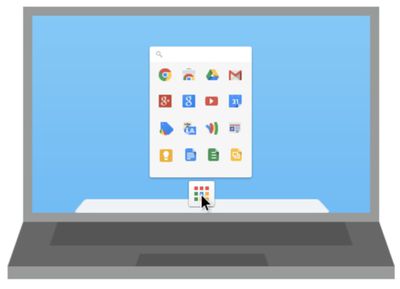
Chrome Apps work offline, update automatically and sync to any computer where you're signed into Chrome, so you can pick up where you left off. Your Chrome Apps on Mac behave and feel just like native software. For example, you can find your Chrome Apps in the Applications folder on the Dock. Search for apps by name in the Spotlight search—just like any other Mac program that you already use.
Chrome Apps, which are separate from Chrome browser apps, are downloaded into the applications folder and work like any other Mac app. The apps have access to local storage for offline support, differentiating them from standard Chrome apps, and are able to easily sync content between multiple computers.
Chrome Apps for the Mac also work with Google's Chrome App Launcher, which will be automatically installed when any Chrome App is downloaded. The Chrome App Launcher aggregates all Chrome Apps into one convenient expandable grid on the Mac's dock.
Google has several different fully functional Chrome Apps available for download from its Chrome Web Store, including offerings like video editing app WeVideo Next and project management app Smartsheet.
Thursday February 5, 2026 12:54 pm PST by Joe Rossignol
Apple turns 50 this year, and its CEO Tim Cook has promised to celebrate the milestone. The big day falls on April 1, 2026.
"I've been unusually reflective lately about Apple because we have been working on what do we do to mark this moment," Cook told employees today, according to Bloomberg's Mark Gurman. "When you really stop and pause and think about the last 50 years, it makes your heart ...
Thursday February 5, 2026 12:22 pm PST by Joe Rossignol
Apple plans to announce the iPhone 17e on Thursday, February 19, according to Macwelt, the German equivalent of Macworld.
The report, citing industry sources, is available in English on Macworld.
Apple announced the iPhone 16e on Wednesday, February 19 last year, so the iPhone 17e would be unveiled exactly one year later if this rumor is accurate. It is quite uncommon for Apple to unveil...
Friday February 6, 2026 3:06 pm PST by Juli Clover
In the iOS 26.4 update that's coming this spring, Apple will introduce a new version of Siri that's going to overhaul how we interact with the personal assistant and what it's able to do.
The iOS 26.4 version of Siri won't work like ChatGPT or Claude, but it will rely on large language models (LLMs) and has been updated from the ground up.
Upgraded Architecture
The next-generation...
Tuesday February 3, 2026 7:47 am PST by Joe Rossignol
While the iOS 26.3 Release Candidate is now available ahead of a public release, the first iOS 26.4 beta is likely still at least a week away. Following beta testing, iOS 26.4 will likely be released to the general public in March or April.
Below, we have recapped known or rumored iOS 26.3 and iOS 26.4 features so far.
iOS 26.3
iPhone to Android Transfer Tool
iOS 26.3 makes it easier...
The iPhone 18 Pro Max will feature a bigger battery for continued best-in-class battery life, according to a known Weibo leaker.
Citing supply chain information, the Weibo user known as "Digital Chat Station" said that the iPhone 18 Pro Max will have a battery capacity of 5,100 to 5,200 mAh. Combined with the efficiency improvements of the A20 Pro chip, made with TSMC's 2nm process, the...
If you don't think Apple does it, you're fooling yourself.
Note that I did not in any way, shape, or form defend what Google does.
Follow the money.
Yes, Apple does collect very limited and anonymous data, which they make clear--and let you choose to opt in or out very easily. Example: detection of traffic jams for iOS Maps. It's a useful and legitimate tool for both Apple and Google.
But Apple's income is founded on happy users becoming return customers.
Google's customers are advertisers. Users are what's for sale! Their income depends on collecting personal info to make ads worth more.
Google's incentive to collect more data, less anonymously, build profiles, and make it hard to know what's collected, is far greater. Their history bears this out. They touch the creepy line often, and occasionally cross it. Very different behavior from Apple.