New Version of 'January 1, 1970 Bug' Can Brick Pre-iOS 9.3.1 Devices Over Compromised Wi-Fi Networks

Security researchers Patrick Kelley and Matt Harrigan have uncovered a new way to exploit the infamous January 1, 1970 bug that was found to be the cause of bricked iPhones in February. Despite Apple's patch of the original issue in iOS 9.3, Kelley and Harrigan discovered the way in which an iPhone constantly looks for trusted Wi-Fi networks could lend itself to the malicious bricking of a Wi-Fi enabled Apple device, without the user even knowing it was happening.
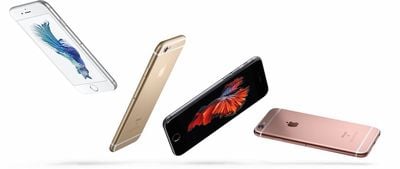
iPhone-6s-main
In a hypothetical example described by Krebs on Security, if a user confirms that a network called "attwifi" is a trusted connection, any subsequent network they come into contact with boasting the same name will connect with their iPhone. That way, when users revisit the same location frequently, they never have to fiddle with going through the Wi-Fi set-up process again. But the feature could be used to silently weaponize the 1970 bug, connecting users to similarly-named networks they've never encountered and altering the date and time stamps of their iOS devices.

In their research, Kelley and Harrigan used this feature of iPhones and iPads to build a nefarious Wi-Fi network, harnessing the requirement of iOS devices to occasionally connect to a network time protocol (NTP) server to keep date and time in sync. Once a user connected to their thought-to-be trusted network, the iPhone would reconfigure its software to update the date and time information from Kelley and Harrigan's own NTP date, which they specified as January 1, 1970.

Harrigan, president and CEO of San Diego-based security firm PacketSled, described the meltdown thusly:

“One thing we noticed was when we set the date on the iPad to 1970, the iPad display clock started counting backwards. While we were plugging in the second test iPad 15 minutes later, the first iPad said it was Dec. 15, 1968. I looked at Patrick and was like, ‘Did you mess with that thing?’ He hadn’t. It finally stopped at 1965, and by that time [the iPad] was about the temperature I like my steak served at.”

Harrigan and Kelley coordinated with Apple when they discovered their findings to avoid preempting the company's promise of a fix for the bug, and possibly encouraging its malicious use in the wild. As such, the company has fixed the issue and anyone running iOS 9.3.1 will be protected from the new iteration of the 1970 bug. Older iOS releases, including the original iOS 9.3 update, are still susceptible, however.

With the release of their research, the two security experts are understandably encouraging users to update their iPhones and iPads as soon as possible, and have created a video to better explain the issue.

Related Forum: iOS 9

Popular Stories

maxresdefault

Apple Shows Off a Key Reason to Upgrade to the iPhone 17

Saturday February 7, 2026 9:26 am PST by
Apple today shared an ad that shows how the upgraded Center Stage front camera on the latest iPhones improves the process of taking a group selfie. "Watch how the new front facing camera on iPhone 17 Pro takes group selfies that automatically expand and rotate as more people come into frame," says Apple. While the ad is focused on the iPhone 17 Pro and iPhone 17 Pro Max, the regular iPhone...
wwdc sans text feature

Apple Rumored to Announce New Product on February 19

Thursday February 5, 2026 12:22 pm PST by
Apple plans to announce the iPhone 17e on Thursday, February 19, according to Macwelt, the German equivalent of Macworld. The report, citing industry sources, is available in English on Macworld. Apple announced the iPhone 16e on Wednesday, February 19 last year, so the iPhone 17e would be unveiled exactly one year later if this rumor is accurate. It is quite uncommon for Apple to unveil...
Apple Logo Zoomed

Tim Cook Teases Plans for Apple's Upcoming 50th Anniversary

Thursday February 5, 2026 12:54 pm PST by
Apple turns 50 this year, and its CEO Tim Cook has promised to celebrate the milestone. The big day falls on April 1, 2026. "I've been unusually reflective lately about Apple because we have been working on what do we do to mark this moment," Cook told employees today, according to Bloomberg's Mark Gurman. "When you really stop and pause and think about the last 50 years, it makes your heart ...
Finder Siri Feature

Why Apple's iOS 26.4 Siri Upgrade Will Be Bigger Than Originally Promised

Friday February 6, 2026 3:06 pm PST by
In the iOS 26.4 update that's coming this spring, Apple will introduce a new version of Siri that's going to overhaul how we interact with the personal assistant and what it's able to do. The iOS 26.4 version of Siri won't work like ChatGPT or Claude, but it will rely on large language models (LLMs) and has been updated from the ground up. Upgraded Architecture The next-generation...
iOS 26

iOS 26.3 and iOS 26.4 Will Add These New Features to Your iPhone

Tuesday February 3, 2026 7:47 am PST by
While the iOS 26.3 Release Candidate is now available ahead of a public release, the first iOS 26.4 beta is likely still at least a week away. Following beta testing, iOS 26.4 will likely be released to the general public in March or April. Below, we have recapped known or rumored iOS 26.3 and iOS 26.4 features so far. iOS 26.3 iPhone to Android Transfer Tool iOS 26.3 makes it easier...

Top Rated Comments

Tubamajuba Avatar
128 months ago
Apple iOS, it just works... oh wait :eek:
Dude, give it up. We get it, you hate all things Apple.
Score: 12 Votes (Like | Disagree)
braddick Avatar
128 months ago
this issue reminds me of the joke, "The patient says, "Doctor, it hurts when I do this." "Then don't do that!"
Score: 8 Votes (Like | Disagree)
KALLT Avatar
128 months ago
Apple products like the iPad (and virtually all mass-market wireless devices) are designed to automatically connect to wireless networks they have seen before. They do this with a relatively weak level of authentication: If you connect to a network named “Hotspot” once, going forward your device may automatically connect to any open network that also happens to be called “Hotspot.”

For example, to use Starbuck’s free Wi-Fi service, you’ll have to connect to a network called “attwifi”. But once you’ve done that, you won’t ever have to manually connect to a network called “attwifi” ever again. The next time you visit a Starbucks, just pull out your iPad and the device automagically connects.
That right there is your problem. As if automatic joining of known SSIDs was not a bad enough idea, iOS also offers no way to see, edit and remove these known SSIDs, unless you are in range. You can only reset your networking settings to clear everything, but who does that on a regular basis? I do not understand why Apple has not done anything about it. I’d wager that there are many iPhone users out there who have long lists of known SSIDs.
Score: 7 Votes (Like | Disagree)
maxsix Avatar
128 months ago
Apple iOS, it just works... oh wait :eek:
Score: 7 Votes (Like | Disagree)
Traverse Avatar
128 months ago
I'm still astounded at how people find these. Like old hacks in Gameboy color games: "take 3 steps left, head down until you're spotted, press start at the right time to freeze the game, go here, turn around three times = unlimited whatever"

Who figures these out! :eek:
[doublepost=1460563286][/doublepost]
Apple should just change it to where you cannot change the date on iOS, and all times are adjusted automatically through Wi-Fi or cellular through Apple's servers only.
But then my aunt couldn't cheat at Candy Crush! :p
Score: 6 Votes (Like | Disagree)
Soba Avatar
128 months ago
Should never happen if apple is using ntp - the spec and all common implementations forbid time travel (setting clock backwards). So this is purely and Apple bug, not ntp.
Very tiny nitpick: In some situations, the clock will indeed be set backwards with ntp, but it's an unusual circumstance and the change should be quite small.

However, ntp's defaults (last I knew) forbid any clock correction exceeding 1000 seconds, so this kind of massive, 40-year correction should not be possible under any circumstances. Either Apple wrote their own time sync client (why?) or changed this default in their implementation of ntp. (Again, why?)

Incorrect device clocks have major security implications for any network, so even without this bricking bug, Apple should be paying closer attention to this. Time sync should never be an afterthought.
Score: 6 Votes (Like | Disagree)