Late last month Apple revealed it had partnered with hearing aid company Cochlear to launch the first Made For iPhone Cochlear implant, which can stream audio from an iOS device directly to a surgically embedded sound processor.

Now, in a new Wired article titled "How Apple is Putting Voices in Users' Heads – Literally", the company has offered up a few more details on how it was able to achieve the technical feat of transmitting high bandwidth data to such a low-powered device.
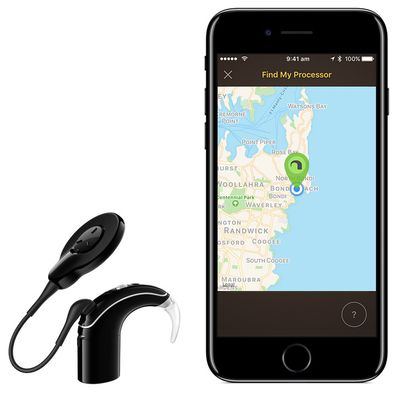
cochlear iphone
To solve the problem of streaming high-quality audio without draining the tiny zinc batteries in hearing aids, Apple's accessibility team essentially had to create a more advanced version of the existing Bluetooth Low Energy profile.

Bluetooth LE is only meant to be used to send low-bandwidth data signals, like getting heart rate monitor readings from wearables, so Apple developed a more advanced version called Bluetooth Low Energy Audio (BLEA), which can stream high quality audio whilst preserving the LE profile's battery-extending properties.

Apple has had BLEA in the works for some time, and the profile appeared in patents dating back to 2014, but this is the first time Apple has spoken about using the profile in an actual consumer product.

Sarah Herrlinger, Apple's director of global accessibility policy, summarized the company's efforts with the following comments:

While our devices have been built to support hearing aids for years, we found that the experience of people trying to make a phone call was not always a good one. So we brought together a lot of people in different areas around the company to start investigating ways to make the process easier.

Our goal was to get rid of all those extra things that need batteries and can get in the way, so when a phone call comes in you just hit the button to answer it and that sound is streaming into your hearing aid.

The technical detail about the Bluetooth profile is revealed in the context of the story of implant wearer Mathias Bahnmueller, a 49-year-old who suffers from hearing loss and uses the system developed by Apple and Cochlear. Called the Nucleus 7 sound processor, the device won FDA approval in June and is the first of its kind in the hearing aid industry.

The extended article is certainly worth a read, and Tim Cook has already shared the piece on Twitter, saying he is proud of the work Apple is doing in this area.

Top Rated Comments

69Mustang Avatar
111 months ago
Tech used to improve lives. That is always a good thing.
Score: 6 Votes (Like | Disagree)
69Mustang Avatar
111 months ago
There still is a device that goes on the ear with a battery.
Although the battery is outside, the goal of the BLEA technology is to reduce the load placed on the battery. Less load, less need to recharge frequently. If a regular BT load causes you to charge the hearing aid 2, 3, 4x (just guesses here) more than a hearing aid without BT, it's a less effective device.
Score: 1 Votes (Like | Disagree)
budselectjr Avatar
111 months ago
Although the battery is outside, the goal of the BLEA technology is to reduce the load placed on the battery. Less load, less need to recharge frequently. If a regular BT load causes you to charge the hearing aid 2, 3, 4x (just guesses here) more than a hearing aid without BT, it's a less effective device.
agreed. I wasn’t trying to play down the achievement. Was just trying to clarify as I think the article summary in it’s current form might slightly mislead some people.
Score: 1 Votes (Like | Disagree)
loftiness Avatar
111 months ago
BLEA was basically a "hack" on BLE they created in 2015 when they worked with Resound on the first made-for-iPhone hearing aids. normal bluetooth streaming was too power hungry. This is just the same thing applied to implants, not a new breakthrough per se. Does make big difference for patients though.

If a regular BT load causes you to charge the hearing aid 2, 3, 4x (just guesses here) more than a hearing aid without BT, it's a less effective device.
- this is a cochlear implant, not a hearing aid
- most hearing aids still have replaceable batteries (last for a week~)
Score: 1 Votes (Like | Disagree)
Pilgrim1099 Avatar
111 months ago
Although the battery is outside, the goal of the BLEA technology is to reduce the load placed on the battery. Less load, less need to recharge frequently. If a regular BT load causes you to charge the hearing aid 2, 3, 4x (just guesses here) more than a hearing aid without BT, it's a less effective device.
I use a digital BTE ( behind the ear ) hearing aid and the battery is easily accessible that way, lasting about a week or two . Most Cochlear implants are set up similarly to what's mentioned in the article although without bluetooth. You just control the volume or hearing modes ( programmed by the audiologist ) on the hearing aid.

I would never use a cochlear implant since they cost an arm and a leg, requiring intense speech therapy all over again and a re-adjustment phase. I'm old school and liked the analog hearing aids better due to the rich sonorous sound uncompressed. The digital one I have is pretty good but the way you listen to music with it sounds different than analog. Most of the music had dropped bass on certain parts of the track that didn't sound normal, so I had to get my audiologist to remove the compression so that it sounds better with my open-air Sennheiser headphones with standard headphone jack ( one reason why I'm not a fan of the Air Pod design ).

If I wanted to make a video call on Skype, for example, I have to use a special headset that sits next to my hearing aid tethered with a 3.5 jack wire to the phone or iPad. That way the headset uses t-coil mode, blocking the entire background in total silence while I can only hear the person or the music. That headset has no need to be recharged.

I'm aware of a bluetooth hearing aid that Apple partnered up with another company that uses the iPhone to control it, but I'm skeptical about the idea behind it. If the phone gets lost, the person is not going to be able to manipulate the hearing aid's control settings.

And lastly, cochlear implants are a big issue with the deaf community as many refuse to touch it, preferring to stay with hearing aids or none. I don't use sign language but the majority of those I've met are extremely fluent with it.
Score: 1 Votes (Like | Disagree)
GubbyMan Avatar
111 months ago
I thought the part that had the battery was outside the ear and could easily be replaced or charged?
Score: 1 Votes (Like | Disagree)

Popular Stories

Apple Logo Zoomed

Tim Cook Teases Plans for Apple's Upcoming 50th Anniversary

Thursday February 5, 2026 12:54 pm PST by
Apple turns 50 this year, and its CEO Tim Cook has promised to celebrate the milestone. The big day falls on April 1, 2026. "I've been unusually reflective lately about Apple because we have been working on what do we do to mark this moment," Cook told employees today, according to Bloomberg's Mark Gurman. "When you really stop and pause and think about the last 50 years, it makes your heart ...
wwdc sans text feature

Apple Rumored to Announce New Product on February 19

Thursday February 5, 2026 12:22 pm PST by
Apple plans to announce the iPhone 17e on Thursday, February 19, according to Macwelt, the German equivalent of Macworld. The report, citing industry sources, is available in English on Macworld. Apple announced the iPhone 16e on Wednesday, February 19 last year, so the iPhone 17e would be unveiled exactly one year later if this rumor is accurate. It is quite uncommon for Apple to unveil...
Finder Siri Feature

Why Apple's iOS 26.4 Siri Upgrade Will Be Bigger Than Originally Promised

Friday February 6, 2026 3:06 pm PST by
In the iOS 26.4 update that's coming this spring, Apple will introduce a new version of Siri that's going to overhaul how we interact with the personal assistant and what it's able to do. The iOS 26.4 version of Siri won't work like ChatGPT or Claude, but it will rely on large language models (LLMs) and has been updated from the ground up. Upgraded Architecture The next-generation...
iOS 26

iOS 26.3 and iOS 26.4 Will Add These New Features to Your iPhone

Tuesday February 3, 2026 7:47 am PST by
While the iOS 26.3 Release Candidate is now available ahead of a public release, the first iOS 26.4 beta is likely still at least a week away. Following beta testing, iOS 26.4 will likely be released to the general public in March or April. Below, we have recapped known or rumored iOS 26.3 and iOS 26.4 features so far. iOS 26.3 iPhone to Android Transfer Tool iOS 26.3 makes it easier...
iphone 17 pro dark blue 1

iPhone 18 Pro Max Rumored to Deliver Next-Level Battery Life

Friday February 6, 2026 5:14 am PST by
The iPhone 18 Pro Max will feature a bigger battery for continued best-in-class battery life, according to a known Weibo leaker. Citing supply chain information, the Weibo user known as "Digital Chat Station" said that the iPhone 18 Pro Max will have a battery capacity of 5,100 to 5,200 mAh. Combined with the efficiency improvements of the A20 Pro chip, made with TSMC's 2nm process, the...