Judge Rules FBI Cannot View a Phone Lock Screen Without a Warrant

The FBI broke the law when it powered on a suspect's smartphone to take a photo of his lock screen without a warrant, a U.S. District Court Judge has ruled (via Ars Technica).
iphone11faceid
In a Seattle court, Judge John Coughenour determined that gathering evidence from a lock screen constitutes a search, therefore doing so without first obtaining a warrant violates the Fourth Amendment, which prohibits unreasonable search seizure.

Joseph Sam from Washington state was arrested in May 2019 and indicted on several charges related to robbery and assault. The suspect was in possession of a Motorola smartphone. According to Sam, one of the officers present at his arrest pressed the power button to bring up the phone's lock screen.

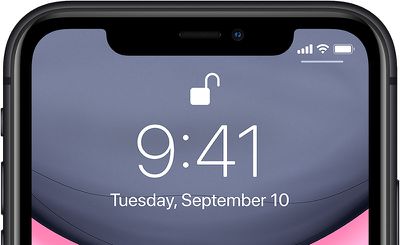
What is known is that on February 13, 2020, the FBI removed Mr. Sam's phone from inventory, powered the phone on, and took a photograph of the lock screen [...] The photograph shows the name “STREEZY” right underneath the time and date.

The suspect's name revealed on the phone's unlock screen turned out to be useful evidence. Sam's lawyer subsequently filed a motion arguing that this evidence should not have been sought without a warrant and should therefore be suppressed.

Judge Coughenour ruled that the police were within their rights to look at the lock screen at the time of the arrest, given that certain circumstances allow for a search to take place without a warrant. However, investigators involved in later search and seizure must obtain a warrant first.

The police's examination took place either incident to a lawful arrest or as part of the police's efforts to inventory the personal effects found during Mr. Sam's arrest. The FBI's examination, by contrast, occurred long after the police had arrested Mr. Sam and inventoried his personal effects. Those examinations present significantly different legal issues […]

The FBI physically intruded on Mr. Sam's personal effect when the FBI powered on his phone to take a picture of the phone's lock screen.

Usually when the topic of a smartphone search comes up in court, the question has to do with forcing suspects to unlock their phone, so this is the first case where merely viewing a lock screen has been subject to judicial scrutiny.

A 2019 U.S. court ruling judged that law enforcement officials can't force smartphone users to unlock their devices using fingerprints or other biometric features such as facial recognition, since doing so would run afoul of the Fourth and Fifth Amendments.

Previous to the 2019 ruling, multiple cases involved law enforcement forcing suspects to unlock their iPhones and other devices using biometric authentication.

Note: Due to the political or social nature of the discussion regarding this topic, the discussion thread is located in our Political News forum. All forum members and site visitors are welcome to read and follow the thread, but posting is limited to forum members with at least 100 posts.
Popular Stories

Apple Logo Zoomed

Tim Cook Teases Plans for Apple's Upcoming 50th Anniversary

Thursday February 5, 2026 12:54 pm PST by
Apple turns 50 this year, and its CEO Tim Cook has promised to celebrate the milestone. The big day falls on April 1, 2026. "I've been unusually reflective lately about Apple because we have been working on what do we do to mark this moment," Cook told employees today, according to Bloomberg's Mark Gurman. "When you really stop and pause and think about the last 50 years, it makes your heart ...
wwdc sans text feature

Apple Rumored to Announce New Product on February 19

Thursday February 5, 2026 12:22 pm PST by
Apple plans to announce the iPhone 17e on Thursday, February 19, according to Macwelt, the German equivalent of Macworld. The report, citing industry sources, is available in English on Macworld. Apple announced the iPhone 16e on Wednesday, February 19 last year, so the iPhone 17e would be unveiled exactly one year later if this rumor is accurate. It is quite uncommon for Apple to unveil...
Finder Siri Feature

Why Apple's iOS 26.4 Siri Upgrade Will Be Bigger Than Originally Promised

Friday February 6, 2026 3:06 pm PST by
In the iOS 26.4 update that's coming this spring, Apple will introduce a new version of Siri that's going to overhaul how we interact with the personal assistant and what it's able to do. The iOS 26.4 version of Siri won't work like ChatGPT or Claude, but it will rely on large language models (LLMs) and has been updated from the ground up. Upgraded Architecture The next-generation...
iOS 26

iOS 26.3 and iOS 26.4 Will Add These New Features to Your iPhone

Tuesday February 3, 2026 7:47 am PST by
While the iOS 26.3 Release Candidate is now available ahead of a public release, the first iOS 26.4 beta is likely still at least a week away. Following beta testing, iOS 26.4 will likely be released to the general public in March or April. Below, we have recapped known or rumored iOS 26.3 and iOS 26.4 features so far. iOS 26.3 iPhone to Android Transfer Tool iOS 26.3 makes it easier...
iphone 17 pro dark blue 1

iPhone 18 Pro Max Rumored to Deliver Next-Level Battery Life

Friday February 6, 2026 5:14 am PST by
The iPhone 18 Pro Max will feature a bigger battery for continued best-in-class battery life, according to a known Weibo leaker. Citing supply chain information, the Weibo user known as "Digital Chat Station" said that the iPhone 18 Pro Max will have a battery capacity of 5,100 to 5,200 mAh. Combined with the efficiency improvements of the A20 Pro chip, made with TSMC's 2nm process, the...

Top Rated Comments

dannyyankou Avatar
75 months ago
This is constitutional law 101. The warrant is what makes “unreasonable search and seizure” reasonable.
Score: 25 Votes (Like | Disagree)
clayj Avatar
75 months ago
The judge is correct. There ALWAYS needs to be a warrant, especially for anything not in plain sight.


You learn something new everyday... My question is, why would they take a picture of it? Why couldn’t they just write that name down? Lol. It’s not like there was any other info on the screen.

Interesting stuff.
You take a picture because that's better proof of what was on the phone. Otherwise some crooked cop could just write something down and SAY he saw it.
Score: 21 Votes (Like | Disagree)
Scottsoapbox Avatar
75 months ago
The article title is missing the key word later.

As looking at the lock screen was ruled fine at the time of arrest.
Score: 9 Votes (Like | Disagree)
Appleman3546 Avatar
75 months ago
This decision so fact sensitive and nuanced. If the lock screen is on and in a public place, it is available to the public and the US Supreme Court will likely rule it is like viewing a car on a public road (permissible to survey without a warrant). If the screen is off or in a private place, there is likely to be a reasonable expectation of privacy. Regardless, some states have already permitted access to phones in lawsuits such as Antico v Sindt Trucking in Florida (later approved by the Supreme Court of Florida in Weaver v Myers)
Score: 5 Votes (Like | Disagree)
MacBandit Avatar
75 months ago

just more reasons to lock down everything on the phone.. lol.
I have my phone setup is it doesn’t even show notifications until unlocked.
Score: 4 Votes (Like | Disagree)
MadDawg2020 Avatar
75 months ago
Don’t worry folks - Mitch McConnell is working very hard right now to push new search and seizure laws through the Senate that will guarantee that search warrants will no longer be necessary for the Government to search any of our data any time they want, on any device you own and for any reason they want, with no probably cause, no notification or no compensation to you ever, - regardless of you were involved in a crime or not!
Score: 3 Votes (Like | Disagree)