TSMC's Next-Generation Chip Technology for Apple Silicon on Schedule

Apple chipmaker TSMC is making progress toward manufacturing 2nm and 1.4nm chips that are likely destined for future generations of Apple silicon, DigiTimes reports.

apple silicon feature joeblue
The manufacturing time frames for mass production of 2nm and 1.4nm chips have now apparently been determined: Trial production of the 2nm node will begin at in the second half of 2024, with small-scale production ramping up in the second quarter of 2025. Notably, TSMC's new plant in Arizona will also join 2nm production efforts. In 2027, facilities in Taiwan will start to shift toward production of 1.4nm chips.

TSMC's first 1.4nm node is officially called "A14" and will follow its "N2" 2nm chips. N2 is scheduled for mass production in late 2025, to be followed by an enhanced "N2P" node in late 2026.

Historically, Apple is among the first companies to adopt new, state-of-the-art chip fabrication technologies. For example, it was the first company to utilize TSMC's 3nm node with the A17 Pro chip in the iPhone 15 Pro and ‌iPhone‌ 15 Pro Max, and Apple is likely to follow suit with the chipmaker's upcoming nodes. Apple's most advanced chip designs have historically appeared in the ‌iPhone‌ before making their way to the iPad and Mac lineups. With all of the latest information, here's how the ‌iPhone‌'s chip technology is expected to look going forward:

  • ‌iPhone‌ XR and XS (2018): A12 Bionic (7nm, N7)
  • ‌iPhone‌ 11 lineup (2019): A13 Bionic (7nm, N7P)
  • ‌iPhone‌ 12 lineup (2020): A14 Bionic (5nm, N5)
  • ‌iPhone‌ 13 Pro (2021): A15 Bionic (5nm, N5P)
  • ‌iPhone‌ 14 Pro (2022): A16 Bionic (4nm, N4P)
  • ‌iPhone‌ 15 Pro (2023): A17 Pro (‌3nm‌, N3B)
  • iPhone 16 Pro (2024): "A18" (‌3nm‌, N3E)
  • "iPhone 17 Pro" (2025): "A19" (2nm, N2)
  • "iPhone 18 Pro" (2026): "A20" (2nm, N2P)
  • "‌iPhone‌ 19 Pro" (2027): "A21" (1.4nm, A14)

The M1 series of Apple silicon chips is based on the A14 Bionic and uses TSMC's N5 node, while the M2 and M3 series use N5P and N3B, respectively. The Apple Watch's S4 and S5 chips use N7, the S6, S7, and S8 chips use N7P, and the latest S9 chip uses N4P.

Each successive TSMC node surpasses its predecessor in terms of transistor density, performance, and efficiency. Late last year, it emerged that TSMC had already demonstrated prototype 2nm chips to Apple ahead of their expected introduction in 2025.

Popular Stories

maxresdefault

Apple Shows Off a Key Reason to Upgrade to the iPhone 17

Saturday February 7, 2026 9:26 am PST by
Apple today shared an ad that shows how the upgraded Center Stage front camera on the latest iPhones improves the process of taking a group selfie. "Watch how the new front facing camera on iPhone 17 Pro takes group selfies that automatically expand and rotate as more people come into frame," says Apple. While the ad is focused on the iPhone 17 Pro and iPhone 17 Pro Max, the regular iPhone...
Finder Siri Feature

Why Apple's iOS 26.4 Siri Upgrade Will Be Bigger Than Originally Promised

Friday February 6, 2026 3:06 pm PST by
In the iOS 26.4 update that's coming this spring, Apple will introduce a new version of Siri that's going to overhaul how we interact with the personal assistant and what it's able to do. The iOS 26.4 version of Siri won't work like ChatGPT or Claude, but it will rely on large language models (LLMs) and has been updated from the ground up. Upgraded Architecture The next-generation...
wwdc sans text feature

Apple Rumored to Announce New Product on February 19

Thursday February 5, 2026 12:22 pm PST by
Apple plans to announce the iPhone 17e on Thursday, February 19, according to Macwelt, the German equivalent of Macworld. The report, citing industry sources, is available in English on Macworld. Apple announced the iPhone 16e on Wednesday, February 19 last year, so the iPhone 17e would be unveiled exactly one year later if this rumor is accurate. It is quite uncommon for Apple to unveil...
apple wallet drivers license feature iPhone 15 pro

Apple Says These 7 U.S. States Plan to Offer iPhone Driver's Licenses

Monday February 9, 2026 6:24 am PST by
In select U.S. states, residents can add their driver's license or state ID to the Apple Wallet app on the iPhone and Apple Watch, and then use it to display proof of identity or age at select airports and businesses, and in select apps. The feature is currently available in 13 U.S. states and Puerto Rico, and it is expected to launch in at least seven more in the future. To set up the...
14 inch MacBook Pro Keyboard

New MacBook Pros Could Now Arrive in March

Sunday February 8, 2026 6:02 am PST by
New MacBook Pro models with the M5 Pro and M5 Max chips could arrive as soon as Monday, March 2, according to Bloomberg's Mark Gurman. In today's "Power On" newsletter, Gurman said that the release of new MacBook Pro models is tied to the release of macOS Tahoe 26.3. The launch is said to be slated for as early as the week of March 2. He added that the M4 Pro and M4 Max models on sale today...

Top Rated Comments

vegetassj4 Avatar
24 months ago
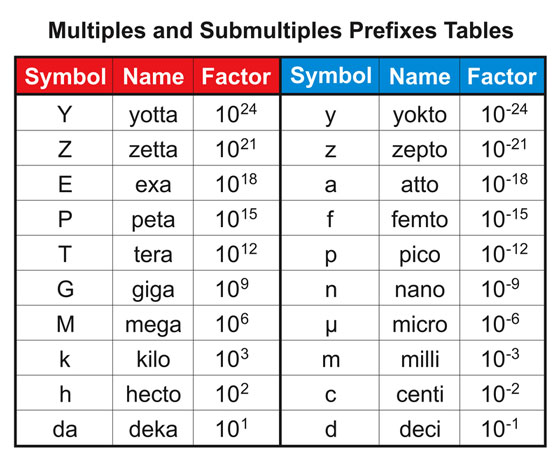
If a speedometer measures speed, then a nanometer measures nan…. Grandmas? Flatbread?


https://dictionary.cambridge.org/us/dictionary/english/nan[Click to view video attachment]
Score: 8 Votes (Like | Disagree)
Anaxarxes Avatar
24 months ago

If I understood it correctly the "x nm" is just arbitrary and not an actual size? What comes after?


but for tech nodes, after nm we'll see Angstrom (100pm) as the unit
Score: 6 Votes (Like | Disagree)
AgeOfSpiracles Avatar
24 months ago

The whole thing is stupid... Angstroms (0.1 nm) follow, or picometres (0.001 nm). But since, as you say, the label is arbitrary they may as well call the next one 38.287 seconds. It all means nothing.
If MR included this caveat at the top of every article on the subject, do you suppose that people would still make this comment? Probably.
Score: 6 Votes (Like | Disagree)
Nimrad Avatar
24 months ago
If I understood it correctly the "x nm" is just arbitrary and not an actual size? What comes after?
Score: 4 Votes (Like | Disagree)
MayaUser Avatar
24 months ago

If I understood it correctly the "x nm" is just arbitrary and not an actual size? What comes after?
yes, its just marketing like M1 M2 M3...all words are invented. but that said it doesnt mean we will not get a lot more transistors , more efficient SoC or keep the same efficiency but go for pure performance only
From this M3 to the M7, we will see a big difference no matter the nm marketing
Score: 3 Votes (Like | Disagree)
bradman83 Avatar
24 months ago

If I understood it correctly the "x nm" is just arbitrary and not an actual size? What comes after?
Within the same company the labels provide a useful description of the miniaturization over the prior generation; the jump from 2nm from 3nm for TSMC's process would result in about a 33% increase in miniaturization and transistor density.

That said you are correct that it's all just marketing. Different processes from different companies have different transistor densities. Intel's 10nm process node is widely believed to be comparable to TSMC's 7nm node, for example (hence why Intel started calling their refreshed 10nm process as Intel 7).

The next marketing term is Angstrom; 10 Angstroms = 1 nanometer
Score: 3 Votes (Like | Disagree)