Testing of iOS Browsers With Third-Party Engines Geofenced to EU
Developers who want to develop browsers for iOS with third-party engines can only test their apps on devices physically located in the EU, according to The Register.
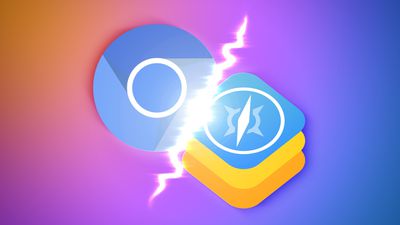
This rule introduces a considerable barrier for developers outside the EU, who are now limited to using simulators instead of actual devices for testing their browsers. This restriction complicates the process of developing and supporting browsers with alternative engines, as on-device testing is essential to accurate performance assessment and troubleshooting. Apple's previous policy, which remains in place in other regions around the world, demands the use of WebKit for all iOS and iPadOS browsers, effectively making every browser on these platforms a variant of Safari.
Under the Digital Markets Act (DMA), Apple was designated as a gatekeeper in the European Union, compelling the company to make changes to its policies. With the release of iOS 17.4, Apple began allowing the use of alternative browser engines within the EU. However, it has now emerged that testing of browsers with third-party engines is strictly geofenced to the EU, potentially hindering the ability of developers around the world to address security issues or implement updates efficiently.
The requirements raise some practical concerns about the feasibility of supporting a separate EU browser. Some developers have pointed out that Apple's extensive list of conditions makes it challenging to comply while also ensuring that the browser remains competitive and secure.
The European Commission has launched an investigation into Apple's compliance with the DMA, focusing on the restrictive nature of its latest changes. The investigation seeks to determine whether Apple's requirements are designed to circumvent the spirit of the DMA by making it difficult for competitors to operate on a level playing field.
Popular Stories
Apple turns 50 this year, and its CEO Tim Cook has promised to celebrate the milestone. The big day falls on April 1, 2026.
"I've been unusually reflective lately about Apple because we have been working on what do we do to mark this moment," Cook told employees today, according to Bloomberg's Mark Gurman. "When you really stop and pause and think about the last 50 years, it makes your heart ...
Apple plans to announce the iPhone 17e on Thursday, February 19, according to Macwelt, the German equivalent of Macworld.
The report, citing industry sources, is available in English on Macworld.
Apple announced the iPhone 16e on Wednesday, February 19 last year, so the iPhone 17e would be unveiled exactly one year later if this rumor is accurate. It is quite uncommon for Apple to unveil...
In the iOS 26.4 update that's coming this spring, Apple will introduce a new version of Siri that's going to overhaul how we interact with the personal assistant and what it's able to do.
The iOS 26.4 version of Siri won't work like ChatGPT or Claude, but it will rely on large language models (LLMs) and has been updated from the ground up.
Upgraded Architecture
The next-generation...
While the iOS 26.3 Release Candidate is now available ahead of a public release, the first iOS 26.4 beta is likely still at least a week away. Following beta testing, iOS 26.4 will likely be released to the general public in March or April.
Below, we have recapped known or rumored iOS 26.3 and iOS 26.4 features so far.
iOS 26.3
iPhone to Android Transfer Tool
iOS 26.3 makes it easier...
The iPhone 18 Pro Max will feature a bigger battery for continued best-in-class battery life, according to a known Weibo leaker.
Citing supply chain information, the Weibo user known as "Digital Chat Station" said that the iPhone 18 Pro Max will have a battery capacity of 5,100 to 5,200 mAh. Combined with the efficiency improvements of the A20 Pro chip, made with TSMC's 2nm process, the...