Apple's New Dynamic 40W to 60W Charger Has a Key Advantage - MacRumors
Skip to Content

Apple's New Dynamic 40W to 60W Charger Has a Key Advantage

The website ChargerLAB today published a teardown of Apple's new 40W Dynamic Power Adapter with 60W Max, which has a key advantage over one of its other chargers.
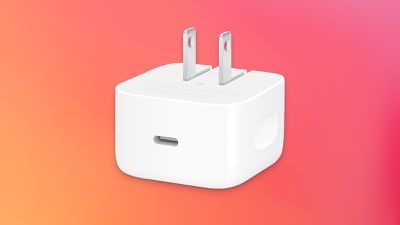
Apple 40W Dynamic Power Adapter with 60W Max
Specifically, the teardown shows the new 40W to 60W charger is roughly the same size as Apple's 20W charger, despite its higher wattage for faster charging speeds. In other words, you are getting more power from a smaller charger, although the 40W to 60W model costs $39 in the U.S., while the 20W option costs $19.
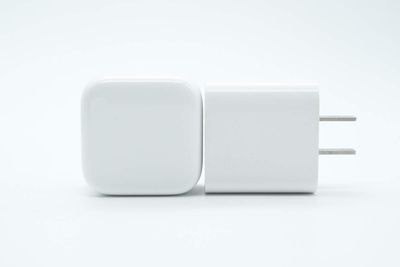
Apple 20W vs 40W to 60W ChargerApple's 40W-60W charger on left and 20W charger on right (Image: ChargerLAB)

To achieve this, the charger supports USB-C Power Delivery 3.2 with SPR AVS (Standard Power Range Adjustable Voltage Supply), according to ChargerLAB.

The teardown confirms the charger can approach its 60W limit, but this will only be in short bursts, due to the thermal limitations of its compact design.


In addition to the U.S., the 40W Dynamic Power Adapter with 60W Max is available to order in Canada, China, Japan, Mexico, Taiwan, and the Philippines. It appears to be the spiritual successor to Apple's discontinued 30W adapter, which is still included with the base-model 13-inch MacBook Air and the Apple Vision Pro for now.

iPhone 17, iPhone 17 Pro, and iPhone 17 Pro Max models can be charged up to 50% in 20 minutes with a compatible charger, including the 40W to 60W one.


Top Rated Comments

WarmWinterHat Avatar
7 months ago

This is the only charger currently that can do that.
For about a week or two, until other companies release their version. It's a new standard, and not proprietary.
Score: 14 Votes (Like | Disagree)
bradman83 Avatar
7 months ago
I believe this is Apple's first charger that uses gallium nitride (GaN) technology, which is why it's so small compared to their other chargers. I'm glad they've not only caught up to other chargers but are also on the bleeding edge of offering DPS and AVS implementations that are actually ahead of the curve.
Score: 12 Votes (Like | Disagree)
Johnny907 Avatar
7 months ago
I mean... when you have THIS from Anker, MSRP at $35 but regularly sold for 25-30 bucks, why?
Dimensions are pretty close (1.8x1.78x1.11 for Apple vs 1.65x1.42x1.74 for Anker) and though the Anker brick is about an ounce heavier (3.84 vs 2.82) it's also putting out up to 65w continuous vs Apple's 60w burst. Yes I know that 65w does fluctuate, but guarantee it maintains those higher watts longer and more reliably than the Apple part and for 10-15 bucks less.
This is a step in the right direction, but Apple still has a long way to go when it comes to charging accessories.


Attachment Image
Score: 9 Votes (Like | Disagree)
7 months ago
Looking forward to a proper three pin UK style version.
Score: 8 Votes (Like | Disagree)
7 months ago

$39 dollars for this charger is ridiculous! They should have made it $29 at the most.
Well the Google Pixel Flex USB-C charger which is the (so far) only other charger out there with PD 3.2/AVS etc. is 59.99 MSRP. Yes, two ports but there you go.

I for one am looking forward to the release in EU.
Score: 7 Votes (Like | Disagree)
bradman83 Avatar
7 months ago

Wait, so there are no other existing chargers that can do this, including ones with higher wattages? It requires this new power delivery spec?
The article does a poor job of explaining what this charger does and what makes it unique.

All chargers that support USB-PD can vary their power output according to what the device needs, up to a specific limit.

What this particular charger does it it allows the charger to go 20 watts over its charging limit to 60 watts if certain conditions are met (ie: it's not too hot), and it can only do it for a limited amount of time. It's sort of like the turbo mode on a CPU, it can boost to a higher clock speed for certain tasks but it usually can't sustain that maximum speed indefinitely.

So in effect with this version of the USB-PD standard you get the size of a 40 watt charger with the ability to boost to 60 watts for fast charging and similar scenarios.
Score: 6 Votes (Like | Disagree)