All of the iPhones in Apple's iPhone 12 and iPhone 13 lineups feature Qualcomm modems that support 5G, but potential buyers need to know that not all 5G networks are equal. There's the super fast mmWave (millimeter wave) 5G and the slower but more widespread Sub-6GHz 5G.
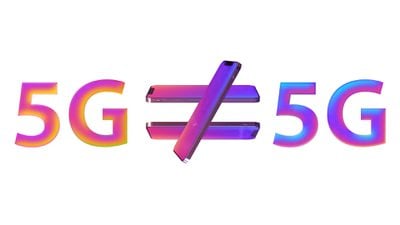
In the United States, all of the iPhone 12 and iPhone 13 models support both mmWave and sub-6GHz 5G connectivity, but mmWave technology is not available worldwide. The 2022 iPhone SE is also limited to sub-6GHz 5G connectivity. This guide highlights the differences between mmWave and Sub-6GHz 5G to give you an overview of how 5G works on the iPhone.
mmWave vs. Sub6GHz Explained
5G is fifth-generation cellular wireless, succeeding the 4G LTE networks that have been in use since 2010. There are two kinds of 5G networks: mmWave, which is the super-fast 5G that most people are talking about when they talk about 5G speed improvements, and sub-6GHz, the 5G that most people are going to experience for the time being.
Smartphones transmit voice and data over the air using electromagnetic radio frequencies, with these frequencies organized into different frequency bands. Some of these bands have more capacity than others and are able to deliver information faster, which is the case with mmWave.
mmWave refers to higher frequency radio bands ranging from 24GHz to 40GHz, and Sub-6GHz refers to mid and low-frequency bands under 6GHz. Low-frequency bands are under 1GHz, while mid-bands range from 3.4GHz to 6GHz and are not considered "mmWave."
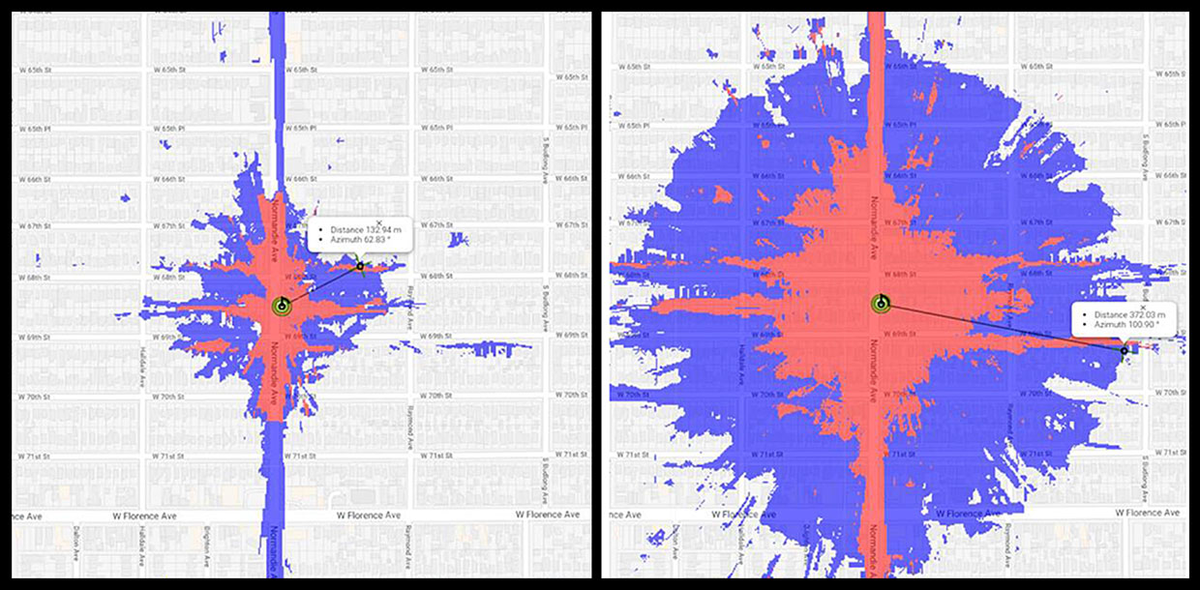
mmWave 5G networks are ultra-fast, but they're also ultra-short range. To use mmWave technology, you need to be within about a block of a 5G tower, which isn't feasible in suburban and rural areas. mmWave spectrum is also blocked and obscured by doors, windows, trees, and walls, further limiting its available range, and because it requires so many towers for coverage, it's expensive for carriers to deploy.
Because of its limited range, accessing mmWave spectrum has only become possible over the course of the last few years due to technological advancements like Massive MIMO, adaptable beamforming, and miniaturization of complex antenna processing functions, and mmWave is still nascent technology that's in the process of being adopted.
mmWave's limitations make it best suited for dense, urban areas, or specific targeted spots like airports or concerts. In rural and suburban areas, mmWave technology is not practical because it doesn't have enough range, which is where the Sub-6GHz networks come in. Sub-6GHz 5G is faster than 4G, but it doesn't offer the blazing-fast speeds that you can get with mmWave. Since it has a longer range and can better penetrate objects, it's much more affordable for carriers to implement.
It's worth noting that mmWave 5G offers greater bandwidth, relieving network congestion. In crowded areas, LTE speeds can slow because of the number of devices connecting, while mmWave technology is able to handle a greater number of connections without significant speed drops. For that reason, you may see mmWave set up in crowded areas where network congestion is a problem, such as at sporting events, airports, concerts, and other locations where many people gather, as well as in urban areas.
With an iPhone that supports both mmWave and Sub-6GHz, you can take advantage of lightning-quick 5G speeds where mmWave technology is available, while other 5G coverage is similar to the more modern LTE networks. With an iPhone that only has Sub-6GHz, you can use the most widely available 5G networks, but are blocked off from the faster mmWave that might be available in cities.
Over time, low-band and mid-band 5G speeds should get much quicker just like LTE did as it evolved, but those incredibly fast speeds that people expect from 5G are mmWave speeds and are much more limited in availability.
Speed Differences
mmWave spectrum can deliver theoretical speeds as high as 5Gb/s, which is much, much faster than the speeds achievable with LTE connectivity.
In practice, early mmWave networks have been delivering speeds that max out at around 2Gb/s, but as we found when we tested Verizon's mmWave network with a Samsung smartphone in Chicago in mid-2019, speeds vary drastically based on your position and proximity to the nearest 5G tower.


LTE networks are much slower. In fact, Tom's Guide recently looked at LTE speeds and saw top download speeds of 53Mb/s on Verizon, but most carriers were closer to 35Mb/s.
Sub-6GHz networks fall somewhere in between mmWave and LTE speeds. Sprint's Sub-6GHz network (which is now T-Mobile's), for example, has seen maximum speeds of about 200Mb/s. A good LTE connection can hit those speeds, but realistically, Sub-6GHz 5G is faster than most people will see with LTE, though not reaching those incredible speeds possible with mmWave.
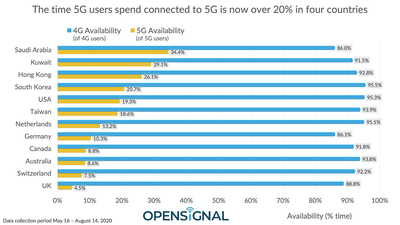
OpenSignal in August 2020 analyzed real-world 5G speeds in multiple countries (using smartphones that currently support 5G), and the speed results for the United States might be surprising to those who are expecting major speed gains from 5G. Average download speeds on 5GHz networks were around 50.9Mb/s, compared to 28.9 Mb/s on LTE, and that's because most of the coverage in the U.S. is Sub-6GHz at this time.
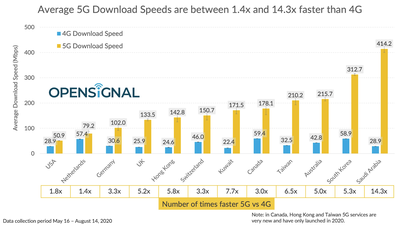
Other countries have more advanced 5G networks and can provide some insight into the speed improvements we could realistically see within the next few years. On average, OpenSignal found 5G connectivity to be between 1.4x and 14.3x faster than 4G, but this data does not separate mmWave 5G from Sub-6GHz 5G.
One other interesting metric OpenSignal noted was time connected to 5G networks. In the United States, smartphone owners with devices that support 5G spent just 19.3 percent of the time connected to 5G networks because of their limited availability.
mmWave Availability
In the United States, AT&T and Verizon have implemented mmWave support, but it's still available in a limited capacity. It's in select major cities and not even citywide - it's typically limited to select neighborhoods.
With Sub-6GHz, it's already more widespread with AT&T, Verizon, and T-Mobile rolling out lower-spectrum and mid-band 5G networks that are available to many more customers.
Which iPhones Support mmWave?
All iPhone 12 and iPhone 13 models in the United States support mmWave 5G networks. Outside of the United States, only sub-6GHz 5G networks are supported.
Do I Need the mmWave 5G Connectivity?
In a nutshell, no, most people don't need mmWave connectivity, nor will most people even access to it on a regular basis for the next several years to come.
Full mmWave 5G connectivity is still in the process of rolling out, and it continues to be limited in scope. It's only available in major cities in the United States, and in most of those major cities, it's not available everywhere and is in select areas.
The transition from 4G to 5G started in 2019 and there's still a ways to go, so most people are going to be able to get by without mmWave speeds. To know whether mmWave technology is worth it for you personally, it's a good idea to look up your carrier and see if mmWave spectrum has even rolled out where you live.
5G information for the major carriers in the United States is linked below so you can see the coverage for your particular carrier in your area.
If you don't spend a lot of time in one of the specific neighborhoods in one of the cities where your carrier offers 5G technology, you're not going to benefit from mmWave speeds and purchasing a mmWave iPhone should not be a major concern at this time. If you do live in a major urban area with a lot of mmWave 5G towers, you could see benefits from an iPhone that supports the faster technology.
Carriers are, of course, going to continue building out their mmWave networks and in a few years it could be much more widespread, which is a consideration for those who take future-proofing into account when making an iPhone purchase. But even years from now, mmWave is still likely to be limited in scope and available only in more urban areas and Sub-6GHz is the 5G most people will know and connect to.
Keep in mind that some carriers are charging more for 5G right now. Verizon, for example, is pricing 5G plans $10 higher than comparative 4G unlimited plans. AT&T and T-Mobile aren't charging higher prices yet, but that could change as 5G further expands.
Apple's Future 5G Plans
Apple is working on creating its own modem chips that are designed in-house, much like the Apple silicon and A-series chips, which will allow the company to reduce its reliance on modem chip vendors.
Apple analyst Ming-Chi Kuo recently said that Apple could transition to its own 5G modems as early as 2023. Once Apple comes out with its own modem designs, it will no longer need Qualcomm. 2023 is the "earliest" date, however, so the timeline could change.
Guide Feedback
Have questions about mmWave vs. Sub-6GHz 5G connectivity or want to offer feedback on this guide? Send us an email here. If you want to know more about Apple's 5G iPhone plans, make sure to check out our 5G iPhone guide.