Huawei Unveils AI Mobile Chipset Said to Rival A11 Processor in Upcoming iPhones - MacRumors
Skip to Content

Huawei Unveils AI Mobile Chipset Said to Rival A11 Processor in Upcoming iPhones

by

On Saturday, Chinese mobile maker Huawei unveiled its first artificial intelligence smartphone chipset, which it hopes will lure customers away from Apple's upcoming range of new iPhones and towards the Asian company's "most powerful handset yet", the Mate 10, which is set to debut next month (via Nikkei Asian Review).

Huawei touted the Kirin 970 AI mobile chipset's built-in "neural processing unit" at the IFA consumer electronics trade show in Berlin, claiming that the technology is "20 times faster" than a traditional processor.
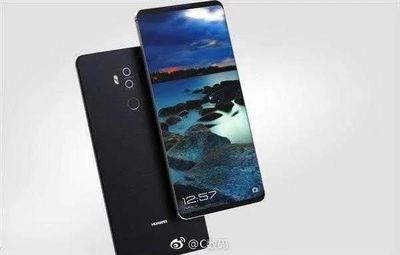
Mate 10 2

Mate 10 handset render via Weibo

"The Kirin 970 is faster, better and more secure than anything else available [in the market]. This is the latest technology and it is the first chip to have a neural processing unit inside, which is 20 times faster than a central processing unit," said Richard Yu, chief of Huawei's consumer business group.

"It is a major breakthrough for Huawei. We will enable the first use of AI technology in mobile apps, and provide consumers with a never-before-seen AI experience right in the palm of their hands," he added.

The world's third largest smartphone maker claimed that mobile devices powered by the Kirin 970 will be able to "truly know and understand their users", by supporting real-time image recognition, voice interaction, and intelligent photography with ease.

"Compared with Samsung and Apple, we have advantages," Yu said in an interview with Reuters. "Users are in for much faster (feature) performance, longer battery life and more compact design."

According to Nikkei, the Kirin 970 integrates 5.5 billion transistors in a single square centimeter about the size of a thumbnail, which includes an octa-core central processing unit, a 12-core graphics processing unit, a dual-image signal processor, a high-speed 1.2Gbps Cat.18 modem, and AI mobile computing architecture.

The Kirin 970 is said to be based on the same 10-nanometer technology as Apple's existing A10X Fusion processor and the A11 processor that will power its new iPhone range, set to debut this month. The A10X powers Apple's latest 10.5-inch and 12.9-inch iPad Pro tablets, making them the first consumer devices to feature a chip built on Taiwan Semiconductor Manufacturing Company's advanced 10-nanometer FinFET technology.

Mark Li, an analyst at Sanford C. Bernstein, claimed that the new chip powering Huawei's Mate 10 may be better than the chips for the new iPhone range. "The new Huawei chip can be 10 times as powerful as an average smartphone chip, and also more energy efficient, when it comes to handling AI-related functions such as image and voice recognition," Li said. But he added that the popularity of the chip would depend on whether Huawei is able exploit its power in a killer AI app.

The Mate 10 is said to be a bezel-less all-screen handset with a 6-inch, 2:1 display and a 2,160 x 1,080 resolution. Like Apple's so-called "iPhone 8", the Mate 10 is also expected to feature some form of facial recognition and improved cameras.

Huawei aims to become the world's largest smartphone maker by 2021, ahead of both Apple and Samsung, and the latest market share data suggests it is making headway towards that goal.

The company shipped an estimated 38.4 million smartphones in the June quarter, a 20 percent increase over a year ago, according to research firm Strategy Analytics. By comparison, Apple reported it sold 41 million iPhones in the same period, up nearly 2 percent from 40.4 million iPhones in the year-ago quarter.
Related Forum: iPhone

Top Rated Comments

Red Oak Avatar
112 months ago
Here are the single core benchmarks from the Kirin 960 and A10. Huawei will need to effectively double performance just to catch up to Apple's year old processor

As for the "20X faster", that sounds like pure ********. Let's see the benchmark scores


[B]GeekBench 3 Benchmark Comparison[/B]
Single-core Score

[LIST=1]
* Apple A10 : 3510
* Exynos 8890 : 2041
* Kirin 960 : 1989
* Snapdragon 820 : 1845
* Snapdragon 821 : 1827
Score: 24 Votes (Like | Disagree)
Kabeyun Avatar
112 months ago
To me, this is all useless. These tit-for-tat spec wars remind me of the 90s where everyone else was busying themselves comparing megahertz and the 00s when it was the digital camera industry and megapixels. This has nothing to do with a fluid user experience. Apple is king when it comes to hardware/software integration, and I couldn't care less about the number of "Hz" or "x" or cores or transistors. Whatevs, Huawei et al. It's a distraction and a route to claim superiority for the user where none exists. I will go where (fluid experience + app library + quality + security/trustworthiness + support) take me, and right now that's Apple in a heartbeat.
Score: 17 Votes (Like | Disagree)
duffman9000 Avatar
112 months ago
I’ll believe it when I see proof. I recall other tall tales like the PlayStation’s emotion engine.
Score: 13 Votes (Like | Disagree)
112 months ago
But it runs Android, so the phone will never be updated. The software will suck, and the reason it knows so much about you is because it'll mine all your data. Will wonders never cease?
Score: 8 Votes (Like | Disagree)
112 months ago
You must be using Apple software from a parallel universe then. Nothing is in any way simpler in macOS or iOS - it's usually just different and in many cases even more cumbersome and less intuituve. Especially on macOS, a lot of stuff also is slower than Windows or Linux on the same Mac. At least that's my experience from the last 12+ years.
I previously was a windows user until 2006 or so - an example (have many more) why I switched; format PC several times in order it to run smooth compared to Mac where I format when a new MacOS is released, and recently was using an android tablet - did not find it as fluid as iOS.

I can confidently say that I find Apple much better. I am afaird to say that you're living in a parallels world. Your examples are vague, so I am not sure who you're trying to convince?
Score: 7 Votes (Like | Disagree)
AfroAbel Avatar
112 months ago
I still expect the A11 to trounce it in single core performance.
[doublepost=1504444961][/doublepost]
Here are the single core benchmarks from the Kirin 960 and A10. Huawei will need to effectively double performance just to catch up to Apple's year old processor

As for the "20X faster", that sounds like pure ********. Let's see the benchmark scores


[B]GeekBench 3 Benchmark Comparison[/B]
Single-core Score

[LIST=1]
* Apple A10 : 3510
* Exynos 8890 : 2041
* Kirin 960 : 1989
* Snapdragon 820 : 1845
* Snapdragon 821 : 1827

It's pretty insane to think that Apple is effectively more than a year ahead in terms of soc performance.
Score: 7 Votes (Like | Disagree)

Popular Stories

iOS 26

iOS 26.4 Adds Two New Features to CarPlay

Tuesday March 24, 2026 1:55 pm PDT by
iOS 26.4 was released today, and it includes a couple of new features for CarPlay: an Ambient Music widget and support for voice-based chatbot apps. To update your iPhone 11 or newer to iOS 26.4, open the Settings app and tap on General → Software Update. CarPlay will automatically offer the new features so long as the iPhone connected to your vehicle is running iOS 26.4 or later....
Apple Business hero

Apple Unveils 'Apple Business' All-in-One Platform

Tuesday March 24, 2026 8:53 am PDT by
Apple today announced Apple Business, a new all-in-one platform that unifies device management, productivity tools, and customer outreach features. The service is designed to be a consolidated replacement for several of Apple's existing business-focused offerings, including Apple Business Essentials, Apple Business Manager, and Apple Business Connect. It provides organizations with a single...
AirPods Pro Firmware Feature

Apple Releases New Firmware for AirPods Pro 3, AirPods Pro 2 and AirPods 4

Tuesday March 24, 2026 12:31 pm PDT by
Apple today released new firmware for the AirPods Pro 2, AirPods Pro 3, and the AirPods 4. The firmware has a version number of 8B39, up from 8B34 on the AirPods Pro 3, 8B28 on the AirPods Pro 2, and 8B21 on the AirPods 4. There is no word on what's included in the firmware, but Apple has a support document with limited notes. Most updates are limited to bug fixes and performance...