Apple Shares Tips on Avoiding App Store and iTunes Phishing Emails - MacRumors
Skip to Content

Apple Shares Tips on Avoiding App Store and iTunes Phishing Emails

Apple last week shared a new support document that's designed to help App Store and iTunes users avoid phishing emails that mimic legitimate emails from Apple.

In the document, Apple outlines techniques to identify an actual App Store or iTunes email, which the company says will always include a current billing address, something scammers are unlikely to have access to.
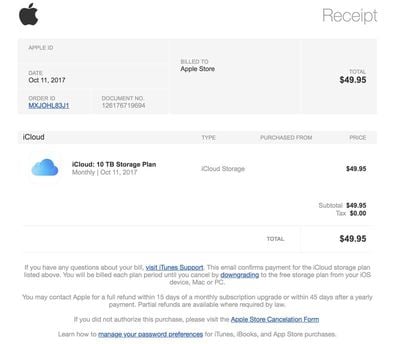
applescamemail

An example of a well-crafted phishing email

Apple also says that emails from the App Store, iBooks Store, iTunes Store, or Apple Music will never ask customers to provide details like a Social Security Number, mother's maiden name, a credit card number, or a credit card CCV code.

Apple recommends that customers who receive emails asking them to update their account or payment information do so directly in the Settings app on an iPhone, iPad, or iPod touch, in iTunes or the App Store on a Mac, or in iTunes on a PC rather than through any kind of web interface.

Customers who receive a suspicious email can forward it to reportphishing@apple.com, and any customer who may have entered personal information on a scam website should update their Apple ID password immediately.

Scam and phishing emails like those Apple describes in this support document are not new, but at the current time, there's a new wave of legitimate-looking emails going around that look much like Apple emails that can easily fool customers who don't know what to look for.

Related Forum: Mac Apps

Popular Stories

iOS App Store General Feature Desaturated

Apple Removes Freecash App From App Store After Months of Data Harvesting

Tuesday April 14, 2026 3:54 pm PDT by
Apple removed scam app Freecash from the App Store this week after the app spent months harvesting data from iPhone users, reports TechCrunch. Freecash reached the number two spot on the U.S. App Store charts in January after being heavily marketed on TikTok. It promised users up to $35 per hour for watching TikTok content, but it was collecting swaths of user data. Back in January, Wired...
grok logo purple gradient

Apple Threatened to Pull Grok From App Store Over Sexualized Images

Wednesday April 15, 2026 7:10 am PDT by
Apple privately warned Elon Musk's xAI company in January that it would remove the Grok app from the App Store unless the company put a stop to the chatbot's nude and sexualized deepfakes, according to a letter Apple sent to U.S. senators and obtained by NBC News ($). Earlier this year, Grok's AI capabilities came under scrutiny after X users shared nonconsensual sexualized images of women...
iOS App Store General Feature Dock

Apple Quietly Tweaked the iOS App Store App – Here's What's Changed

Friday April 17, 2026 2:32 am PDT by
No, you aren't going crazy – Apple has quietly made a backend change to the App Store app in iOS that switches the location of the Updates tab and renames it to make it more prominent. In the App Store app, you can see the change by tapping your profile picture in the top-right corner. The "Apps & Purchase History" tab used to be at the top the list, but it has switched places with...


Top Rated Comments

107 months ago
PROTIP: disable html in your mail client, it's harder to phish when you can see the links that will be used are not what the text claims they are.

Bonus: tell anyone sending html only to not be a muppet, helping the phishers by conditioning users to accepts such emails. Ask them to include the regular plain text body for those who are trying to not be phished.
Score: 6 Votes (Like | Disagree)
iModFrenzy Avatar
107 months ago
How about tips for recognizing battery throttling scams?
How much longer are we gonna beat a dead horse?
Score: 4 Votes (Like | Disagree)
fastasleep Avatar
107 months ago
I think the current app store's "Today" section design is kind of phishing too.
If you hold the phone with your right hand and scroll through the Today's stories with your right thumb, you can so easily touch the "GET" or "purchase" buttons by mistake, and when that happens some people's first reaction is to press the home button to quit the app store app, but if you do that and if you are using touch ID to approve purchases, the purchase gets approved.
That's not what phishing means.
[doublepost=1519875375][/doublepost]
You’d think they could use their fancy smancy machine learning to stop these from coming through for all sorts of major companies. I know companies like PayPal have trouble with this all the time. Even if you can’t cover everything it’s better to get at least 90% of them.

Heck, you could probably just regex to match certain strings like their footer or other common phrases used in Apple emails. Then check the sender against official Apple email addresses and if it doesn’t check out, send it to the spam folder or put a big red warning at the top saying the email seems suspicious and might be a phishing attempt. This seems like a solvable problem in 2018.
They often do. My spam filter (ASSP) correctly flag all the phishing emails I get as spam. When reviewing stuff in my spambox for false positives, I often take a second look at things that look like they came from Netflix or Apple, only to realize they were correctly flagged. But remember there are a ton of email providers out there with various types and qualities of spam filters.
Score: 3 Votes (Like | Disagree)
Apple_Robert Avatar
107 months ago
Good move on Apple for doing what they can to inform people about phishing.
Score: 3 Votes (Like | Disagree)
AndyUnderscoreR Avatar
107 months ago
Well, you SAY that's an Apple support document....
Score: 3 Votes (Like | Disagree)
dannyyankou Avatar
107 months ago
These are actually good tips. I didn’t realize Apple emails have your mailing address on them.
Score: 2 Votes (Like | Disagree)