macOS Image Capture Bug More Pervasive Than Originally Thought

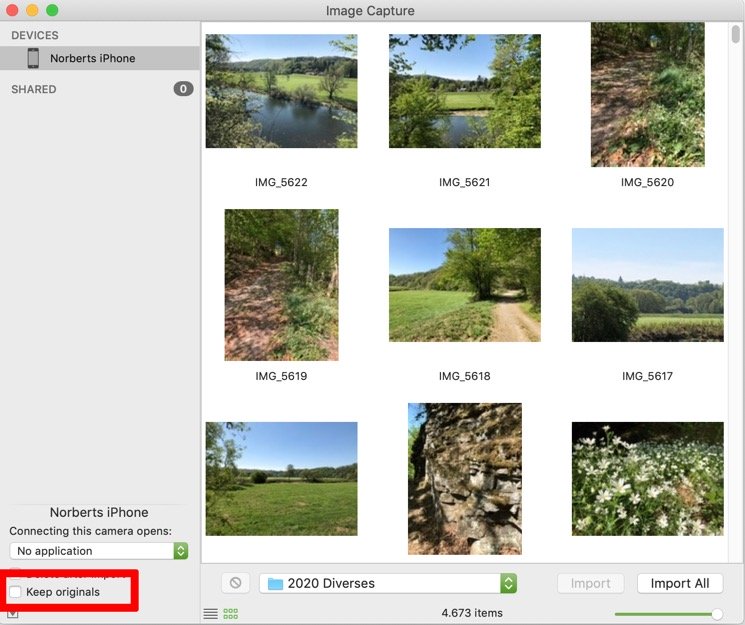
Earlier this week we reported on a bug in Apple's macOS Image Capture app that adds empty data to photos when imported from iOS devices, potentially eating up gigabytes of disk storage needlessly. Today, we're hearing that the bug in macOS 10.14.6 and later is a lot more extensive than was initially believed.
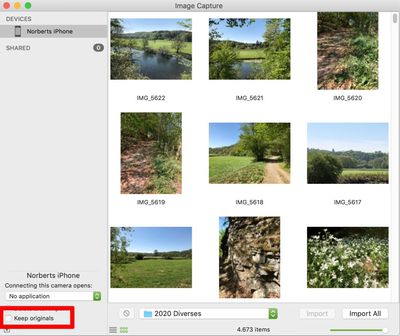
image capture
NeoFinder developer Norbert Doerner, who originally discovered the bug, informed MacRumors that the same issue affects nearly all Mac apps that import photos from cameras and iOS devices, including Adobe Lightroom, Affinity Photo, PhaseOne Media Pro, and Apple's legacy iPhoto and Aperture apps.

The reason is said to be because the bug is located inside Apple's ImageCaptureCore framework, which is a part of macOS that all developers must use to connect to digital cameras. The only app that isn't affected is said to be Apple's Photos app, which uses other undocumented APIs to talk to iOS devices.

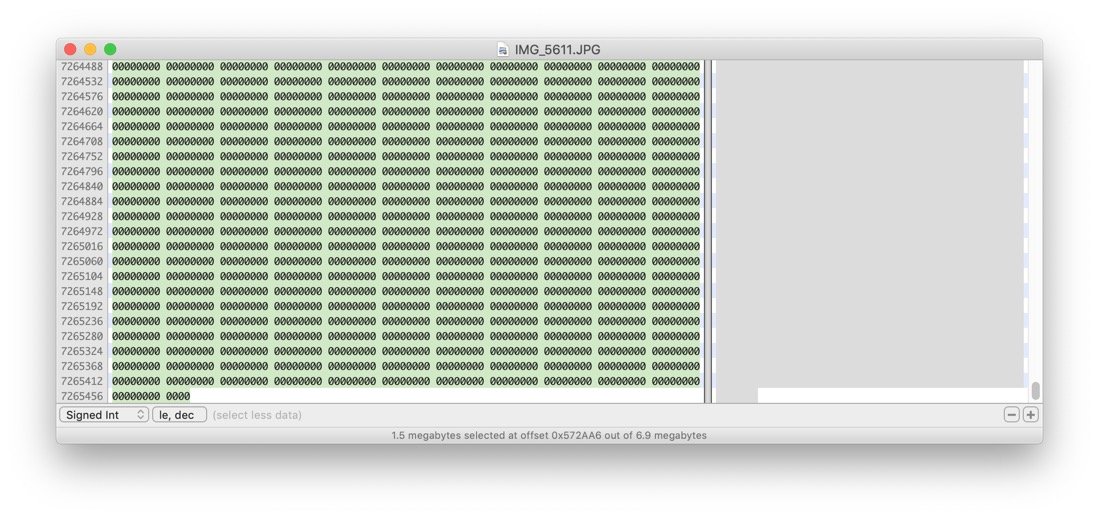
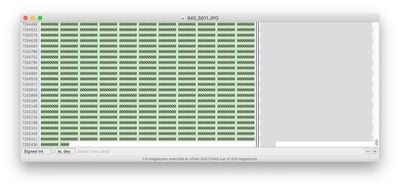
Essentially, the pervasive Mac bug causes HEIC files imported from iOS devices and converted to JPG to contain more than 1.5MB of empty data appended to the end of each file, increasing the file size and eating up storage. As an example, Doerner said he discovered more than 12,000 JPG files in his own photo library containing this extra unwanted data, resulting in over 20GB of wasted disk space.
wasted space image capture

Hex data of a JPG file viewed using Hex Fiend

Apple is apparently aware of the bug, but until a patch arrives, one short term workaround for future transfers is to prevent your iPhone or iPad from using the HEIF format when taking photos: To do so, launch the Settings app, select Camera -> Formats and check Most Compatible.

For users with large existing photo libraries, Doerner has suggested using a new beta version of the third-party utility Graphic Converter, which includes an option to remove the unwanted empty data from the JPEG files.

Alternatively, media asset management app NeoFinder is itself being updated on Monday to include a tool that can find and eliminate the unwanted data in JPG files. NeoFinder for Mac costs $39.99 and a free trial is available to download on the developers' website.

Popular Stories

Apple Logo Zoomed

Tim Cook Teases Plans for Apple's Upcoming 50th Anniversary

Thursday February 5, 2026 12:54 pm PST by
Apple turns 50 this year, and its CEO Tim Cook has promised to celebrate the milestone. The big day falls on April 1, 2026. "I've been unusually reflective lately about Apple because we have been working on what do we do to mark this moment," Cook told employees today, according to Bloomberg's Mark Gurman. "When you really stop and pause and think about the last 50 years, it makes your heart ...
wwdc sans text feature

Apple Rumored to Announce New Product on February 19

Thursday February 5, 2026 12:22 pm PST by
Apple plans to announce the iPhone 17e on Thursday, February 19, according to Macwelt, the German equivalent of Macworld. The report, citing industry sources, is available in English on Macworld. Apple announced the iPhone 16e on Wednesday, February 19 last year, so the iPhone 17e would be unveiled exactly one year later if this rumor is accurate. It is quite uncommon for Apple to unveil...
Finder Siri Feature

Why Apple's iOS 26.4 Siri Upgrade Will Be Bigger Than Originally Promised

Friday February 6, 2026 3:06 pm PST by
In the iOS 26.4 update that's coming this spring, Apple will introduce a new version of Siri that's going to overhaul how we interact with the personal assistant and what it's able to do. The iOS 26.4 version of Siri won't work like ChatGPT or Claude, but it will rely on large language models (LLMs) and has been updated from the ground up. Upgraded Architecture The next-generation...
iOS 26

iOS 26.3 and iOS 26.4 Will Add These New Features to Your iPhone

Tuesday February 3, 2026 7:47 am PST by
While the iOS 26.3 Release Candidate is now available ahead of a public release, the first iOS 26.4 beta is likely still at least a week away. Following beta testing, iOS 26.4 will likely be released to the general public in March or April. Below, we have recapped known or rumored iOS 26.3 and iOS 26.4 features so far. iOS 26.3 iPhone to Android Transfer Tool iOS 26.3 makes it easier...
iphone 17 pro dark blue 1

iPhone 18 Pro Max Rumored to Deliver Next-Level Battery Life

Friday February 6, 2026 5:14 am PST by
The iPhone 18 Pro Max will feature a bigger battery for continued best-in-class battery life, according to a known Weibo leaker. Citing supply chain information, the Weibo user known as "Digital Chat Station" said that the iPhone 18 Pro Max will have a battery capacity of 5,100 to 5,200 mAh. Combined with the efficiency improvements of the A20 Pro chip, made with TSMC's 2nm process, the...

Top Rated Comments

chrfr Avatar
75 months ago

Is it possible this is more than just a "bug"? Apple makes a LOT of money from services including iCloud storage fees, and by inflating photo file sizes, more people would be nagged to upgrade their iCloud storage from the initial free 5GB, to a paid tier, to accomodate a larger iCloud Photo Library. There is potential financial motive here - anyone with the know how should look carefully at all files stored in iCloud to see if there is any similar artificial inflation of file size. It reminds me of the Wells Fargo scandal where staff were creating extra accounts in customer names to inflate their numbers...
This is an unfounded conspiracy theory. This bug affects images imported to a Mac manually via the Image Capture app, not images saved in iCloud Photo Library. It's not a widespread workflow for people- most folks just let their device sync photos through the Photos app.
Score: 12 Votes (Like | Disagree)
hughsaunders Avatar
75 months ago
A fixed increase per file is linear not exponential growth.
Score: 11 Votes (Like | Disagree)
martyjmclean Avatar
75 months ago

I don't understand, why a workaround is preventing iOS from shooting in HEIF. It's not the problem in HEIF, but in conversion. So if you work only with HEIF files, it should be fine, right?
The problem is, nothing is compatible with HEIF (or HEVC). I get handed a lot of iPhone stuff at work and need to xcode them to JPG or DNX.
Score: 6 Votes (Like | Disagree)
chrfr Avatar
75 months ago

('https://www.geekwebguides.com/2020/05/01/macos-jpg-truncation-bug-widespread/')

Earlier this week we reported on a bug in Apple's macOS Image Capture app ('https://www.geekwebguides.com/2020/04/28/macos-image-capture-bug-eats-storage/') that adds empty data to photos when imported from iOS devices, potentially eating up gigabytes of disk storage needlessly. Today, we're hearing that the bug in macOS 10.14.6 and later is a lot more extensive than was initially believed.


NeoFinder ('https://www.cdfinder.de') developer Norbert Doerner, who originally discovered the bug, informed MacRumors that the same issue affects nearly all Mac apps that import photos from cameras and iOS devices, including Adobe Lightroom, Affinity Photo, PhaseOne Media Pro, and Apple's legacy iPhoto and Aperture apps.

The reason is said to be because the bug is located inside Apple's ImageCaptureCore framework, which is a part of macOS that all developers must use to connect to digital cameras. The only app that isn't affected is said to be Apple's Photos app, which uses other undocumented APIs to talk to iOS devices.

Essentially, the pervasive Mac bug causes HEIC files imported from iOS devices and converted to JPG to contain more than 1.5MB of empty data appended to the end of each file, increasing the file size and eating up storage. As an example, Doerner said he discovered more than 12,000 JPG files in his own photo library containing this extra unwanted data, resulting in over 20GB of wasted disk space.


Hex data of a JPG file viewed using Hex Fiend ('https://ridiculousfish.com/hexfiend/')

Apple is apparently aware of the bug, but until a patch arrives, one short term workaround for future transfers is to prevent your iPhone or iPad from using the HEIF format when taking photos: To do so, launch the Settings app, select Camera -> Formats and check Most Compatible.

For users with large existing photo libraries, Doerner has suggested using a new beta version of the third-party utility Graphic Converter ('http://www.lemkesoft.org/beta.html'), which includes an option to remove the unwanted empty data from the JPEG files.

Alternatively, media asset management app NeoFinder is itself being updated ('https://www.cdfinder.de/guide/17/17.5/truncate_JPG.html') on Monday to include a tool that can find and eliminate the unwanted data in JPG files. NeoFinder for Mac costs $39.99 and a free trial is available to download on the developers' website ('https://www.cdfinder.de').

Article Link: macOS JPG File Truncation Bug More Pervasive Than Originally Thought ('https://www.geekwebguides.com/2020/05/01/macos-jpg-truncation-bug-widespread/')
This article title is wrong. The files are not being truncated. Rather, data is being appended to the end of the files.
Score: 5 Votes (Like | Disagree)
citysnaps Avatar
75 months ago

Is it possible this is more than just a "bug"? Apple makes a LOT of money from services including iCloud storage fees, and by inflating photo file sizes, more people would be nagged to upgrade their iCloud storage from the initial free 5GB, to a paid tier, to accomodate a larger iCloud Photo Library. There is potential financial motive here - anyone with the know how should look carefully at all files stored in iCloud to see if there is any similar artificial inflation of file size. It reminds me of the Wells Fargo scandal where staff were creating extra accounts in customer names to inflate their numbers...
The answer to your question is no. Relax.
Score: 5 Votes (Like | Disagree)
ivarh Avatar
75 months ago
This is a bad bug, but on the other side i would not reccomend converting the .heif files if you are importing them for archiving.

The heif files coming off my iphone 11 pro contains 10 bit color data per channel and this means that in addition of the loss of image quality you get from decompressing a lossy format that .heif is and changing it to jpg that is another lossy format you also loose a lot of color information.

This is not a excuse for apple to not fix the bug but doing this conversion is a bad choice in the first place for archiving.
Score: 5 Votes (Like | Disagree)