TSMC Details Potential iPhone 12 A14 Performance and Upcoming 3nm Process - MacRumors
Skip to Content

TSMC Details Potential iPhone 12 A14 Performance and Upcoming 3nm Process

Apple chipmaker TSMC has set out the potential performance and power efficiency of the upcoming iPhone 12's A14 chip, according to a report by AnandTech.
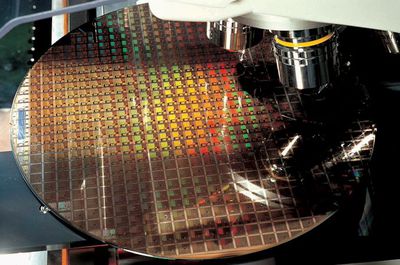
tsmc semiconductor chip inspection 678x452

The iPhone 12 is expected to contain an A14 chip, based on TSMC's smaller 5nm manufacturing process. The iPhone 11's A13 chip used a 7nm process by comparison.

Manufacturing chips using this smaller process offers a number of advantages, including a reduction in power consumption of up to 30 percent, and up to 15 percent increased performance. This indicates what kind of improvements may come to the A14 chip in the iPhone 12.

There is a tradeoff when selecting one or the other, but Apple tends to prioritize performance improvements over power consumption. When reducing the size of the manufacturing process for a new generation of chips, power consumption and performance improvements are slightly lower.

Last year, TSMC announced a $25 billion investment in the new 5nm node technology in a bid to remain the exclusive supplier of Apple's processors. TSMC has reportedly been in mass production of chips using the 5nm process for several months now, and the process is also expected to be used for Apple Silicon chips coming to the Mac before the end of this year.

In addition to the 5nm process for 2020, TSMC outlined its plans for a 3nm process coming in late 2022. This would likely be used for a potential A16 chip and other future ‌Apple Silicon‌ if the company follows previous years, but it is understandably difficult to speculate on Apple's manufacturing plans so far ahead. The ‌3nm‌ process yields similar 30 percent and 15 percent power consumption and performance improvements over the 5nm process.

It is worth noting that regardless of the performance of TSMC's chips, Apple usually optimizes its software for further performance improvements. It is also possible that Apple could significantly prioritize power consumption over performance for improved battery life. These decisions belong to Apple regardless of TSMC's manufacturing process, making the exact behavior of the A14 chip somewhat uncertain until official announcement.

Related Forum: iPhone

Popular Stories

iOS 26

iOS 26.4 Adds Two New Features to CarPlay

Tuesday March 24, 2026 1:55 pm PDT by
iOS 26.4 was released today, and it includes a couple of new features for CarPlay: an Ambient Music widget and support for voice-based chatbot apps. To update your iPhone 11 or newer to iOS 26.4, open the Settings app and tap on General → Software Update. CarPlay will automatically offer the new features so long as the iPhone connected to your vehicle is running iOS 26.4 or later....
Apple Business hero

Apple Unveils 'Apple Business' All-in-One Platform

Tuesday March 24, 2026 8:53 am PDT by
Apple today announced Apple Business, a new all-in-one platform that unifies device management, productivity tools, and customer outreach features. The service is designed to be a consolidated replacement for several of Apple's existing business-focused offerings, including Apple Business Essentials, Apple Business Manager, and Apple Business Connect. It provides organizations with a single...
AirPods Pro Firmware Feature

Apple Releases New Firmware for AirPods Pro 3, AirPods Pro 2 and AirPods 4

Tuesday March 24, 2026 12:31 pm PDT by
Apple today released new firmware for the AirPods Pro 2, AirPods Pro 3, and the AirPods 4. The firmware has a version number of 8B39, up from 8B34 on the AirPods Pro 3, 8B28 on the AirPods Pro 2, and 8B21 on the AirPods 4. There is no word on what's included in the firmware, but Apple has a support document with limited notes. Most updates are limited to bug fixes and performance...

Top Rated Comments

LiE_ Avatar
73 months ago
Intel has left the chat
Score: 40 Votes (Like | Disagree)
73 months ago
What happens when they run out of nm's?
Score: 8 Votes (Like | Disagree)
jav6454 Avatar
73 months ago
We are about to hit the atomic limit of process nodes.
Score: 8 Votes (Like | Disagree)
73 months ago

It’s gibberish.
I think it's supposed to suggest that performance and power consumption gains are becoming less pronounced at each new stage.


https://spectrum.ieee.org/semiconductors/devices/another-step-toward-the-end-of-moores-law
Score: 5 Votes (Like | Disagree)
iReality85 Avatar
73 months ago

We are about to hit the atomic limit of process nodes.

Nope. They told me that in 1992, too. :)

0.2 nm or so for silicon, yes? Got a ways to go. And, of course, the process node “size” has very little to do with the actual size of actual devices. I don’t think I ever used a minimum length transistor.
Conceivably, if nodes keep being reduced by roughly 1/2 for the next decade, we'll enter the atomic range soon:

2019: 5nm

2022: 3nm

2025? 1nm - 1.5nm?

Then we enter picometers.

2030? 500pm - 750pm? (.5nm - .75nm)

Depending on the atom, that's anywhere from 50pm - 500pm in size. Basically, silicon's days will be numbered once we reach the 2030s.
Score: 4 Votes (Like | Disagree)
73 months ago
don't get too excited about whatever power consumption improvements the new chip may bring, the next iPhone that uses it will just have a smaller battery to offset the gain. Count on it.
Score: 3 Votes (Like | Disagree)