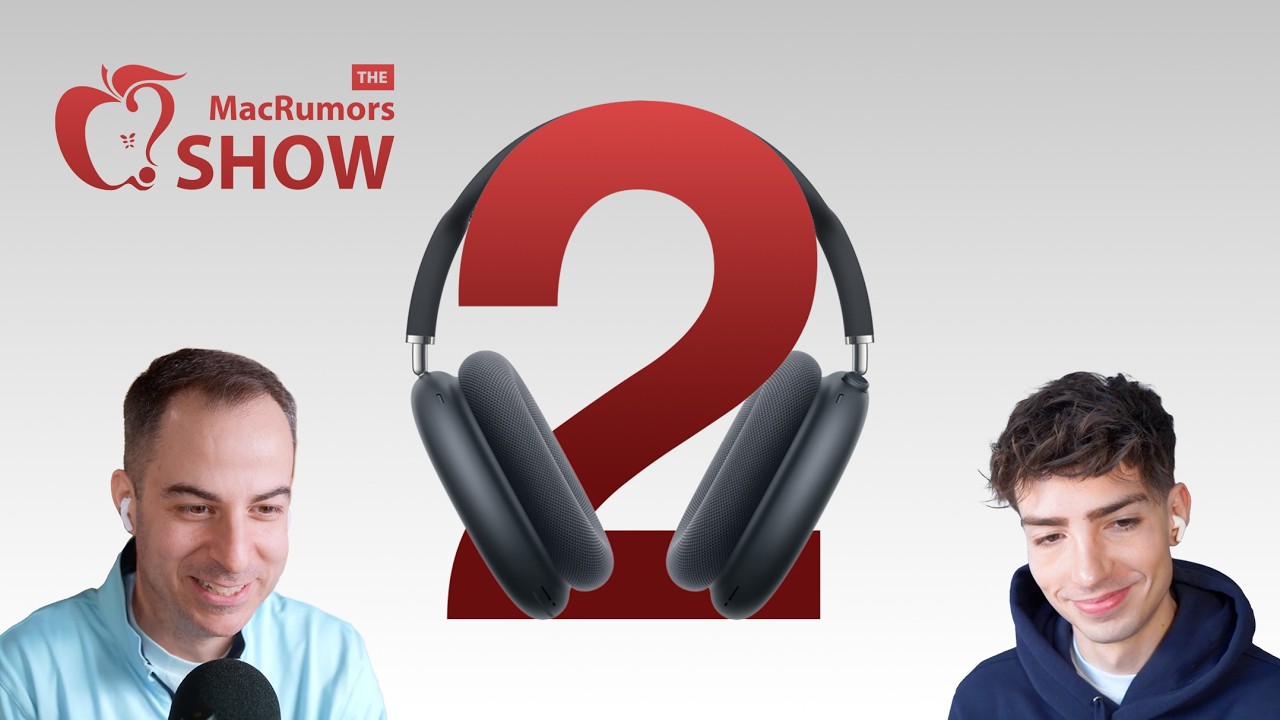
Sensor-Shift Camera Stabilization Expected on All iPhone 13 Models

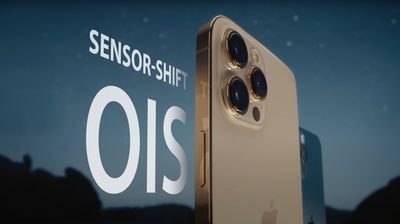
While sensor-shift optical image stabilization is currently limited to the iPhone 12 Pro Max, the feature will be expanded to all iPhone 13 models later this year, according to Taiwanese supply chain publication DigiTimes.
iPhone OIS Feature2
From the report, with emphasis added:

The VCM makers mainly deliver shipments for Android handsets in the first half of the year, but such shipments are expected to be surpassed by those for iPhones in the second half, given that all new iPhones will feature the sensor-shift OIS (optical image stabilization) function, the sources said, adding that the makers have been told to raise capacity by 30-40% to meet strong demand for iPhones.

DigiTimes already floated this rumor in January, but today's report provides further assurance as iPhone 13 models move towards mass production.

Apple first introduced sensor-shift stabilization on the Wide lens of the iPhone 12 Pro Max. The technology stabilizes the camera's sensor instead of the lens for even greater image stabilization and improved photo quality.

"Until now, sensor‑shift stabilization was only on DSLR cameras," explains Apple's website. "This is the first time it's been adapted for iPhone. Whether you're shooting video of your kids as you chase them around the park or holding your iPhone out the window on a bumpy road, you'll get more precise stabilization than ever."

iPhone 13 models are expected to have slightly larger rear camera bumps, likely to accommodate larger sensors and other camera improvements.

Related Forum: iPhone

Popular Stories

Apple Logo Zoomed

Tim Cook Teases Plans for Apple's Upcoming 50th Anniversary

Thursday February 5, 2026 12:54 pm PST by
Apple turns 50 this year, and its CEO Tim Cook has promised to celebrate the milestone. The big day falls on April 1, 2026. "I've been unusually reflective lately about Apple because we have been working on what do we do to mark this moment," Cook told employees today, according to Bloomberg's Mark Gurman. "When you really stop and pause and think about the last 50 years, it makes your heart ...
wwdc sans text feature

Apple Rumored to Announce New Product on February 19

Thursday February 5, 2026 12:22 pm PST by
Apple plans to announce the iPhone 17e on Thursday, February 19, according to Macwelt, the German equivalent of Macworld. The report, citing industry sources, is available in English on Macworld. Apple announced the iPhone 16e on Wednesday, February 19 last year, so the iPhone 17e would be unveiled exactly one year later if this rumor is accurate. It is quite uncommon for Apple to unveil...
Finder Siri Feature

Why Apple's iOS 26.4 Siri Upgrade Will Be Bigger Than Originally Promised

Friday February 6, 2026 3:06 pm PST by
In the iOS 26.4 update that's coming this spring, Apple will introduce a new version of Siri that's going to overhaul how we interact with the personal assistant and what it's able to do. The iOS 26.4 version of Siri won't work like ChatGPT or Claude, but it will rely on large language models (LLMs) and has been updated from the ground up. Upgraded Architecture The next-generation...
iOS 26

iOS 26.3 and iOS 26.4 Will Add These New Features to Your iPhone

Tuesday February 3, 2026 7:47 am PST by
While the iOS 26.3 Release Candidate is now available ahead of a public release, the first iOS 26.4 beta is likely still at least a week away. Following beta testing, iOS 26.4 will likely be released to the general public in March or April. Below, we have recapped known or rumored iOS 26.3 and iOS 26.4 features so far. iOS 26.3 iPhone to Android Transfer Tool iOS 26.3 makes it easier...
iphone 17 pro dark blue 1

iPhone 18 Pro Max Rumored to Deliver Next-Level Battery Life

Friday February 6, 2026 5:14 am PST by
The iPhone 18 Pro Max will feature a bigger battery for continued best-in-class battery life, according to a known Weibo leaker. Citing supply chain information, the Weibo user known as "Digital Chat Station" said that the iPhone 18 Pro Max will have a battery capacity of 5,100 to 5,200 mAh. Combined with the efficiency improvements of the A20 Pro chip, made with TSMC's 2nm process, the...

Top Rated Comments

svish Avatar
62 months ago
If true, good that all models get the feature and not just the Pro iPhones
Score: 9 Votes (Like | Disagree)
manu chao Avatar
62 months ago

Would it be asking too much for some proof ?

Also, are there ANY drawbacks (vs. the previous approach) ?
For standalone cameras, the Japanese Camera & Imaging Products Association (CIPA) has developed a standard ('https://www.slrlounge.com/nikon-reclassifies-lens-vr-ratings-to-cipa-standard/') by which a camera + lens is placed on a vibrating platform and it is tested by how many stops the image stabilisation (IS) systems reduce the motion blur created by the camera moving on that platform (where one stop means it halves the motion blur, two stops mean a halving again, ie, down to 1/4, and so on). That system isn’t perfect as there are different kinds of camera shake (normal human handshake, shake created by a moving platform like a boat or helicopter, shake induced by stabbing the shutter button, etc.) but it enables an easily comparable performance yardstick. Apple doesn’t use this standard but they surely have their own internal testing procedure. People also hold phones differently than cameras and stabbing the shutter button on phone creates a different shake than than doing so on a camera.

On standalone cameras, optical image stabilisation (OIS) normally means moving a single (small) lens element somewhere in the centre of the lens in at least two directions (up/down and left/right), possibly also tilting it in two dimensions, compensating for camera movement. Camera movement can be split up into linear movement (up/down, left/right, forward/backwards) and rotational movement, tilting up/down, left/right, but also around the optical axis. OIS cannot compensate for that last kind of movement direction.

Lenses in smartphones are so small and so tightly packed that moving individual lens elements isn’t really possible. OIS is thus implemented via the complete lens assembly moving. Whether only linear movements ('https://www.quora.com/What-is-the-optical-image-stabilization-feature-on-a-smartphone') or tilting or even both might vary, this article ('https://www.newelectronics.co.uk/electronics-technology/how-technology-is-bringing-sharper-images-to-users-of-smartphone-cameras-and-videos/61637/') describes (small) tilting movements. With tilting, the whole lens+sensor package might tilt as described here ('https://www.quora.com/unanswered/Which-smart-phones-camera-support-full-optical-image-stabilization-OIS-for-its-zoom-Periscope-Lens-mode').

In standalone cameras with interchangeable lenses the clear trend has been to move from OIS to sensor-based image stabilisation (usually referred to as in-body-image-stabilisation, IBIS, as being in the camera body not the individual lenses), except for longer tele lenses. This has a number of advantages, not all applying to phones. For once, this requires only one stabilisation unit inside the camera instead of having one in every individual lens. Not only does this save money and weight, OIS based on moving individual lens elements also requires a more complex lens design such that there is small enough lens element whose movement can achieve this task (small because moving a large element would add size and most importantly would require very powerful actuators to move quickly enough, additionally, whatever you move should be only a small fraction of the weight of the total camera+lens unit), and moving the lens element should not affect the optical performance too much (which also works better with a centrally-located lens element).

Except for longer tele lenses, IBIS has proven to provide a better stabilisation performance and also enables the compensation of rotation around the optical axis. Given the more simplistic OIS in smartphones, I am not surprised that sensor-based IS can achieve better results here as well (on top of adding optical axis rotation correction). Moving only the sensor is also certainly easier than moving sensor plus lens and probably requires less space to move things back and forth (as you are moving something smaller, maybe also lighter).

One last point, the requirements for stabilisation with still image photography and video are somewhat different. For the former you just need to correct for camera movement for the time the ‘shutter is open’ during the exposure (but that exposure time might be relatively long). With video, you also want to achieve small and smooth movements of the camera from video frame to video frame (while the exposure time will always be as short or shorter than the frame rate). With OIS in standalone cameras, you’d want the corrective lens element to move such that it compensates the camera movement but at same time do so while as close as possible to its neutral position (as the optical design is based on all lens elements being lined up perfectly). When shooting video the additional corrective action for camera movement from frame to frame makes that pretty difficult. Here, sensor-based stabilisation avoids that issue but also appears to perform better in general in achieving smooth video.
Score: 7 Votes (Like | Disagree)
Return Zero Avatar
62 months ago
Good news.. I want a mini pro!
Score: 6 Votes (Like | Disagree)
jayducharme Avatar
62 months ago
If it's on the 13 mini, that would be an instant buy for me.
Score: 6 Votes (Like | Disagree)
Sasparilla Avatar
62 months ago

How discernible is this for the average user?
It essentially elimates hand shake issues from pictures (when done properly), so it probably depends on the person taking and the particular picture. But can be very noticeable from a free hand held picture taken without image stabilization.
Score: 5 Votes (Like | Disagree)
JMStearnsX2 Avatar
62 months ago
If the stabilization is on the sensor (IBS - In Body Stabilizer) and not in the optics (OIS - Optical Image Stabilization), then it's not optical and shouldn't be marketed as such.
Score: 3 Votes (Like | Disagree)