Technology to Embed Face ID into MacBook Displays 'Doesn't Exist,' Says Gurman

Apple's first Mac with Face ID is unlikely to be a MacBook because the technology necessary to embed the authentication hardware into a thin notebook display still doesn't exist, according to well-connected Bloomberg journalist Mark Gurman.
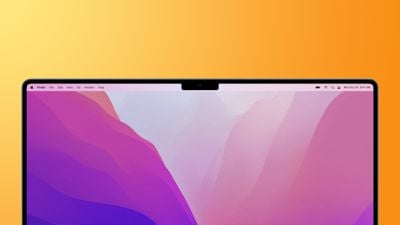
macbook pro 2021 notch feature
Gurman's latest thoughts on the subject appeared in the Q&A section of his latest "Power On" newsletter. On whether ‌Face ID‌ will ever come to the Mac, Gurman writes:

Face ID was in the cards for the original M1 iMac. Naturally, the iMac is the thickest Mac with a built-in display since Apple's laptops have fairly thin screens. At this point, the technology to embed Face ID into the thin MacBook displays doesn't exist. So if Face ID comes to the Mac, I think it will be on an iMac or external monitor first. Apple has definitely been working on this, but time will tell if they launch it.

First shown off in 2017 with the launch of the iPhone X, Apple's ‌Face ID‌ facial recognition system has since replaced Touch ID in most of the company's subsequent iPhones and iPads, and rumors have inevitably suggested a future Mac will adopt ‌Face ID‌.

Broaching the topic in July 2021, Gurman said he believed Apple intended to launch its first Mac with ‌Face ID‌ "within a couple of years," and that Apple had initially planned to include ‌Face ID‌ in 2021's 24-inch iMac, but its inclusion was delayed because of the all-in-one machine's 2021 redesign.

There have been rumors that Apple has tested ‌Face ID‌ for its next larger ‌‌iMac‌‌, tentatively dubbed "‌iMac‌ Pro," but it is not a confirmed feature and it remains unclear whether ‌‌Face ID‌‌ will make it into the release version of the machine.

Aside from the technical limitations, there are also practical questions surrounding the implementation of ‌Face ID‌ on a Mac. For example, unlocking a Mac from sleep using ‌Face ID‌ would seem reasonably straightforward, but using it to authenticate actions like purchases would presumably mean it would have to be confirmed by a physical button press or perhaps be used in conjunction with ‌Touch ID‌.

As for ‌Face ID‌ on future iPhones, for at least some of the ‌iPhone‌ 14 models, Apple is working to eliminate the notch that houses the hardware needed for ‌Face ID‌. Display analyst Ross Young has said he expects to see both a pill-shaped cutout and a circular cutout on some ‌iPhone‌ 14 models. The circular cutout will likely house the ‌Face ID‌ dot projector, and the pill-shaped cutout will include the front camera, ‌Face ID‌ infrared camera, and possibly other components.

In addition to the question of ‌Face ID‌ on Mac, Gurman's latest newsletter reiterated that Apple is planning to hold a virtual event on Tuesday, March 8 to introduce new ‌iPhone‌ SE and iPad Air models, which are both expected to feature an A15 chip and 5G support.
Popular Stories

Apple Logo Zoomed

Tim Cook Teases Plans for Apple's Upcoming 50th Anniversary

Thursday February 5, 2026 12:54 pm PST by
Apple turns 50 this year, and its CEO Tim Cook has promised to celebrate the milestone. The big day falls on April 1, 2026. "I've been unusually reflective lately about Apple because we have been working on what do we do to mark this moment," Cook told employees today, according to Bloomberg's Mark Gurman. "When you really stop and pause and think about the last 50 years, it makes your heart ...
wwdc sans text feature

Apple Rumored to Announce New Product on February 19

Thursday February 5, 2026 12:22 pm PST by
Apple plans to announce the iPhone 17e on Thursday, February 19, according to Macwelt, the German equivalent of Macworld. The report, citing industry sources, is available in English on Macworld. Apple announced the iPhone 16e on Wednesday, February 19 last year, so the iPhone 17e would be unveiled exactly one year later if this rumor is accurate. It is quite uncommon for Apple to unveil...
Finder Siri Feature

Why Apple's iOS 26.4 Siri Upgrade Will Be Bigger Than Originally Promised

Friday February 6, 2026 3:06 pm PST by
In the iOS 26.4 update that's coming this spring, Apple will introduce a new version of Siri that's going to overhaul how we interact with the personal assistant and what it's able to do. The iOS 26.4 version of Siri won't work like ChatGPT or Claude, but it will rely on large language models (LLMs) and has been updated from the ground up. Upgraded Architecture The next-generation...
iOS 26

iOS 26.3 and iOS 26.4 Will Add These New Features to Your iPhone

Tuesday February 3, 2026 7:47 am PST by
While the iOS 26.3 Release Candidate is now available ahead of a public release, the first iOS 26.4 beta is likely still at least a week away. Following beta testing, iOS 26.4 will likely be released to the general public in March or April. Below, we have recapped known or rumored iOS 26.3 and iOS 26.4 features so far. iOS 26.3 iPhone to Android Transfer Tool iOS 26.3 makes it easier...
iphone 17 pro dark blue 1

iPhone 18 Pro Max Rumored to Deliver Next-Level Battery Life

Friday February 6, 2026 5:14 am PST by
The iPhone 18 Pro Max will feature a bigger battery for continued best-in-class battery life, according to a known Weibo leaker. Citing supply chain information, the Weibo user known as "Digital Chat Station" said that the iPhone 18 Pro Max will have a battery capacity of 5,100 to 5,200 mAh. Combined with the efficiency improvements of the A20 Pro chip, made with TSMC's 2nm process, the...

Top Rated Comments

johannnn Avatar
52 months ago

This article doesn’t make sense to me. Isn’t FaceID technology on an iPhone pretty thin? The iPhone certainly sends thin enough to be used as a laptop screen, no?
The iPhone is way way way thicker than the Macbook screens.
Score: 27 Votes (Like | Disagree)
Apple Knowledge Navigator Avatar
52 months ago

I wonder whether Apple doesn't implement FaceID because of patents? Afterall, the technology is already present on Windows laptop for 6 years or so.
Windows Hello is a photographic technology, which is entirely different to FaceID.
Score: 26 Votes (Like | Disagree)
MrCubes Avatar
52 months ago

The article mentions the thin laptop screens as the reason why FaceID hasn't been added to Macs. I'm curious: Is the technology to implement FaceID significantly different from that to use Windows Hello? I use WH on my XPS 9510, and that has a very thin screen (and a crappier camera than Macs have). I'm no engineer, so maybe that's legitimate according to the way Apple builds their systems?
My understanding of Windows Hello is that it is just a 2D photographic scan, using IR for low light - but otherwise just a normal webcam. As such it is not as secure, and, in particular, can be fooled by a photo of the user's face.

FaceID, on the other hand, uses its dot projector, combined with the IR camera, to produce a 3D map of the face and is, therefore, more secure. It's this component that is more problematic at these sizes.
Score: 22 Votes (Like | Disagree)
Apple Knowledge Navigator Avatar
52 months ago
It’s okay - the scientists on forums apparently know otherwise ?
Score: 20 Votes (Like | Disagree)
Hajj.david Avatar
52 months ago

What? Windows Hello, which is similar to faceid has been around for years.
No its not, two vastly different technologies.
Score: 19 Votes (Like | Disagree)
TheDailyApple Avatar
52 months ago
I just wish they had made the notch smaller. I’m sure it will match future macs with Face ID, but I’d rather lose that continuity and have a small notch. I have enough icons in my menu bar for it to get in my way.
Score: 17 Votes (Like | Disagree)