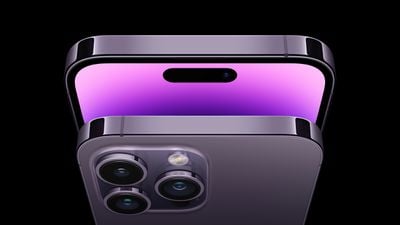
The iPhone 14 Pro and iPhone 14 Pro Max feature 6GB of faster RAM, which helps make overall device performance faster and more efficient compared to last year's iPhone 13 Pro.
Earlier today, a teardown of the iPhone 14 Pro revealed it features Qualcomm's X65 5G modem, offering faster 5G speeds and lower energy consumption.
That same teardown also confirmed that the iPhone 14 Pro and iPhone 14 Pro Max feature the newer and faster type of LPDDR5 RAM compared to the LPDDR4X memory in the previous iPhone 13 Pro. Like the iPhone 13 Pro last year, the iPhone 14 Pro still features the same 6GB capacity of RAM but benefits from the newer LPDDR5 memory type.
The standard iPhone 14 and iPhone 14 Plus, as rumored, are expected to still be featuring LPDDR4X memory alongside the A15 Bionic chip from last year's high-end iPhones. According to Apple, the A16 Bionic in the iPhone 14 Pro features 50% more memory bandwidth, which is in line with the expected increase from moving to LPDDR5 memory. The iPhone 14 Pro and iPhone 14 Pro Max feature the new A16 Bionic chip that Apple says is the "fastest chip ever in a smartphone."
iOS 26.4 was released today, and it includes a couple of new features for CarPlay: an Ambient Music widget and support for voice-based chatbot apps.
To update your iPhone 11 or newer to iOS 26.4, open the Settings app and tap on General → Software Update. CarPlay will automatically offer the new features so long as the iPhone connected to your vehicle is running iOS 26.4 or later....
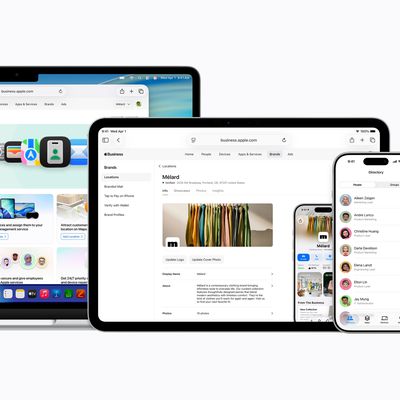
Apple today announced Apple Business, a new all-in-one platform that unifies device management, productivity tools, and customer outreach features.
The service is designed to be a consolidated replacement for several of Apple's existing business-focused offerings, including Apple Business Essentials, Apple Business Manager, and Apple Business Connect. It provides organizations with a single...
Tuesday March 24, 2026 12:31 pm PDT by Juli Clover
Apple today released new firmware for the AirPods Pro 2, AirPods Pro 3, and the AirPods 4. The firmware has a version number of 8B39, up from 8B34 on the AirPods Pro 3, 8B28 on the AirPods Pro 2, and 8B21 on the AirPods 4.
There is no word on what's included in the firmware, but Apple has a support document with limited notes. Most updates are limited to bug fixes and performance...
What is incredible is that an iPhone is just 2GB shy of the 8GB offered in entry level MBAs and MBPs. Goes to show how important memory is for the Mac-line and how under powered they are to boost bottom line.
Very nice! All we need is 10 more GB of ram for Apple to catch up to Android.
I am legitimately curious, in what situation does the iPhone ever show that it doesn't have enough RAM? I have been using them since the first and I cannot ever remember wishing for more memory. I still find the experience smoother than any other phone I have ever used.
Not being a dick, just trying to figure out why people keep wanting more and more RAM when it seems like Apple has the iPhone pretty optimized using less than competitors.
Very nice! All we need is 10 more GB of ram for Apple to catch up to Android.
The reason why Android needs so much memory is that it lacks Apple's level of hardware and software integration and, like generic windows and other software that is required to run on a plethora of ambiguous hardware, is highly inefficient and needs twice as much to do pretty much the same as Apple does on its highly regulated hardware.
If iPhone ever moves over to M series with its unified memory architecture, this gap in performance and power usage will be literally LOLworthy.
What is incredible is that an iPhone is just 2GB shy of the 8GB offered in entry level MBAs and MBPs. Goes to show how important memory is for the Mac-line and how under powered they are to boost bottom line.
Unpopular opinion? Perhaps.
I'm sure there are those with use cases that can support 8gb. People who buy computers, hopefully understand their use cases and then buy the appropriate hardware to support their use cases.