The European Parliament today voted overwhelmingly in favor of enforcing USB-C as a common charging port across a wide range of consumer electronic devices, including the iPhone and AirPods, by the end of 2024.
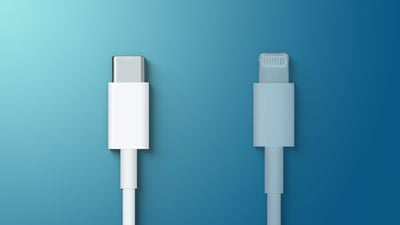
The proposal, known as a directive, forces all consumer electronics manufacturers who sell their products in Europe to ensure that a wide range of devices feature a USB-C port. This "common port" will be a world-first statute and impact Apple in particular since it widely uses the Lightning connector instead of USB-C on many of its devices. MEPs claim that the move will reduce electronic waste, address product sustainability, and make use of different devices more convenient.
The directive received 602 votes in favor, 13 votes against, and eight abstentions. A press release issued by the European Parliament earlier today states:
By the end of 2024, all mobile phones, tablets and cameras sold in the EU will have to be equipped with a USB Type-C charging port. From spring 2026, the obligation will extend to laptops. The new law, adopted by plenary on Tuesday with 602 votes in favour, 13 against and 8 abstentions, is part of a broader EU effort to reduce e-waste and to empower consumers to make more sustainable choices.
Under the new rules, consumers will no longer need a different charger every time they purchase a new device, as they will be able to use one single charger for a whole range of small and medium-sized portable electronic devices.
Regardless of their manufacturer, all new mobile phones, tablets, digital cameras, headphones and headsets, handheld videogame consoles and portable speakers, e-readers, keyboards, mice, portable navigation systems, earbuds and laptops that are rechargeable via a wired cable, operating with a power delivery of up to 100 Watts, will have to be equipped with a USB Type-C port.
All devices that support fast charging will now have the same charging speed, allowing users to charge their devices at the same speed with any compatible charger.
Exemptions will apply for devices that are too small to offer a USB-C port, such as smart watches, health trackers, and some sports equipment, but the legislation is expected to be expanded to other devices over time. Companies will also have to ensure that dedicated labels clearly inform consumers about the charging characteristics of devices they buy.
In addition, the EU seeks to ensure that wireless charging solutions are interoperable as the technology evolves over time. The directive empowers the European Commission to develop delegated acts by the end of 2024 that force companies to make their custom wireless charging solutions more open and meet interoperability standards, helping consumers to avoid getting locked into proprietary charging solutions while preventing fragmentation and reducing waste. It is not clear if this would include Apple's MagSafe charging system for the iPhone and AirPods since it is based on the Qi wireless charging standard.
Now, the European Council must approve the directive so that it can be published in the EU Official Journal. It will come into force 20 days after publication in the EU Official Journal and its requirements will start to apply to new devices after 24 months. Products that went on sale before the date of application will be exempt and can continue to be sold after that point.
In 2018, the European Commission attempted to reach a final resolution on this issue but it failed to come into law. At the time, Apple warned that forcing a common charging port on the industry would stifle innovation and create electronic waste as consumers would be forced to switch to new cables.
The EU's effort resumed last year, with the European Commission spearheading a refreshed version of the directive. In April, the Internal Market and Consumer Protection Committee voted to support the directive, with 43 votes in favor and just two against. In June, the EU's Committee on Internal Market and Consumer Protection reached an agreement to introduce the directive to the European Parliament.
Both Apple analyst Ming-Chi Kuo and Bloomberg's Mark Gurman have said that Apple is testing a version of the iPhone that has a USB-C port instead of a Lightning port. Kuo believes that Apple could switch the iPhone to USB-C starting with 2023's iPhone 15, before transitioning AirPods and other accessories at a later date. This timing would allow Apple to switch many of its affected devices to USB-C ahead of the EU directive coming into force.
Note: Due to the political or social nature of the discussion regarding this topic, the discussion thread is located in our Political News forum. All forum members and site visitors are welcome to read and follow the thread, but posting is limited to forum members with at least 100 posts.