iPhone 16 May Feature More Power-Efficient Samsung OLED Display - MacRumors
Skip to Content

iPhone 16 May Feature More Power-Efficient Samsung OLED Display

Next year's iPhone 16 could feature a more power-efficient display thanks to a new OLED material set that is reportedly being developed by Samsung specifically for Apple.
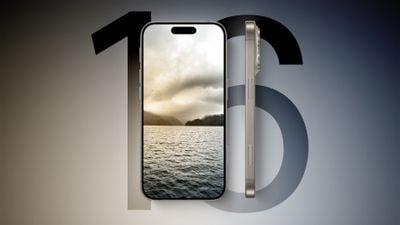
iPhone 16 Side Feature
A material set includes a variety of components for OLED screens, such as capping layers (CPL), which adjust the optical characteristics of the screen. Each component is produced by a specialist manufacturer and supplied to Samsung, which then uses them to construct the final OLED panel.

A different composition of materials in the set can alter attributes of the OLED panel, such as lifespan, brightness, color accuracy, or manufacturing efficiency.

Back in April, The Elec reported that Samsung was using its "M12" material set for this year's iPhone 15 models, while also developing a new OLED material set, dubbed "M14," specifically for Apple's 2024 iPhones. The precise reason for the development was not known at the time, but a new report from the Korean-language outlet suggests it could be related to making the OLED panel more energy efficient.

Citing Korean Ubi Research analyst Daejeong Yoon, The Elec now reports that Samsung's OLED development roadmap has been focused on replacing blue fluorescent materials with a blue phosphorescence that could reduce the overall power consumption of an OLED panel.

According to Yoon, Samsung originally intended to use the more power-efficient material in OLED panels developed for a variety of foldable phones in 2024, but it is not easy to develop, and Samsung could instead reserve it for Apple's M14 material set.

"Following the ‌iPhone 16‌ next year, M14 will be applied to the iPhone 17 in 2025, and the application period for the Apple iPhone OLED material set will increase to two years," Yoon was quoted as saying.

The ‌iPhone 16‌ Pro and ‌iPhone 16‌ Pro Max are expected to have larger display sizes, according to multiple sources. The ‌iPhone 16‌ Pro will have a display that's 6.27 inches in size (rounded to 6.3), while the ‌iPhone 16‌ Pro Max is expected to have a display that's 6.85 inches in size (rounded to 6.9).

A previous report in September suggested ‌iPhone 16‌ OLED panels could use micro-lens technology to maintain or increase the brightness of the displays while potentially reducing their power consumption.

Meanwhile an earlier report in May claimed that Apple intends to mass produce more advanced microLED displays in order to lessen its reliance on Samsung and increase its own control over supply, laying the groundwork to realize its ultimate goal of bringing the next-generation technology to iPhones.
Tags: OLED, The Elec

Popular Stories

iOS 26

iOS 26.4 Adds Two New Features to CarPlay

Tuesday March 24, 2026 1:55 pm PDT by
iOS 26.4 was released today, and it includes a couple of new features for CarPlay: an Ambient Music widget and support for voice-based chatbot apps. To update your iPhone 11 or newer to iOS 26.4, open the Settings app and tap on General → Software Update. CarPlay will automatically offer the new features so long as the iPhone connected to your vehicle is running iOS 26.4 or later....
Apple Business hero

Apple Unveils 'Apple Business' All-in-One Platform

Tuesday March 24, 2026 8:53 am PDT by
Apple today announced Apple Business, a new all-in-one platform that unifies device management, productivity tools, and customer outreach features. The service is designed to be a consolidated replacement for several of Apple's existing business-focused offerings, including Apple Business Essentials, Apple Business Manager, and Apple Business Connect. It provides organizations with a single...
AirPods Pro Firmware Feature

Apple Releases New Firmware for AirPods Pro 3, AirPods Pro 2 and AirPods 4

Tuesday March 24, 2026 12:31 pm PDT by
Apple today released new firmware for the AirPods Pro 2, AirPods Pro 3, and the AirPods 4. The firmware has a version number of 8B39, up from 8B34 on the AirPods Pro 3, 8B28 on the AirPods Pro 2, and 8B21 on the AirPods 4. There is no word on what's included in the firmware, but Apple has a support document with limited notes. Most updates are limited to bug fixes and performance...

Top Rated Comments

Octavius8 Avatar
31 months ago
Same old story about better designs, more advanced manufacturing processes, new materials, etc. and we end up with the same battery life year after year.
Score: 13 Votes (Like | Disagree)
AppleFanBoyCAN Avatar
31 months ago
« iPhone 16 delivers the same incredible all-day battery life! »
Score: 10 Votes (Like | Disagree)
31 months ago
I just hope the new iPhone displays do not use PWM or have TLM (temporal light modulation). Many of us cannot use the OLED iPhones because the screens cause severe eye-strain and make us feel sick. I seriously hope they fix that instead of worrying about saving a few more mAh of battery.

Here is concrete evidence of this issue: https://forums.macrumors.com/threads/eye-strain-while-using-iphone-x-and-up.2085427/post-32709834
Score: 8 Votes (Like | Disagree)
Alex Cai Avatar
31 months ago
And make a iOS development gap year, fix the bugs and clean everything up.
Score: 6 Votes (Like | Disagree)
Steve-Jobz Avatar
31 months ago
Tim: OK. -500mAh
Score: 4 Votes (Like | Disagree)
bradman83 Avatar
31 months ago

Same old story about better designs, more advanced manufacturing processes, new materials, etc. and we end up with the same battery life year after year.

« iPhone 16 delivers the same incredible all-day battery life! »
One of the biggest complaints of modern iPhones since the 12 series, especially the pro models, is how heavy they are. Batteries are the biggest contributors to a phone's weight. So if Apple can reduce the phone's weight by shrinking the battery but deliver the same runtime by using more efficient components that would be a win in and of itself. (And yes I fully recognize there are users out there who would carry around a heavy phone with a beefier battery).
Score: 4 Votes (Like | Disagree)