Apple to Pay Canadian Customers Up to $150 Following iPhone Battery Controversy - MacRumors
Skip to Content

Apple to Pay Canadian Customers Up to $150 Following iPhone Battery Controversy

A court in British Columbia, Canada today approved Apple's settlement related to the iPhone battery throttling controversy in 2018, according to CBC News.
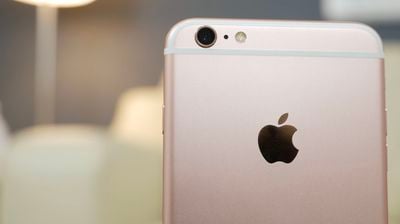
iPhone 6s MacRumors YouTube
Apple agreed to pay up to $14.4 million (CAD) to settle a class action lawsuit in Canada that alleged the company secretly throttled the performance of some iPhone models. Each affected customer who submits a claim will receive a payment of between $17.50 and $150 (CAD) from Apple, with the exact payout amount to be dependent on the total number of claims submitted. More information on how to submit a claim will be shared on the settlement website, but a specific timeframe has yet to be provided.

The class includes any current or former resident of Canada (excluding Quebec) who owned and/or purchased an iPhone 6, iPhone 6 Plus, iPhone 6s, iPhone 6s Plus, and/or iPhone SE with iOS 10.2.1 or later installed or downloaded, and/or an iPhone 7 or iPhone 7 Plus with iOS 11.2 or later installed or downloaded, before December 21, 2017. A serial number will be required for each affected iPhone, according to CBC News.

Apple has denied the allegations described in the lawsuit, and the settlement does not represent an admission of fault. The settlement allows for Apple to avoid the additional time and costs involved with continued litigation.

Apple was sued in multiple Canadian provinces over iPhone battery throttling in 2018, including Alberta, British Columbia, Ontario, and Saskatchewan. The cases were filed shortly after Apple revealed that it had started throttling the maximum performance of some iPhone models with "chemically aged" batteries, when necessary, to prevent the devices from unexpectedly shutting down. Apple introduced this new power management system in iOS 10.2.1, but it initially failed to mention the change in that update's release notes, leading to public outcry. Apple eventually apologized about its lack of transparency, and temporarily lowered the price of iPhone battery replacements to $29 (USD) until the end of 2018.

Apple agreed to pay up to $500 million (USD) to settle a similar class action lawsuit in the U.S., and payments started going out in January there.
Popular Stories

iOS 26

iOS 26.4 Adds Two New Features to CarPlay

Tuesday March 24, 2026 1:55 pm PDT by
iOS 26.4 was released today, and it includes a couple of new features for CarPlay: an Ambient Music widget and support for voice-based chatbot apps. To update your iPhone 11 or newer to iOS 26.4, open the Settings app and tap on General → Software Update. CarPlay will automatically offer the new features so long as the iPhone connected to your vehicle is running iOS 26.4 or later....
Apple Business hero

Apple Unveils 'Apple Business' All-in-One Platform

Tuesday March 24, 2026 8:53 am PDT by
Apple today announced Apple Business, a new all-in-one platform that unifies device management, productivity tools, and customer outreach features. The service is designed to be a consolidated replacement for several of Apple's existing business-focused offerings, including Apple Business Essentials, Apple Business Manager, and Apple Business Connect. It provides organizations with a single...
AirPods Pro Firmware Feature

Apple Releases New Firmware for AirPods Pro 3, AirPods Pro 2 and AirPods 4

Tuesday March 24, 2026 12:31 pm PDT by
Apple today released new firmware for the AirPods Pro 2, AirPods Pro 3, and the AirPods 4. The firmware has a version number of 8B39, up from 8B34 on the AirPods Pro 3, 8B28 on the AirPods Pro 2, and 8B21 on the AirPods 4. There is no word on what's included in the firmware, but Apple has a support document with limited notes. Most updates are limited to bug fixes and performance...

Top Rated Comments

erikkfi Avatar
27 months ago
Apple’s just getting themselves in trouble everywhere these days, aren’t they?

Of course, they never admit fault.
Score: 7 Votes (Like | Disagree)
mike2q Avatar
27 months ago

There's no guilt to admit to. Apple can't change the chemistry of batteries. They did what needed to be done to keep the phone working and stable.
They certainly choose the chemistry of their batteries but that's besides the point. They didn't need to throttle their phones for any end user benefits. If you believe they did then a bridge for sale metaphor comes to mind. Other phone manufacturers are somehow able to get by just fine without throttling so defending Apple on this one feels like defending an abusive relationship because you've had some good times together and they didn't mean to hurt you.
Score: 6 Votes (Like | Disagree)
BryanElliott Avatar
27 months ago

There's no guilt to admit to. Apple can't change the chemistry of batteries. They did what needed to be done to keep the phone working and stable.
I think what most people are mad about is that apple made the choice for the customer to keep the phone slow without letting the customer know WHY and if that were the case they should have given the customer the choice in making that performance/battery life decision and at the very least give us more information about our batteries instead of hiding it from us.
Score: 5 Votes (Like | Disagree)
27 months ago

They certainly choose the chemistry of their batteries but that's besides the point. They didn't need to throttle their phones for any end user benefits. If you believe they did then a bridge for sale metaphor comes to mind. Other phone manufacturers are somehow able to get by just fine without throttling so defending Apple on this one feels like defending an abusive relationship because you've had some good times together and they didn't mean to hurt you.
This is such an old story that was all hashed out over and over and over again like 5 years ago. Tons of phones had this exact problem... but rather than throttling, they just let them hard shut off. They just didn't make the headlines because they weren't apple and apple gets the clicks.
Score: 5 Votes (Like | Disagree)
27 months ago

Apple was pushing for super-thin back then. It had a negative impact on battery life. Phones got thicker again, but now we're returning to thin again, likely because technology has improved.

I don't hold any hard feelings toward Apple trying to keep devices working well. Class-action lawsuits are rooted in selfish victim mindsets.
Someone takes a phone in to an Apple store with a battery problem and instead of telling the customer what the problem was they told them in a lot of cases, You need a new phone.

So the question is, did Apple know what the problem was, before offering this 'fix'? Well lets's see.........

* Apple receive millions of anonymous diagnostic reports when people sync their phones.
* Apple have an official support forum, and although they maintain that no employees actually work there, (no doubt to be able to distance themselves from bad advice), they WILL get feedback about problems.
* Apple have an official online support channel.
* Apple Stores have Genius Bars that report back their findings.
* There are countless other social media avenues that Apple will get wind of problems from, Facebook, Reddit etc.

Are you telling me that you don't believe that Apple, (collectively), lied to customers about what the problem was?
Score: 4 Votes (Like | Disagree)
27 months ago

There's no guilt to admit to. Apple can't change the chemistry of batteries. They did what needed to be done to keep the phone working and stable.
There was a LOT more to it than battery chemistry, but I've run out of steam to drag over it again so you can all ignore reality.
Score: 4 Votes (Like | Disagree)