Apple Silicon Vulnerability Allows Hackers to Extract Encryption Keys

An unpatchable vulnerability has been discovered in Apple's M-series chips that allows attackers to extract secret encryption keys from Macs under certain conditions, according to a newly published academic research paper (via ArsTechnica).
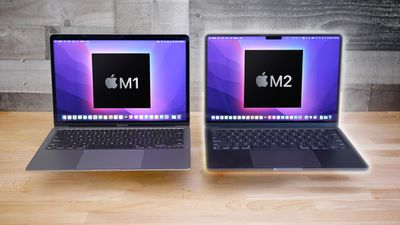
m1 vs m2 air feature toned down
Named "GoFetch," the type of cyber attack described involves Data Memory-Dependent Prefetchers (DMPs), which try to predict what data the computer will need next and retrieve it in advance. This is meant to make processing faster, but it can unintentionally reveal information about what the computer is doing.

The paper finds that DMPs, especially the ones in Apple's processors, pose a significant threat to the security provided by constant-time programming models, which are used to write programs so that they take the same amount of time to run, no matter what data they're dealing with.

The constant-time programming model is meant to protect against side-channel attacks, or types of attacks where someone can gain sensitive information from a computer system without directly accessing it (by observing certain patterns, for example). The idea is that if all operations take the same amount of time, there's less for an attacker to observe and exploit.

However, the paper finds that DMPs, particularly in Apple silicon, can leak information even if the program is designed not to reveal any patterns in how it accesses memory. The new research finds that the DMPs can sometimes confuse memory content, which causes it to treat the data as an address to perform memory access, which goes against the constant-time model.

The authors present GoFetch as a new type of attack that can exploit this vulnerability in DMPs to extract encryption keys from secure software. The attack works against some popular encryption algorithms that are thought to be resistant to side-channel attacks, including both traditional (e.g. OpenSSL Diffie-Hellman Key Exchange, Go RSA decryption) and post-quantum (e.g. CRYSTALS-Kyber and CRYSTALS-Dilithium) cryptographic methods.

In an email to ArsTechnica, the authors explained:

Prefetchers usually look at addresses of accessed data (ignoring values of accessed data) and try to guess future addresses that might be useful. The DMP is different in this sense as in addition to addresses it also uses the data values in order to make predictions (predict addresses to go to and prefetch). In particular, if a data value "looks like" a pointer, it will be treated as an "address" (where in fact it's actually not!) and the data from this "address" will be brought to the cache. The arrival of this address into the cache is visible, leaking over cache side channels.

Our attack exploits this fact. We cannot leak encryption keys directly, but what we can do is manipulate intermediate data inside the encryption algorithm to look like a pointer via a chosen input attack. The DMP then sees that the data value "looks like" an address, and brings the data from this "address" into the cache, which leaks the "address." We don't care about the data value being prefetched, but the fact that the intermediate data looked like an address is visible via a cache channel and is sufficient to reveal the secret key over time.

In summary, the paper shows that the DMP feature in Apple silicon CPUs could be used to bypass security measures in cryptography software that were thought to protect against such leaks, potentially allowing attackers to access sensitive information, such as a 2048-bit RSA key, in some cases in less than an hour.

According to the authors, the flaw in Apple's chips cannot be patched directly. Instead, the attack vector can only be reduced by building defenses into third-party cryptographic software that could result in an extreme performance degradation when executing the cryptographic operations, particularly on the earlier M1 and M2 chips. The DMP on the M3, Apple's latest chip, has a special bit that developers can invoke to disable it, but the researchers aren't yet sure what kind of penalty will occur when this performance optimization is turned off.

As ArsTechnica notes, this isn't the first time researchers have identified threats in Apple DMPs. Research documented in 2022 discovered one such threat in both the ‌M1‌ and Apple's A14 Bionic chip for iPhones, which resulted in the "Augury" attack. However, this attack was ultimately unable to extract the sensitive data when constant-time practices were used.

"GoFetch shows that the DMP is significantly more aggressive than previously thought and thus poses a much greater security risk," the researchers claim on their website. "Specifically, we find that any value loaded from memory is a candidate for being dereferenced (literally!). This allows us to sidestep many of Augury's limitations and demonstrate end-to-end attacks on real constant-time code."

DMP-style attacks are not common, and the researchers informed Apple of the vulnerability in December 2023. Users concerned about the vulnerability are advised to check for GoFetch mitigation updates that become available in future macOS updates for any of the encryption protocols known to be vulnerable. Apple representatives declined to comment on the record when ArsTechnica asked about the paper.

Popular Stories

Apple Logo Zoomed

Tim Cook Teases Plans for Apple's Upcoming 50th Anniversary

Thursday February 5, 2026 12:54 pm PST by
Apple turns 50 this year, and its CEO Tim Cook has promised to celebrate the milestone. The big day falls on April 1, 2026. "I've been unusually reflective lately about Apple because we have been working on what do we do to mark this moment," Cook told employees today, according to Bloomberg's Mark Gurman. "When you really stop and pause and think about the last 50 years, it makes your heart ...
wwdc sans text feature

Apple Rumored to Announce New Product on February 19

Thursday February 5, 2026 12:22 pm PST by
Apple plans to announce the iPhone 17e on Thursday, February 19, according to Macwelt, the German equivalent of Macworld. The report, citing industry sources, is available in English on Macworld. Apple announced the iPhone 16e on Wednesday, February 19 last year, so the iPhone 17e would be unveiled exactly one year later if this rumor is accurate. It is quite uncommon for Apple to unveil...
Finder Siri Feature

Why Apple's iOS 26.4 Siri Upgrade Will Be Bigger Than Originally Promised

Friday February 6, 2026 3:06 pm PST by
In the iOS 26.4 update that's coming this spring, Apple will introduce a new version of Siri that's going to overhaul how we interact with the personal assistant and what it's able to do. The iOS 26.4 version of Siri won't work like ChatGPT or Claude, but it will rely on large language models (LLMs) and has been updated from the ground up. Upgraded Architecture The next-generation...
iOS 26

iOS 26.3 and iOS 26.4 Will Add These New Features to Your iPhone

Tuesday February 3, 2026 7:47 am PST by
While the iOS 26.3 Release Candidate is now available ahead of a public release, the first iOS 26.4 beta is likely still at least a week away. Following beta testing, iOS 26.4 will likely be released to the general public in March or April. Below, we have recapped known or rumored iOS 26.3 and iOS 26.4 features so far. iOS 26.3 iPhone to Android Transfer Tool iOS 26.3 makes it easier...
iphone 17 pro dark blue 1

iPhone 18 Pro Max Rumored to Deliver Next-Level Battery Life

Friday February 6, 2026 5:14 am PST by
The iPhone 18 Pro Max will feature a bigger battery for continued best-in-class battery life, according to a known Weibo leaker. Citing supply chain information, the Weibo user known as "Digital Chat Station" said that the iPhone 18 Pro Max will have a battery capacity of 5,100 to 5,200 mAh. Combined with the efficiency improvements of the A20 Pro chip, made with TSMC's 2nm process, the...

Top Rated Comments

danieldk Avatar
25 months ago
This kind of vulnerability is bad - future hardware revisions should solve it and mitigations should be put into place. However, glossing over the paper, this currently does not seem like a big threat to most users:

Emulating realistic attack scenarios, we assume that ct-swap runs in a victim process, separate from the attacker’s address space. We assume a simple but common protocol between victim and attacker, where the victim takes input from the attacker to populate the ct-swap’s a and b arrays and then executes ct-swap.

So, it assumes that not only has the attacker has a process running on a victim's machine, but that it can also feed input directly to the victim process. However, if a malicious actor already has a local process running with user privileges, there are so many possible attack vectors, that it's also often game over before this vulnerability. If you only install trusted software, you should be pretty safe.

What made Meltdown/Spectre so devastating on Intel CPUs is that they allowed snooping information without communication with the victim process and that e.g. Linux is used on many multi-tenant machines. So there is ample opportunity to eavesdrop on other people's machines.

It's a bit sad that Ars did not qualify the research further, because if you read the headline and article, it's as if the sky is falling on Apple Silicon CPUs. But (not surprisingly) it's not.
Score: 68 Votes (Like | Disagree)
brijazz Avatar
25 months ago
Still better than updating to 14.4 ;)
Score: 33 Votes (Like | Disagree)
danieldk Avatar
25 months ago

From Macworld this morning:
[...]
DMP-based attacks aren’t common, and they require a hacker to have physical access to a Mac. So, the best way to prevent an attack is you secure your user account on your Mac with a strong password, and do not let people you don’t know use your Mac. For more information on Mac security, read “;How to know if your Mac has been hacked ('https://www.macworld.com/article/676307/how-to-know-if-your-mac-has-been-hacked.html')” and “How secure is your Mac? ('https://www.macworld.com/article/668710/how-secure-mac.html')” Also consider running an antivirus program on your Mac ('https://www.macworld.com/article/670537/do-macs-need-antivirus.html').
By the way, MacWorld is incorrect here. It does not require physical access. A malicious actor needs to be able to run a process in your machine. This can also be accomplished by tricking the user to install malware, planting malware through vulnerabilities in programs that read untrusted data (web browser, iMessage, etc.).

If you don't install random software from the internet, you should be pretty safe.
Score: 27 Votes (Like | Disagree)
hovscorpion12 Avatar
25 months ago
Genuine question. Does this “exploit“ actually have an effect on users? Or this for specific individuals?
Score: 25 Votes (Like | Disagree)
mystery hill Avatar
25 months ago
This can be fixed by upgrading to M5.
Score: 23 Votes (Like | Disagree)
hovscorpion12 Avatar
25 months ago

Wonder how long Apple has known about this? I think we can safely assume based on past experience that Apple did nothing, hoping the public would never know.
The devs posted they informed Apple in Dec 2023.
Score: 21 Votes (Like | Disagree)