Apple Files Motion to Dismiss Department of Justice Antitrust Lawsuit

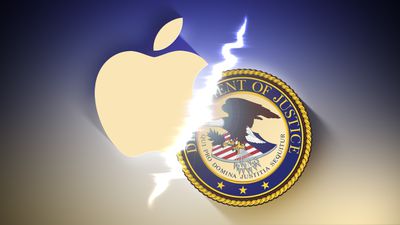
Apple today filed a motion to dismiss its ongoing lawsuit with the United States Department of Justice, a standard step in the litigation process. In its motion to dismiss, Apple argues that the government's complaint has not demonstrated anticompetitive conduct, anticompetitive effect that harms consumers, or that Apple is a monopoly power in the U.S. smartphone market. The government needs to prove all three of these claims for a successful antitrust lawsuit.
Apple vs DOJ Feature
For the anticompetitive allegation, the DoJ lawsuit focused on third-party access to Apple services and features, but Apple argues that there is longstanding Supreme Court precedent that companies can set the terms and conditions of their third-party dealings. Apple claims that the DoJ is attempting to force it to spend money to develop tools for big business competitors, which could have a "chilling" effect on innovation. The DoJ suggested, for example, that Apple should have developed an iMessage app for Android.

iMessage is Apple's proprietary, innovative messaging service that Apple created to competitively differentiate iPhone. Under the Government's view, companies like Apple should face antitrust liability for not expending the resources, cost, and time to develop versions of proprietary products and services for competitors' devices.

Apple points out that the DoJ's complaint does not explain how Apple's alleged limiting of "super apps," cloud streaming apps, digital wallets, messaging apps, and competing smartwatches has harmed consumers or impacted consumer choice about which smartphone to purchase. For a successful antitrust lawsuit, the DoJ needs to prove that Apple's actions hurt consumers and stifle competition, and the DoJ argues that Apple has "locked" customers into its ecosystem.

It is implausible to claim, as the Government does, that Apple has deterred any customers from switching to Google or Samsung because of its policies with respect to "super apps," cloud gaming, smartwatches, or anything else. The opposite is much more plausible: Users unhappy with Apple's reasonable policies on third-party access can and do switch away to competitors' devices, where those limits do not exist.

Apple argues that it is not a monopolist because it faces competition from companies like Google and Samsung, preventing the government from establishing the "typical hallmarks of monopoly power." Apple does not have enough U.S. smartphone marketshare to make the monopoly claim easy for the government to establish. The DoJ has compared Apple to Microsoft, but Microsoft had a 95 percent share of the operating system market when it faced an antitrust lawsuit, while Apple's is closer to 65 percent.

Apple further suggests that the DoJ is aiming to have the court establish a "new theory of antitrust liability" that no prior court has recognized and that would provide "unprecedented authority to control Apple design choices." Apple says that the DoJ is targeting the very features that distinguish iPhones from competing devices, and if the DoJ ultimately wins the case, courts would need to "oversee product-design and policy choices," which they are not equipped to do.

A motion to dismiss limits the information that Apple can provide to dispute the DoJ's claims, and rulings often favor plaintiffs. The allegations that the DoJ made are assumed to be true at this stage, and Apple needs to prove that the claims fail as a matter of law. For this reason, the lawsuit is likely to progress, though claims could be narrowed and there is a chance for dismissal.

If the court rules in the Department of Justice's favor on the dismissal, there will be many future chances for Apple to sway the court because this is a legal battle that will span years.

After Apple's motion to dismiss, the government has until September 12 to file an opposition brief. From there, Apple will file a reply brief on October 10, and there could be a possible hearing after that. A ruling on the motion to dismiss is expected in late 2024 or early 2025.

Should the government win, Apple will file an answer to the initial complaint, leading to a discovery period where both parties provide documents, expert testimony, and depositions, which can last for over a year. A summary judgment will follow, which is where Apple can make a stronger case, and that might not happen until 2027. Should the case ultimately go to trial, a trial could take place sometime in 2028, or even later.

For a refresher on the DoJ's antitrust claims against Apple, we have a dedicated guide that highlights everything you need to know about the U.S. vs. Apple legal fight.
Popular Stories

Apple Logo Zoomed

Tim Cook Teases Plans for Apple's Upcoming 50th Anniversary

Thursday February 5, 2026 12:54 pm PST by
Apple turns 50 this year, and its CEO Tim Cook has promised to celebrate the milestone. The big day falls on April 1, 2026. "I've been unusually reflective lately about Apple because we have been working on what do we do to mark this moment," Cook told employees today, according to Bloomberg's Mark Gurman. "When you really stop and pause and think about the last 50 years, it makes your heart ...
wwdc sans text feature

Apple Rumored to Announce New Product on February 19

Thursday February 5, 2026 12:22 pm PST by
Apple plans to announce the iPhone 17e on Thursday, February 19, according to Macwelt, the German equivalent of Macworld. The report, citing industry sources, is available in English on Macworld. Apple announced the iPhone 16e on Wednesday, February 19 last year, so the iPhone 17e would be unveiled exactly one year later if this rumor is accurate. It is quite uncommon for Apple to unveil...
Finder Siri Feature

Why Apple's iOS 26.4 Siri Upgrade Will Be Bigger Than Originally Promised

Friday February 6, 2026 3:06 pm PST by
In the iOS 26.4 update that's coming this spring, Apple will introduce a new version of Siri that's going to overhaul how we interact with the personal assistant and what it's able to do. The iOS 26.4 version of Siri won't work like ChatGPT or Claude, but it will rely on large language models (LLMs) and has been updated from the ground up. Upgraded Architecture The next-generation...
iOS 26

iOS 26.3 and iOS 26.4 Will Add These New Features to Your iPhone

Tuesday February 3, 2026 7:47 am PST by
While the iOS 26.3 Release Candidate is now available ahead of a public release, the first iOS 26.4 beta is likely still at least a week away. Following beta testing, iOS 26.4 will likely be released to the general public in March or April. Below, we have recapped known or rumored iOS 26.3 and iOS 26.4 features so far. iOS 26.3 iPhone to Android Transfer Tool iOS 26.3 makes it easier...
iphone 17 pro dark blue 1

iPhone 18 Pro Max Rumored to Deliver Next-Level Battery Life

Friday February 6, 2026 5:14 am PST by
The iPhone 18 Pro Max will feature a bigger battery for continued best-in-class battery life, according to a known Weibo leaker. Citing supply chain information, the Weibo user known as "Digital Chat Station" said that the iPhone 18 Pro Max will have a battery capacity of 5,100 to 5,200 mAh. Combined with the efficiency improvements of the A20 Pro chip, made with TSMC's 2nm process, the...

Top Rated Comments

platinumaqua Avatar
20 months ago
It would be news if Apple didn't file to dismiss the lawsuit.
Score: 14 Votes (Like | Disagree)
Mrkevinfinnerty Avatar
20 months ago
Apple: Hey DOJ lets dismiss this suit


DOJ:

Score: 10 Votes (Like | Disagree)
citysnaps Avatar
20 months ago

It's not mentioned in the lawsuit, but I can't help but think Apple's force push of eSIM in the US is increase friction to make switching to Android less appealing. The easy transfer of eSIM function (without needing to use carrier customer support/website) only works among iPhones.
In general... the Apple user experience was built upon reducing friction for its customers using their products. That goes back to early Steve Jobs days. A smart philosophy and a good thing.
Score: 9 Votes (Like | Disagree)
spazzcat Avatar
20 months ago

Don't do it DOJ! Hold Apple's feet to the fire!
All this lawsuit will do is make lawyers richer.
Score: 8 Votes (Like | Disagree)
spazzcat Avatar
20 months ago

Apple: Hey DOJ lets dismiss this suit


DOJ:


Its not up to the DOJ.
Score: 8 Votes (Like | Disagree)
Kirkster Avatar
20 months ago

"It is implausible to claim, as the Government does, that Apple has deterred any customers from switching to Google or Samsung because of its policies with respect to "super apps," cloud gaming, smartwatches, or anything else. The opposite is much more plausible: Users unhappy with Apple's reasonable policies on third-party access can and do switch away to competitors' devices, where those limits do not exist."

Similar could be said about Microsoft in the 1990s. Customers could've switched to Mac OS, OS/2, Linux, BeOS, DR-OS, etc. for non-Windows computers/operating systems, or switched to other non-MS products like Netscape Navigator for browsers. That didn't stop the DOJ. Simply having alternatives does not negate antitrust laws.
What was the combined market share of all of those alternative OSes in 1998? yea, less than 10%. Far cry from from Google and Apple duking it out today for market share around 50/50…
Score: 5 Votes (Like | Disagree)