Find My Network Exploit Turns Any Bluetooth Device Into a Tracker - MacRumors
Skip to Content

Find My Network Exploit Turns Any Bluetooth Device Into a Tracker

George Mason University researchers claim to have uncovered a serious vulnerability in Apple's Find My network that allows hackers to track virtually any Bluetooth-enabled device without the owner's knowledge.
find my friends precision finding
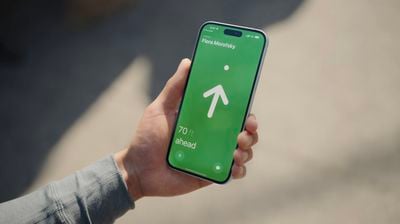
Called "nRootTag," the exploit tricks the Find My network into treating ordinary Bluetooth devices as if they were AirTags, allowing hackers to turn laptops, smartphones, game controllers, VR headsets, and even e-bikes into unwitting tracking beacons.

Find My works by having AirTags and other Find My-compatible items send Bluetooth signals to nearby Apple devices, which then anonymously relay location data to Apple's servers. The researchers discovered they could manipulate cryptographic keys to make the network believe any Bluetooth device was a legitimate AirTag.

The research team found that the attack has a 90% success rate and can pinpoint a device's location within minutes. "While it is scary if your smart lock is hacked, it becomes far more horrifying if the attacker also knows its location," said one of the researchers.

What makes the exploit even more concerning is that it doesn't require physical access or administrator privileges on the target device – it can actually be executed remotely. In their experiments, the team successfully tracked a stationary computer with 10-foot accuracy and even reconstructed the exact flight path of a gaming console brought onboard an airplane.

The attack does require fairly hefty computing resources – the research team used hundreds of graphics processing units to quickly find matching cryptographic keys. However, they note that this could be achieved relatively inexpensively by renting GPUs, which has become a common practice in the crypto-mining community.

The team said they notified Apple about the vulnerability in July 2024, and Apple says that it protected against the vulnerability in December software updates.

Even after Apple implements a fix, the researchers warn the vulnerability could persist for years as many users delay updating their devices. "The vulnerable Find My network will continue to exist until those devices slowly 'die out,' and this process will take years," said one researcher.

The research will be formally presented at the USENIX Security Symposium in August. The team recommends users be cautious about apps requesting Bluetooth permissions, keep their devices updated, and consider privacy-focused operating systems for better protection.

Update: This article has been updated to clarify that Apple bolstered the Find My network in December 2024 to protect against this type of attack.

Popular Stories

iOS 26

iOS 26.4 Adds Two New Features to CarPlay

Tuesday March 24, 2026 1:55 pm PDT by
iOS 26.4 was released today, and it includes a couple of new features for CarPlay: an Ambient Music widget and support for voice-based chatbot apps. To update your iPhone 11 or newer to iOS 26.4, open the Settings app and tap on General → Software Update. CarPlay will automatically offer the new features so long as the iPhone connected to your vehicle is running iOS 26.4 or later....
Apple Business hero

Apple Unveils 'Apple Business' All-in-One Platform

Tuesday March 24, 2026 8:53 am PDT by
Apple today announced Apple Business, a new all-in-one platform that unifies device management, productivity tools, and customer outreach features. The service is designed to be a consolidated replacement for several of Apple's existing business-focused offerings, including Apple Business Essentials, Apple Business Manager, and Apple Business Connect. It provides organizations with a single...
AirPods Pro Firmware Feature

Apple Releases New Firmware for AirPods Pro 3, AirPods Pro 2 and AirPods 4

Tuesday March 24, 2026 12:31 pm PDT by
Apple today released new firmware for the AirPods Pro 2, AirPods Pro 3, and the AirPods 4. The firmware has a version number of 8B39, up from 8B34 on the AirPods Pro 3, 8B28 on the AirPods Pro 2, and 8B21 on the AirPods 4. There is no word on what's included in the firmware, but Apple has a support document with limited notes. Most updates are limited to bug fixes and performance...

Top Rated Comments

JuicyGoomba Avatar
14 months ago
But but but Timmy told me that the real threat was letting people install those pesky 3rd party app stores!

angrybabyfistshake.gif
Score: 20 Votes (Like | Disagree)
14 months ago
Finally! Something that just works!
Score: 17 Votes (Like | Disagree)
14 months ago
I’m ok. Whenever I login to my Apple account it sends me a verification message saying I am 200 miles away from where I actually am.
Score: 8 Votes (Like | Disagree)
klasma Avatar
14 months ago
Website: https://nroottag.github.io/

How it works (from the link above):
[LIST=1]
* Through pairing, an AirTag shares the public / private key information with the owner’s device.
* When the AirTag is separated from the paired device, it advertises its public key via BLE advertisements, known as lost messages.
* Nearby Apple devices, referred to as finders, generate encrypted location reports and send them, along with the hashed public key, to the Apple Cloud.
* The Apple Cloud allows anyone to use a hashed public key to retrieve the associated location reports, which can only be decrypted using the correct private key. To ensure anonymity, finders do not authenticate whether a lost message is sent from an Apple device.

IIUC, any program that can send BLE advertisements can make the device it’s running on trackable via Apple’s Find My network.
Score: 8 Votes (Like | Disagree)
ikramerica Avatar
14 months ago
The author does a poor job if explaining how the hack works.

How did they locate the desktop computer remotely without hacking it and:

A. and finding out it exists
B. Knowing it’s Bluetooth information
C. Broadcasting the BT to Find My as an Airtag

Also, if the Find My network sees it as an Airtag, aren’t nearby iPhone users going to get an alert that an AirTag has been near them that doesn’t belong to you?
Score: 7 Votes (Like | Disagree)
I7guy Avatar
14 months ago
Interesting vulnerability. How easy or hard to deploy? What is the actual threat level? And I presume one can’t be tracked if Bluetooth is off.
Score: 5 Votes (Like | Disagree)