Report: MacBook Pro With OLED Display to Launch Late Next Year

Apple will launch its first MacBook Pro models with OLED displays in late 2026, according to a new report out of Korea discussing the supply of OLED panels.
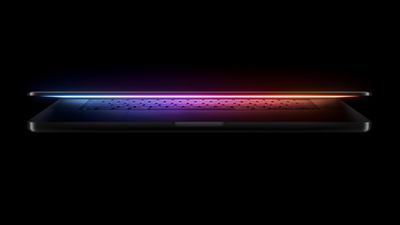
Apple MacBook Pro M4 hero
Dealsite.co.kr reports that Samsung Display will be the sole supplier of OLED panels for the new MacBook Pro models, thanks to its heavy investment in Gen 8.6 OLED production lines.

Gen 8.6 lines use larger glass substrates conducive with laptop and monitor panels, and combine oxide TFT technology for low power consumption and scalability, while reducing manufacturing costs. The investment means Samsung is expected to comfortably meet Apple's demand next year for OLED MacBook panels.

Several previous rumors have indicated that Apple is developing MacBook Pro models with OLED displays. Last month, Omdia doubled down on its 2026 timeframe for the first MacBook models with OLED displays. That report did not mention the "Pro" moniker, but it is widely expected that OLED displays will debut in Apple's higher-end MacBook Pro models before coming to MacBook Air models.

When the MacBook Pro moves from mini-LED to OLED display technology, it will gain several advantages – brighter screens, deeper blacks with higher contrast, improved power efficiency that can extend battery life, and other enhancements.

The switch to OLED is expected to accompany the MacBook Pro's first major redesign since 2021. Apple is reportedly focusing on delivering the thinnest possible device without compromising on battery life or major new features.

It has also been reported that the OLED MacBook Pro could feature a pill-shaped or hole-punch cutout in the display instead of a notch. This rumor is from December 2024, so it is unclear if it remains accurate, or if the change remains on Apple's roadmap.

Last month, some uncertainty emerged around whether the first OLED MacBook Pro would launch in 2026, after Bloomberg's Mark Gurman reported – without offering a reason – that Apple doesn't plan to update any Macs with M5 chips in 2025. However, Gurman noted that the timeline is still subject to change.

The current M4, M4 Pro, and M4 Max ‌MacBook Pro‌ models were announced in October 2024 and released in November 2024, so pushing the M5 models back to 2026 would see Apple skipping a yearly refresh.

If Apple planned to launch the M5 ‌MacBook Pro‌ models in 2026, that could see the OLED model pushed to 2027. Alternatively, Apple could debut the M5 ‌MacBook Pro‌ in early 2026 and the OLED version with M6 chips in late 2026, but that would be unusual. Gurman has so far kept quiet on whether the redesigned OLED MacBook Pro timeline has shifted as well, but hopefully there's an update coming from him soon that will corroborate this latest report.

Related Roundup: MacBook Pro
Buyer's Guide: MacBook Pro (Caution)
Related Forum: MacBook Pro

Popular Stories

Apple Logo Zoomed

Tim Cook Teases Plans for Apple's Upcoming 50th Anniversary

Thursday February 5, 2026 12:54 pm PST by
Apple turns 50 this year, and its CEO Tim Cook has promised to celebrate the milestone. The big day falls on April 1, 2026. "I've been unusually reflective lately about Apple because we have been working on what do we do to mark this moment," Cook told employees today, according to Bloomberg's Mark Gurman. "When you really stop and pause and think about the last 50 years, it makes your heart ...
wwdc sans text feature

Apple Rumored to Announce New Product on February 19

Thursday February 5, 2026 12:22 pm PST by
Apple plans to announce the iPhone 17e on Thursday, February 19, according to Macwelt, the German equivalent of Macworld. The report, citing industry sources, is available in English on Macworld. Apple announced the iPhone 16e on Wednesday, February 19 last year, so the iPhone 17e would be unveiled exactly one year later if this rumor is accurate. It is quite uncommon for Apple to unveil...
Finder Siri Feature

Why Apple's iOS 26.4 Siri Upgrade Will Be Bigger Than Originally Promised

Friday February 6, 2026 3:06 pm PST by
In the iOS 26.4 update that's coming this spring, Apple will introduce a new version of Siri that's going to overhaul how we interact with the personal assistant and what it's able to do. The iOS 26.4 version of Siri won't work like ChatGPT or Claude, but it will rely on large language models (LLMs) and has been updated from the ground up. Upgraded Architecture The next-generation...
iOS 26

iOS 26.3 and iOS 26.4 Will Add These New Features to Your iPhone

Tuesday February 3, 2026 7:47 am PST by
While the iOS 26.3 Release Candidate is now available ahead of a public release, the first iOS 26.4 beta is likely still at least a week away. Following beta testing, iOS 26.4 will likely be released to the general public in March or April. Below, we have recapped known or rumored iOS 26.3 and iOS 26.4 features so far. iOS 26.3 iPhone to Android Transfer Tool iOS 26.3 makes it easier...
iphone 17 pro dark blue 1

iPhone 18 Pro Max Rumored to Deliver Next-Level Battery Life

Friday February 6, 2026 5:14 am PST by
The iPhone 18 Pro Max will feature a bigger battery for continued best-in-class battery life, according to a known Weibo leaker. Citing supply chain information, the Weibo user known as "Digital Chat Station" said that the iPhone 18 Pro Max will have a battery capacity of 5,100 to 5,200 mAh. Combined with the efficiency improvements of the A20 Pro chip, made with TSMC's 2nm process, the...

Top Rated Comments

senttoschool Avatar
27 weeks ago

Meanwhile Windows laptops worth 999€ had it for years.
But when Apple releases it, they will market it like the best thing ever since sliced bread.
Windows OLED panels don't have the required brightness baseline that Apple wants in their laptops. So no, it's not the same thing.
Score: 20 Votes (Like | Disagree)
senttoschool Avatar
27 weeks ago

Please fix laptop display sizes while you’re at it. MBA, 13” and 14.5” … MBP, 14.5” and 16.2”. And fix MBA port variety problem (full interoperability with MBP in all situations, just give MBP three or four Thunderbolt 5 as its distinction) and don’t make MBP thinner, make it a powerhouse with power cooling, the more airflow the better, along with that full capacity battery. There’s no need to go thinner, MBA covers thin and both should be a distinct dramatically different in thickness to help clarify the thin vs power customer communication.
Disagreed. The screen sizes are fine. Make the MBP thinner and lighter. It's too damn heavy.
Score: 14 Votes (Like | Disagree)
JohnRckr Avatar
27 weeks ago
Meanwhile Windows laptops worth 999€ had it for years.
But when Apple releases it, they will market it like the best thing ever since sliced bread.
Score: 11 Votes (Like | Disagree)
berrymetal Avatar
27 weeks ago
Perfect time to upgrade from my M1 Pro 16" MBP.
My wishlist is: thinner and lighter design, FaceID, and OLED
Score: 11 Votes (Like | Disagree)
hovscorpion12 Avatar
27 weeks ago

Ugh, I really don't want an OLED Mac, burn-in is still an issue (I have a TV that's painfully a good example of this).
As someone with a Tandem OLED iPad pro, burn in does not exist. This will be the same when it comes to Macs.

Even the OLED iPhone and Apple Watch does not have burn in.
Score: 10 Votes (Like | Disagree)
senttoschool Avatar
27 weeks ago
Still on M1 Pro 16" MBP. Won't upgrade without the OLED panel and matrix multiplication acceleration in Apple Silicon GPUs.

Tandem OLED would actually yield a difference in everyday computing experience.

Matrix multiplication acceleration in Apple Silicon GPUs means local LLMs will run much faster. Right now, Apple Silicon machines can run very large LLM models locally decently due to high bandwidth unified memory, but the experience is often poor because processing the prompts is very slow. IE., you could be waiting minutes before the AI starts to return tokens if your context is high and the model size is large.

It doesn't make a whole lot of sense to invest in a 128GB VRAM Macbook Pro if the LLM model is going to take minutes to process my prompt.

Nvidia and AMD GPUs already have matrix multiplication accelerators. They're called Tensor Cores on Nvidia GPUs.
Score: 9 Votes (Like | Disagree)