Apple's new low-cost iPhone comes a year after its predecessor, offering over a dozen small changes. Here's how the latest model compares.
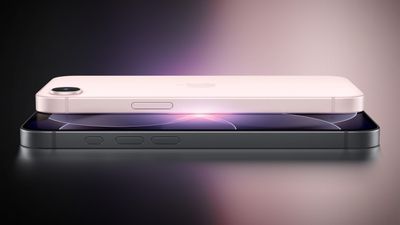
When Apple introduced the iPhone 16e last year, it replaced the aging iPhone SE and became the new low-cost iPhone. The 16e adopted a contemporary full-screen design, Face ID, a 48-megapixel rear camera, USB-C, and the A18 chip, positioning it far closer to Apple's flagship models than previous budget models.
Apple yesterday announced the iPhone 17e, featuring the A19 chip, MagSafe connectivity, faster charging, and more. Here's everything that differs between the iPhone 16e and iPhone 17e:
| iPhone 16e (2025) | iPhone 17e (2026) |
|---|---|
| A18 chip (N3E) | A19 chip (N3P) |
| 4.04 GHz CPU clock speed | 4.26 GHz CPU clock speed |
| 60 GB/s memory bandwidth | 68.2 GB/s memory bandwidth |
| 4-core GPU | 4-core GPU with Neural Accelerators |
| C1 modem | C1X modem |
| eSIM only in United States (no SIM card slot) | eSIM only in additional countries, including Canada, Japan, and Mexico |
| Portrait mode with Depth Control | Next-generation portraits with Focus and Depth Control |
| Ceramic Shield front glass | Ceramic Shield 2 front glass |
| Qi wireless charging up to 7.5W | MagSafe wireless charging up to 15W with 20W adapter or higher |
| Compatible with MagSafe cases, wallets, wireless chargers, and more | |
| 5.88 ounces (167 grams) | 5.96 ounces (169 grams) |
| 128GB, 256GB, and 512GB storage options | 256GB and 512GB storage options |
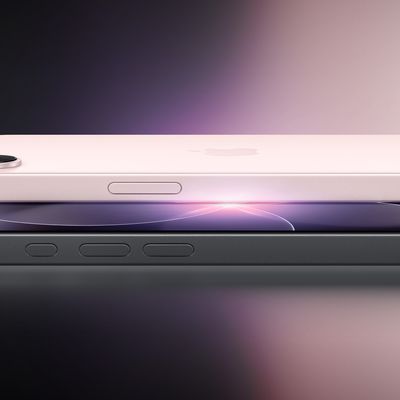
| Available in White and Black | Available in White, Black, and Soft Pink |
How Big Are the Upgrades?
The iPhone 17e's most consequential upgrade is MagSafe. The iPhone 16e was limited to standard Qi wireless charging at up to 7.5W. The iPhone 17e doubles that to 15W and brings compatibility with magnetic accessories such as snap-on chargers, car mounts, wallets, and cases.
The iPhone 17e starts with 256GB, while the iPhone 16e began with 128GB. That is a 100% increase in base capacity at the same $599 starting price.
Durability also improves modestly. The iPhone 17e introduces Ceramic Shield 2, which Apple says offers three times better scratch resistance than the previous generation, along with reduced glare.
Performance improvements are measurable but more incremental. The benefits are more likely to surface in computational photography, gaming headroom, and future AI-driven iOS features. This is essentially a future-proofing upgrade over time rather than a dramatic speed bump.
Other changes are marginal. The modem moves from the C1 to the C1X, promising improved efficiency and cellular performance, but battery life remains rated at 26 hours.
Who Should Buy an iPhone 17e?
The iPhone 17e is a strong choice for anyone upgrading from an iPhone 14 or older. For those users, the combined jumps in performance, charging speed, storage, and camera capabilities are substantial. It is also the better option for first-time iPhone buyers, because it represents a more future-proof baseline with MagSafe, more base storage, and newer silicon that will age better over a three- to five-year ownership cycle.
The more nuanced decision arises when a discounted iPhone 16e is available from a third-party retailer. In that case, the price difference becomes decisive. If the 16e can be purchased at a significant discount, it remains a capable and modern device, and will likely support virtually all of the same Apple Intelligence features going forward. For buyers who do not care about MagSafe and are comfortable with lower storage tiers, the 16e can still represent strong value.
However, if the price gap is only modest, the iPhone 17e is generally the better purchase. The doubling of wireless charging speed, the presence of MagSafe and Ceramic Shield 2, and the doubling of base storage are collectively worth it. Over time, those advantages are more likely to affect day-to-day satisfaction.
The iPhone 16e is the value option only when heavily discounted. The iPhone 17e is likely the better long-term buy, especially for anyone coming from an older device or entering the iPhone ecosystem for the first time.
iPhone 17e pre-orders start on Wednesday, March 4, with availability starting a week later on Wednesday, March 11.