Citibank Now Offers Apple Pay in Australia, Singapore, and Hong Kong
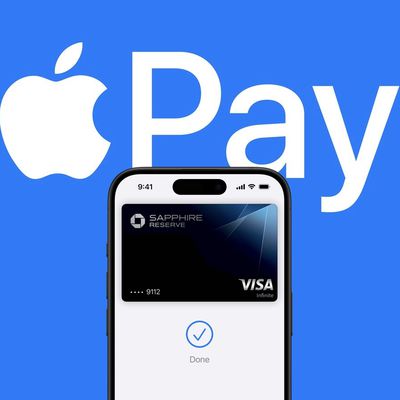
Citi today announced that its credit cards issued in Australia, Singapore, and Hong Kong can now be used with Apple Pay, followed by Taiwan later this year.

Citi cardholders can activate Apple Pay by opening the Wallet app, tapping the plus sign in the top-right corner, tapping the continue button, and positioning the credit card into the on-screen frame or entering the card details manually.
Apple Pay is accepted at thousands of locations with contactless payment systems in each country. A compatible iPhone, iPad, or Apple Watch is required.
In related news, Apple today announced that Apple Pay will soon be offered by BBVA, the second largest bank in Spain. Bankia, the fourth largest bank in Spain, also remains listed as coming soon on the localized Apple Pay page for Spain.
Popular Stories
An antitrust lawsuit accusing Apple of blocking tap-to-pay competition is moving forward and will see banks and credit unions able to band together to sue Apple.
U.S. District Judge Jeffrey White this week certified a class in the lawsuit. It will include any U.S. entities that issued any payment card enabled for Apple Pay and paid Apple a fee for Apple Pay transactions on that payment card. ...
Apple Pay is now available in India, which means customers with an eligible card can add it to the Wallet app on iPhone and Apple Watch for contactless and online payments.
To use Apple Pay in India, users will need an Axis Bank credit card on the Visa or Mastercard network. Earlier today, TechCrunch reported that merchants and payment terminals will need to add Apple Pay support, so the...
Apple Pay is set to launch in India later today (Wednesday local time), starting with Axis Bank credit cards on the Visa and Mastercard networks, according to TechCrunch.
India already has a popular Unified Payments Interface (UPI) system for digital payments, so the initial rollout of Apple Pay in the country is expected to be limited. HDFC Bank, ICICI Bank, and SBI Bank/SBI Card are not...