Apple Music Lossless: Everything You Need to Know - GeekWebGuides
Skip to Content

Apple Music Lossless: Everything You Need to Know

Apple Music offers lossless audio at no additional cost to subscribers, using Apple Lossless Audio Codec (ALAC) to preserve the original audio data. ‌Apple Music‌ offers two levels of lossless audio: Lossless, up to 24-bit/48 kHz, and Hi-Res Lossless, up to 24-bit/192 kHz. Support is available across Apple's major devices, as well as Android and Windows PCs.

Lossless 3D Feature
Here's what you need to know about ‌Apple Music‌ Lossless, including supported devices, headphones, connection requirements, and more.

What is Lossless Audio?

In 2021, Apple upgraded its entire streaming music catalog to lossless audio using the ALAC (Apple Lossless Audio Codec) format. ALAC is a lossless compression format that lets Apple make smaller file sizes without impacting the integrity of the original audio recording.

Lossless means that after compression and then decompression, the audio that you're hearing is identical to the audio as it was recorded by the artist, preserving the texture, detail, and sound that went into the music when it was created.

With lossless audio, ‌Apple Music‌ subscribers can listen to songs exactly as the artists recorded them in the studio and intended them to be heard. Apple says its catalog is encoded using ALAC, with available resolutions ranging from 16-bit/44.1 kHz through 24-bit/192 kHz. The resolution available varies by song.

Lossless vs. Hi-Res Lossless

‌Apple Music‌ offers two lossless quality levels:

  • Lossless: Up to 24-bit/48 kHz
  • Hi-Res Lossless: Up to 24-bit/192 kHz

Lossless includes CD-quality 16-bit/44.1 kHz audio as well as higher-resolution recordings up to 24-bit/48 kHz. Hi-Res Lossless includes resolutions above 48 kHz and goes as high as 24-bit/192 kHz. Playing Hi-Res Lossless above 48 kHz may require an external digital-to-analog converter (DAC), depending on the device and connection.

Also note that Hi-Res Lossless is not compatible with Apple's Automix and Crossfade features that blend tracks together as they transition from one to the next. Those are features are supported on regular Lossless and other audio quality settings.

Lossless Device Support

According to Apple, lossless audio on ‌Apple Music‌ can be listened to on iPhone, iPad, Mac, Apple TV 4K, HomePod, and Apple Vision Pro, as well as through the ‌Apple Music‌ apps for Android and Windows. Lossless audio can typically be turned on using an "Audio Quality" option in the settings for each app across the various platforms. Some platforms may also allow you to select separate quality levels for downloads and streaming.

Headphone support will be the limiting factor for most users, as a conventional Bluetooth AAC connection cannot support lossless ‌Apple Music‌. As a result, most AirPods and Beats headphones will not be able to deliver lossless ‌Apple Music‌.

There are a couple of exceptions, however, and that includes the USB-C AirPods Max and the AirPods Max 2, which can support lossless audio when using a wired connection over USB-C. Certain AirPods and Beats models can also support lossless audio when paired with ‌Apple Vision Pro‌, including AirPods 4 and 5, AirPods Pro 2 with USB-C case, AirPods Pro 3, and Powerbeats Pro 2.

Many wired headphones support lossless audio, although as mentioned above an external DAC may be required for Hi-Res Lossless.

Lossless Audio Songs

At launch, 20 million songs supported lossless quality, with Apple expanding it to the entire ‌Apple Music‌ catalog of over 100 million songs over time. Select content such as ‌Apple Music‌ radio stations and music videos are not available in lossless quality.

Can You Even Hear Lossless Audio?

Lossless audio preserves all of the original audio data, but that doesn't mean every listener will hear an obvious difference.

Audibility depends on the recording and mastering, playback equipment, listening environment, and listener. For many people, the difference between high-quality AAC and lossless audio can be difficult to identify in normal listening. Lossless audio is designed for audiophiles and many people will not miss lossless quality when listening over their Bluetooth headphones.

Spatial Audio with Dolby Atmos

In addition to lossless audio, ‌Apple Music‌ also supports Spatial Audio with Dolby Atmos. With this feature, artists are able to record multi-dimensional audio that will make it sound like the music is coming from all around you.

Lossless Audio and Spatial Audio are distinct concepts, with Lossless Audio describing how music is compressed and delivered while Spatial Audio is an immersive audio format that changes how music is mixed and presented spatially. The two can coexist, with a song being available in both a lossless stereo version and a Spatial Audio version, for example. Lossless does not mean surround sound, and Dolby Atmos does not automatically mean lossless.
Popular Stories

Apple Music New Branding

Apple Music's New Look Officially Announced

Wednesday October 21, 2026 9:06 am PDT by
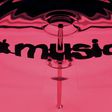
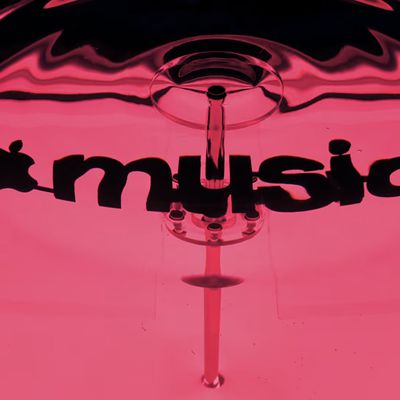
Following the introduction of a new Apple Music logo and app icon earlier this month, Apple today officially introduced Apple Music's new brand identity. In a YouTube video shared today, Apple said the new Apple Music visuals were "made by sound." More specifically, Apple said it played a sound through a container of water, resulting in the liquid moving at the frequency of the notes. Apple...
apple music new logo red

Apple Music Is Getting a New Logo

Tuesday October 6, 2026 4:06 am PDT by
Apple appears to be rolling out a new logo for Apple Music in its upcoming set of software updates. The logo has been spotted in both macOS 27.2 beta 3 and iOS 27.2 beta 3, and it's identical to the one that Apple used in its Apple Music Hall announcement last month. When Apple used the logo in the venue's press materials and on its new official website, it wasn't clear if this was a one-off ...
apple music icon 1

iOS 27.2 Adds New Apple Music Icon

Tuesday October 13, 2026 3:04 pm PDT by
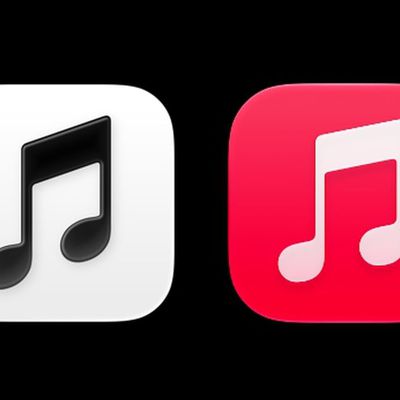
In the fourth beta of iOS 27.2, Apple updated the Apple Music icon. The new icon is black and white, replacing the prior icon. In light mode, the logo is black on a white background, and in dark mode, it's white on a black background. The refreshed Music app icon comes after Apple debuted a new Apple Music logo in an earlier version of iOS 27.2 and in marketing materials for its recent...

Top Rated Comments

AngerDanger Avatar
71 months ago
No problem for me; lossy audio will go great with the miscalibrated colors on my TV!
Score: 85 Votes (Like | Disagree)
dannys1 Avatar
71 months ago

Bro - you might be confusing high res and standard res. Most people can't hear that difference. However, most people absolutely can hear the difference between lossy and lossless, even on mid-grade systems.

Also, pretty bold of you to make assumptions about my car audio setup or listening habits. I have high end speakers and a high end head unit, I drive an electric vehicle so there's no engine noise, and I do most of my listening in my 60-90 minute (depending on traffic) downtime between my two jobs. I'm parked, so no road noise. My head unit plays FLAC and WAV files via USB stick, not bluetooth. When I'm using my iPhone, it's using hardwired CarPlay, not bluetooth.
Listen, as a mix engineer who mixes the records you're listening to, I can confidently say I am not getting them mixed up and I confidently wager £50,000 that you couldn't tell the difference between a FLAC file and a 320kbit MP3 of the same source - so far no one has been able to do - as said, there's an entire blind test on the most detail speakers they could find in a fully audio treated room.

In the greatest respect I drive a Tesla with the premium audio system which has been further enhanced and it's still a million miles away from anything remotely capable of being able to recreate the audio frequencies you can't even hear anyway! As I said, you and neither do I have the best car audio system in the world and even if we did it'd be at the **** end of hi-fi speakers which are at the **** end of studio monitors.

I've got a pair of £1400 Sennheiser HD800s, with a £800 super flat amp to drive them and a £1000 DAC - that combo alone still can't let you hear the difference in compression between a 320kbit MP3 and it's lossless brother, so your car certainly can't - that's why I am able to be bold about my assumptions.
Score: 40 Votes (Like | Disagree)
sully54 Avatar
71 months ago
I expected AirPods to not support lossless. But what's baffling to me is that HomePod also doesn't. There doesn't seem to be a technical reason for it not to be able to support lossless playback. Seems like a marketing decision. Honestly, this whole thing is a mess.

Score: 30 Votes (Like | Disagree)
71 months ago
So, theoretically, the original 15-year-old iPod Hi-Fi (which still sounds great) is more suited to lossless listening than any HomePod by using a 30-pin dock adapter, or the aux/toslink port.
Score: 29 Votes (Like | Disagree)
71 months ago
For real - just try this: test ('http://abx.digitalfeed.net')

I guarantee you won't be able to hear a difference.
I bet Apple could say it works and nobody would even bat an eyelid.
Score: 23 Votes (Like | Disagree)
71 months ago
For your information, here are some facts for those interestred:

- In the audio world "lossless" typically refers to lossless relative to CD quality, which is 16/44.1 or a dynamic range of 16 bits and a sample rate of 44.1kHz.
- The sample rate determines the maximum frequency you can represent. A digital signal is a discrete (made up of samples) representation of a continues signal (waves). To reconstruct a sinus wave you need exactly two samples. This means that the maximum frequency you can reconstruct equals half the sample rate. This reconstruction is exact and not an approximation (as it is for image pixels). In other words, with a sample rate of 44.1 we can accuratly reconstruct frequencies up to 22kHz, well above the limit of human hearring. For reference, the highest note on a piano is 4286 Hz and most speakers will not be able to produce signals over 22kHz either.

- Does playing at 192kHz make sense? Yes, if you like to play music for your dog and you have very high-end speakers with no other bottlnecks in the connection chain. Otherwise, absolutely not.
- The dynamic range determines the number of different volume levels you can represent. With 16bit you can represent signals from wispering to over 90dB, enough to cause damage to your ears after long exposure.
- Is there an advantage of a dynamic range higher than 16bit? Yes, if you want to accuratly represent fine details ranging from whispering to explosions. For most pop/rock music there is no difference at all.
- Recordings are mostly done at higher sample rates and higher bit rates. Why? This is not because we can hear a difference in the recording, but because it gives additional headroom during production, changing a signal invitably results in some losses which can as such be minimized.
- Airplay does support ALAC 16/44.1, in fact if I am not mistaken, it transcodes all input to this format for transmission. I don't see any reason why HomePods would not be able to play lossless input streams. If you will hear a difference is another question...
- Some people seem to belief everything lossy is the same, this is obviously not the case, the codec and bitrate make a huge difference.
- Currently Apple uses 256 AAC, truth is, most people don't hear a difference with lossless (CD quality) either, especially with low end equipment like HomePods for example. However, there are definetly people who can hear a difference on high-end equipment. If you want to check for yourself with your equipment you can do an ABX test here: http://abx.digitalfeed.net/itunes.html
- There are many reasons why you can compress a PCM signal lossy without any perceptual difference at all. For example, our sensitivity does not only depends on the signal intensity but also on the frequency. For example, humans can not hear sounds at 60Hz under 40dB. While these signals are encoded in PCM, these can be removed without any perceptual difference for humans.
- Eventhough most people can't hear a difference in a scientific ABX test they still belief they do hear a difference. Why? One reason is because mostly they don't test blind. At the moment you have prior knowledge you can't do an unbiased test. Tests have been done with exactly the same equipment audio but different logo's (Bose vs B&O for example), the more premium brand will consistenly perceived better even if the hardware is exactly the same. Secondly, it is common to decode the signal sligtly different. For example, simply increase the volume with 1dB and almost all test subjects will perceive this as higher quality. Third, often tests are done where other factors or at play, such as the DAC, connections and so on.
Score: 22 Votes (Like | Disagree)
Latest Stories
Giant iPhone Duo Displays Coming to Four Apple Stores
35 minutes ago
Apple Pulls Keynote, Pages and Numbers From App Store
1 hour ago
Apple Updates More Apps With iPhone Duo Support
2 hours ago
Apple Will Label Apps 'Made for iPhone Duo' in App Store
5 hours ago
Amazon Takes $49 Off iPad With Prices Starting at $399.99
5 hours ago
F1 on Apple TV Now Available in Dolby Atmos
6 hours ago
Apple Reveals More Than 50 Apps That Will Be Updated for iPhone Duo
6 hours ago
Apple Blocks Certificates That Could Help Attackers Fake Websites
8 hours ago
Giant iPhone Duo Installations Spotted at Apple Fifth Avenue
8 hours ago
iPhone Duo 2 Prototypes Include Under-Display Face ID
9 hours ago
Tesla App Gains iPad and iPhone Duo Support
13 hours ago
Apple Reportedly Boosts iPhone Duo Orders by 44%
13 hours ago
Fortnite Returning to Australian App Store After Court Ruling
14 hours ago
Apple Ordered to Open iPhone to Rival App Stores in Australia
14 hours ago
Apple Suppliers Face Hurdles Cutting Circuit Board Emissions
14 hours ago
Things Updated for iPhone Duo With Adaptive Layout
15 hours ago
Simplicity and Siri AI Are HomeView's Killer Features, Apple Says
15 hours ago
iPhone Duo Reviewers Really Miss Face ID
20 hours ago
Does the iPhone Duo Run Hot? Here's What Reviews Found
21 hours ago
Apple Music's New Look is Now Live on Apple's Website
22 hours ago
Anthropic Launches Claude Duet, a Proactive AI Agent
23 hours ago
What 32,000 Folds Did to the iPhone Duo's Hinge
23 hours ago
iPhone Duo's Hidden FaceTime Camera Takes 'Trash' Photos
1 day ago
iPhone Duo Has 'Edge Light' Feature That Debuted on Macs Last Year
1 day ago
Apple Support App Updated for iPhone Duo's Larger Display
1 day ago
Amazon Sweetens the Deal on Entry-Level 16-Inch MacBook Pro With $570 Off
1 day ago
iPhone Duo Tips Over on MagSafe Stands When Unfolded
1 day ago
Apple Music's New Look Officially Announced
1 day ago
iPhone Duo Supports Apple Pencil Starting With iOS 27.2
1 day ago
iPhone Duo Accessories Roundup: Cases and Screen Protectors From OtterBox, ZAGG, and More
1 day ago